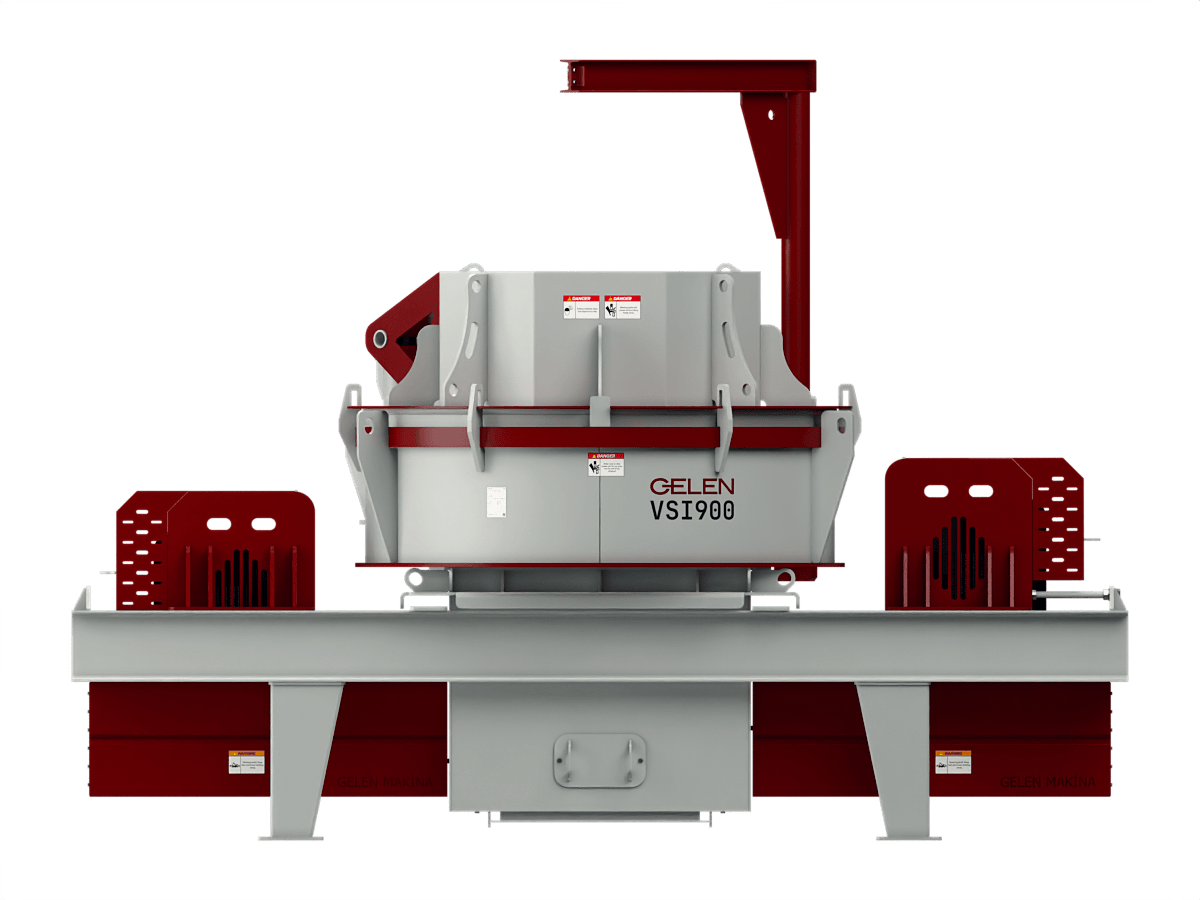
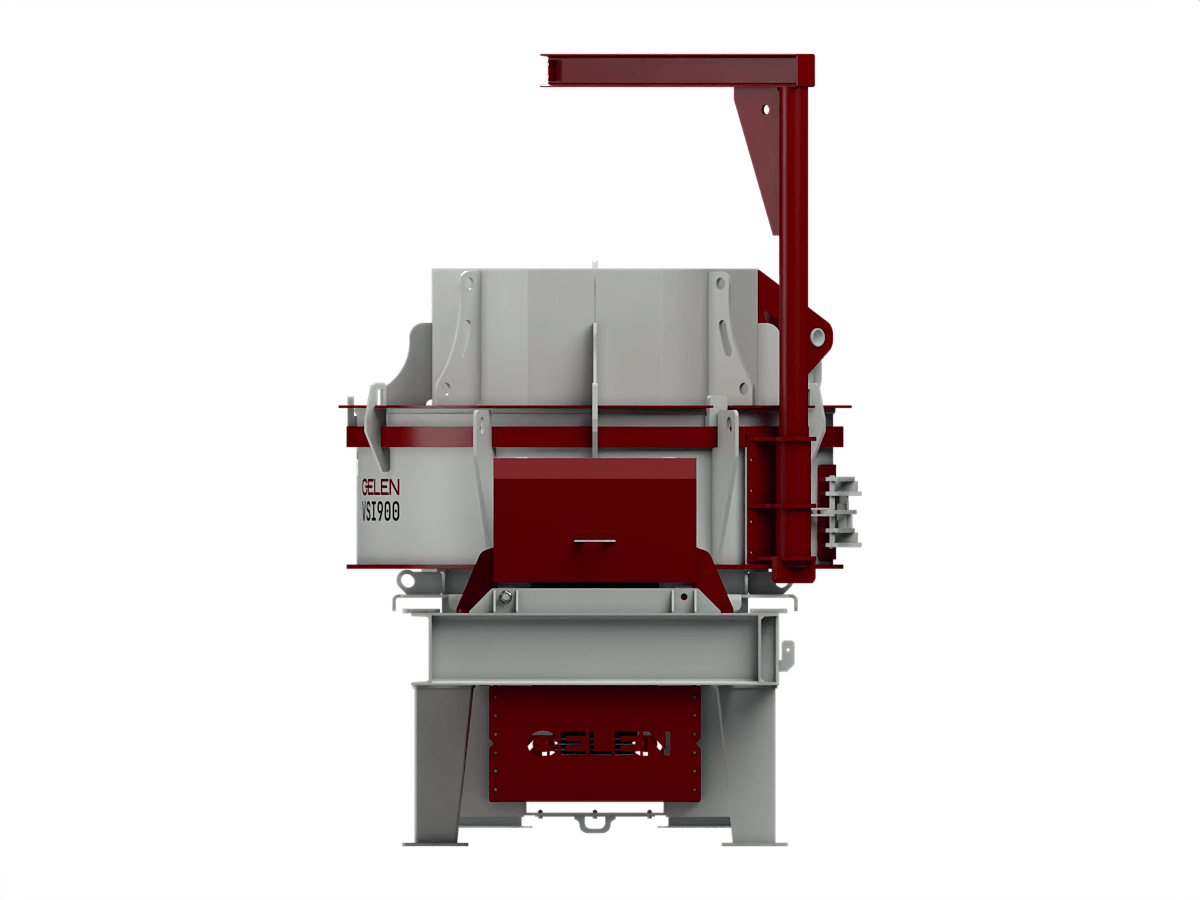
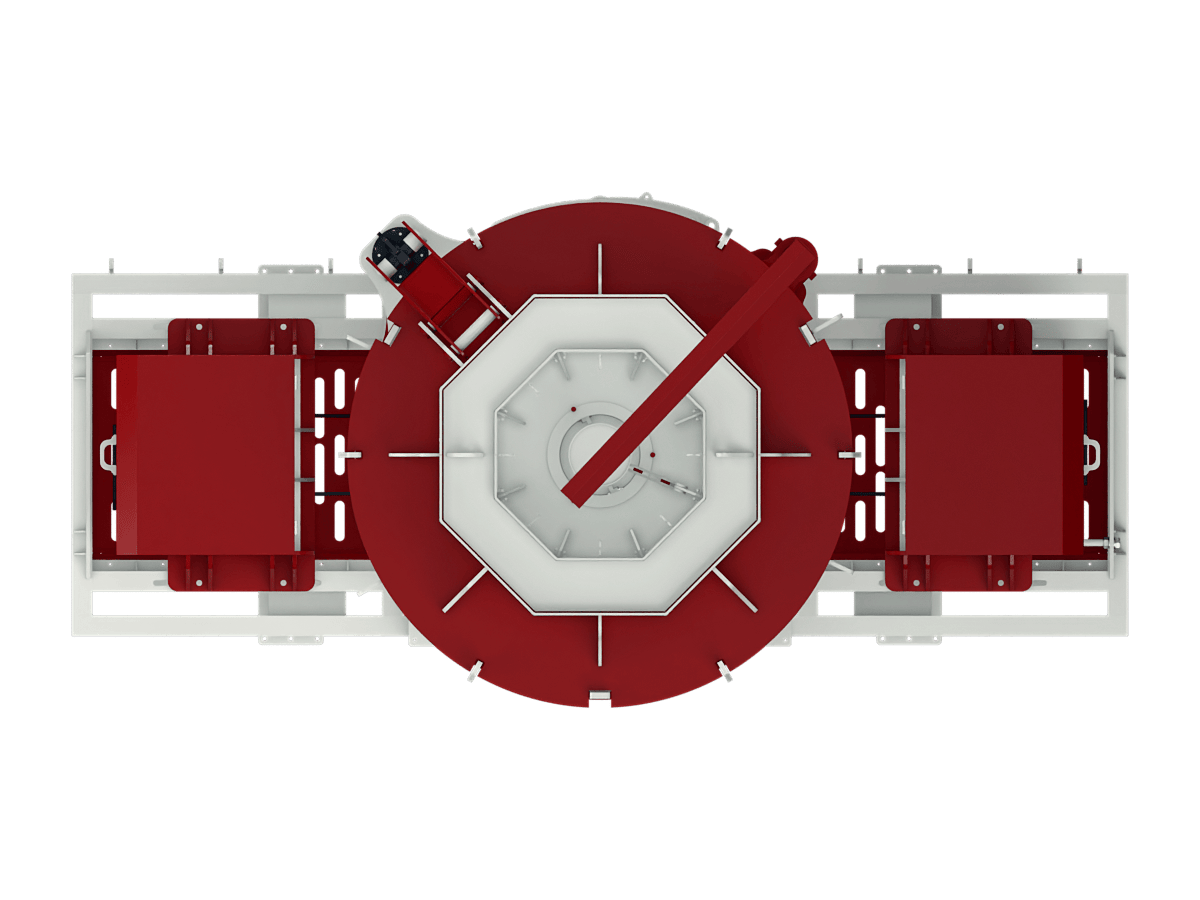
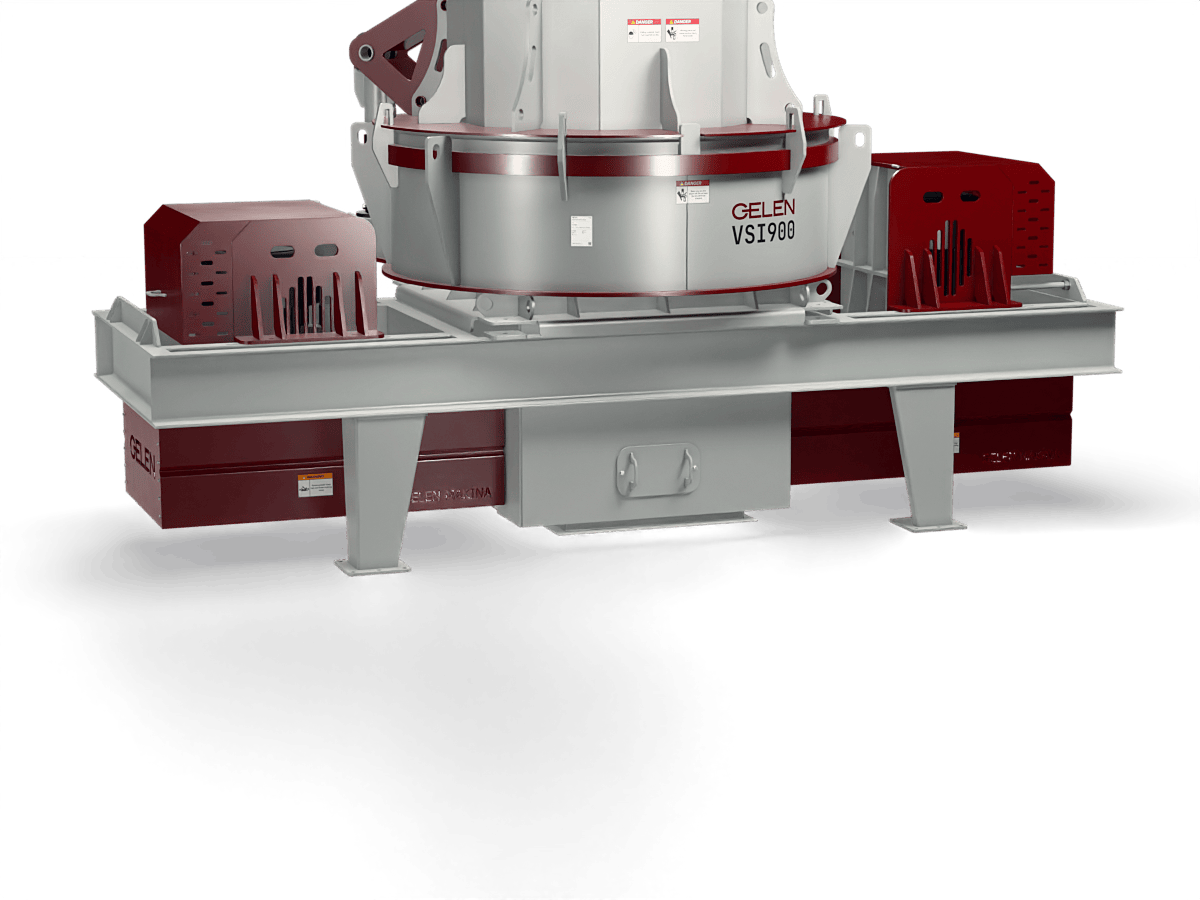
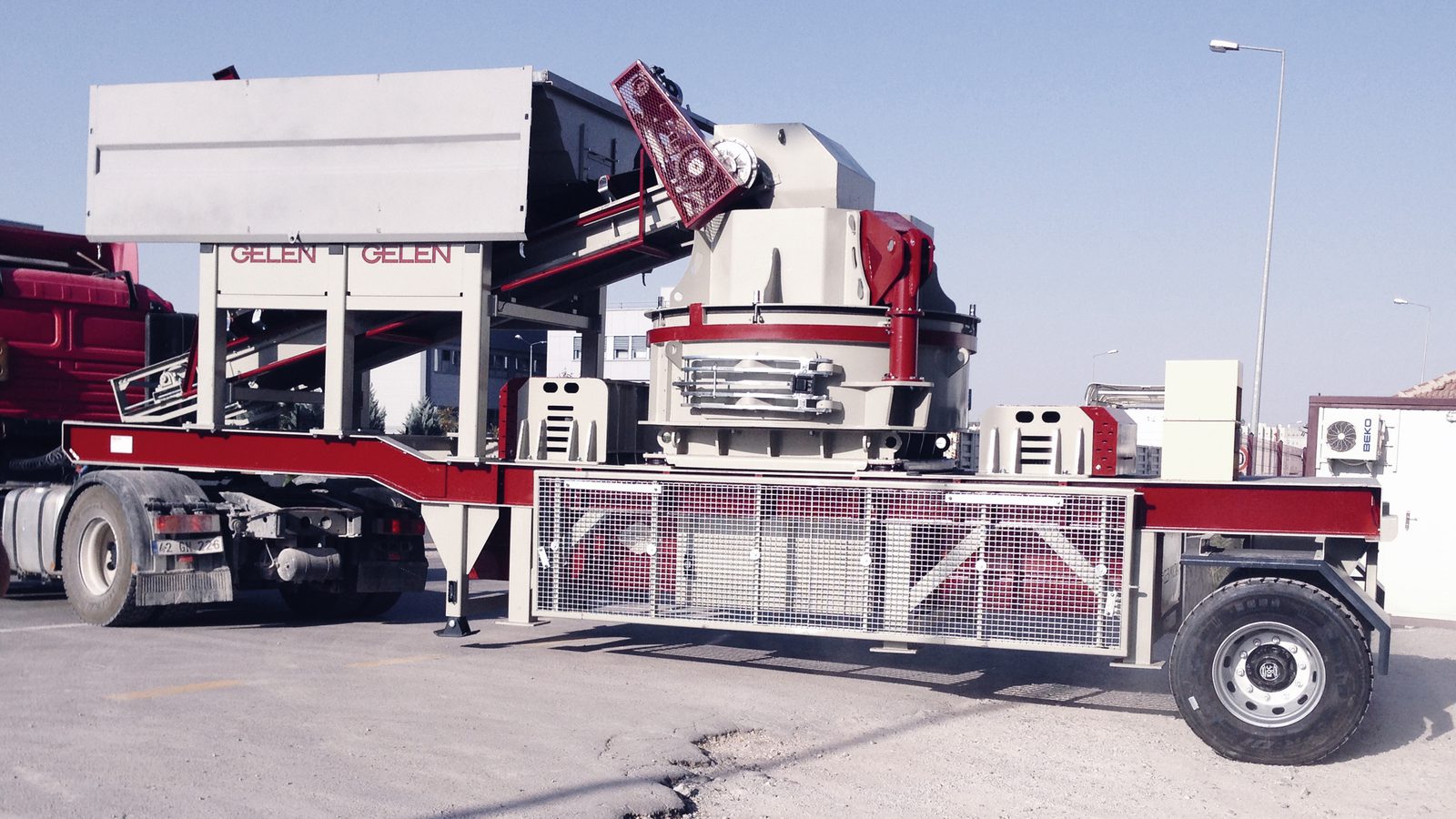
The VSI, also called a vertical shaft crusher, is mainly a third or fourth stage machine which combines crushing and grinding processes especially for all abrasive, brittle and moist materials. Closed rotor VSI’s use rock-on-rock impact crushing system which means that the rock fed into the machine crushes itself. This allows economical and high quality solution for the production of concrete, asphalt and base mixtures.
A vertical shaft impactor is the only crusher on a plant that shapes rather than simply reduces. The rotor throws the feed outward at 40 to 70 m/s and the stone breaks against a bed of its own kind, not against a steel surface. Grains fracture along their natural planes, so flats and elongated pieces are the first to go and what leaves the chamber is close to cubical.
That is also why the wear cost is low for such an abrasive duty. In the closed rotor the working surface is a rock shelf that the feed itself renews; there is no manganese to replace as the tonnage climbs, only the rotor tips.
The trade is feed size. A VSI wants material that a jaw, a cone or an impactor has already brought down — 40 to 50 mm for the closed rotor, up to 120 mm for the open rotor — and it will not tolerate tramp metal at all.
VSI Series Vertical Shaft Impact Crushers
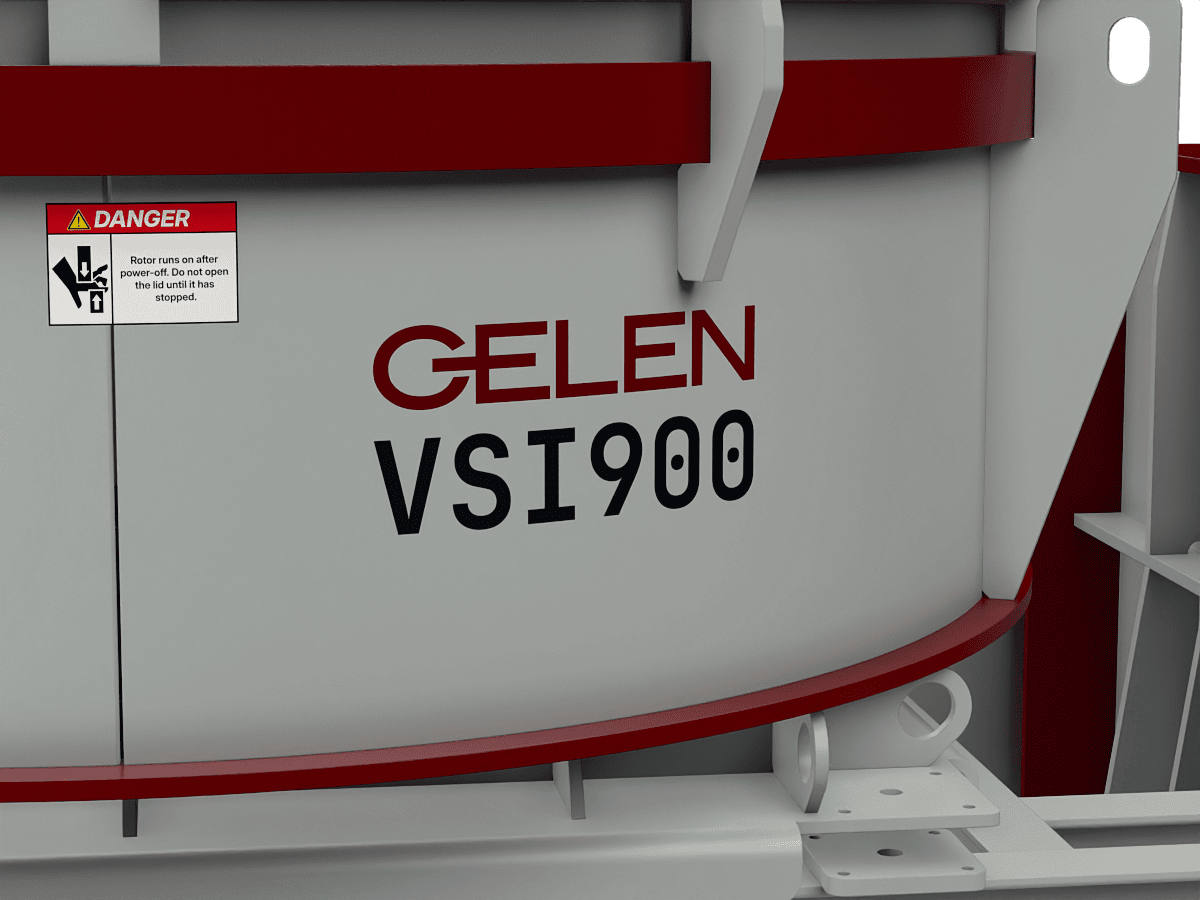
VSI900-CR
VSI800-CR
VSI700-CR
VSI900-OR
ROTOR DIAMETER mm
900
800
700
900
MAX. FEED SIZE mm
50
40
40
120
ROTOR SPEED m/s
45-65
45-65
45-70
40-60
OUTPUT tph
250-350
115-185
50-100
240-280
POWER kW
320-500
220-264
120-150
320-500
WEIGHT kg
13,600
8,900
6,800
13,800
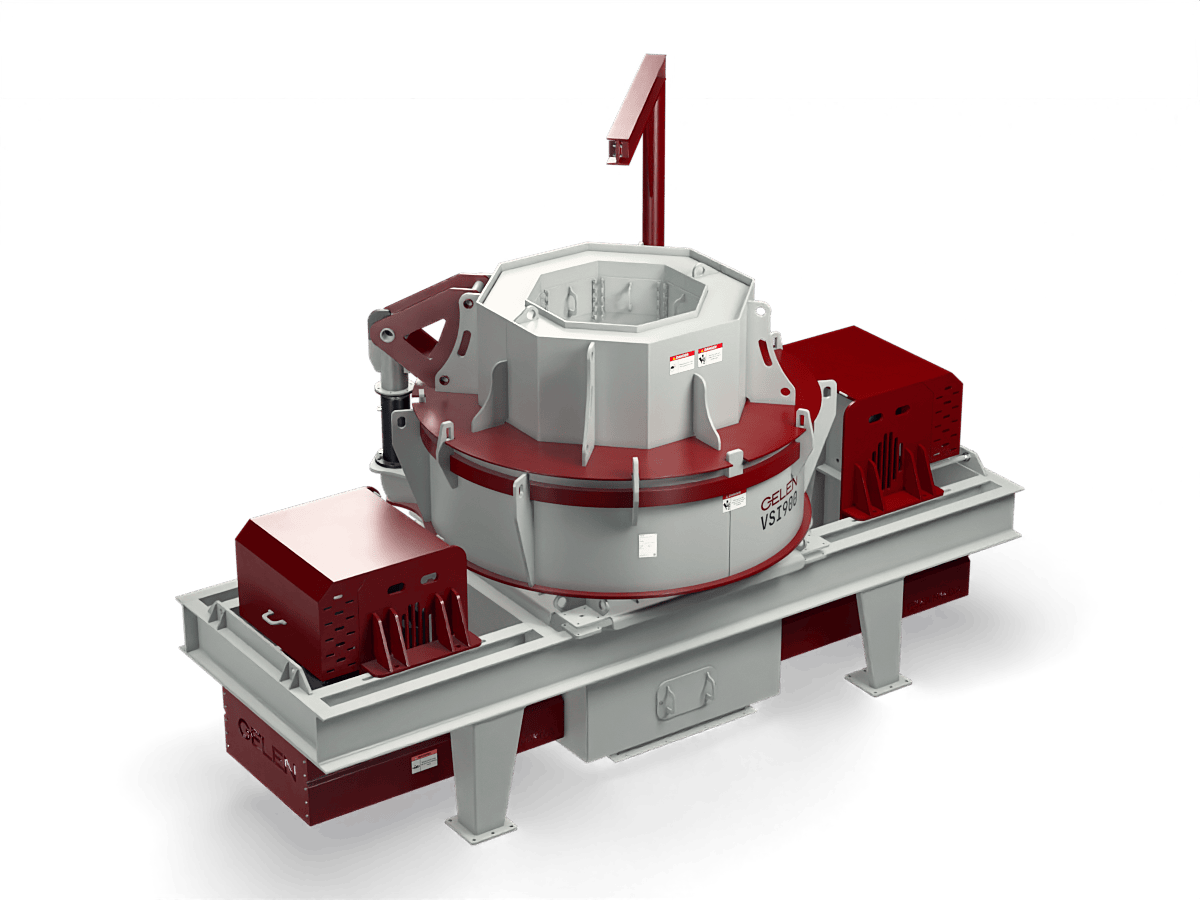
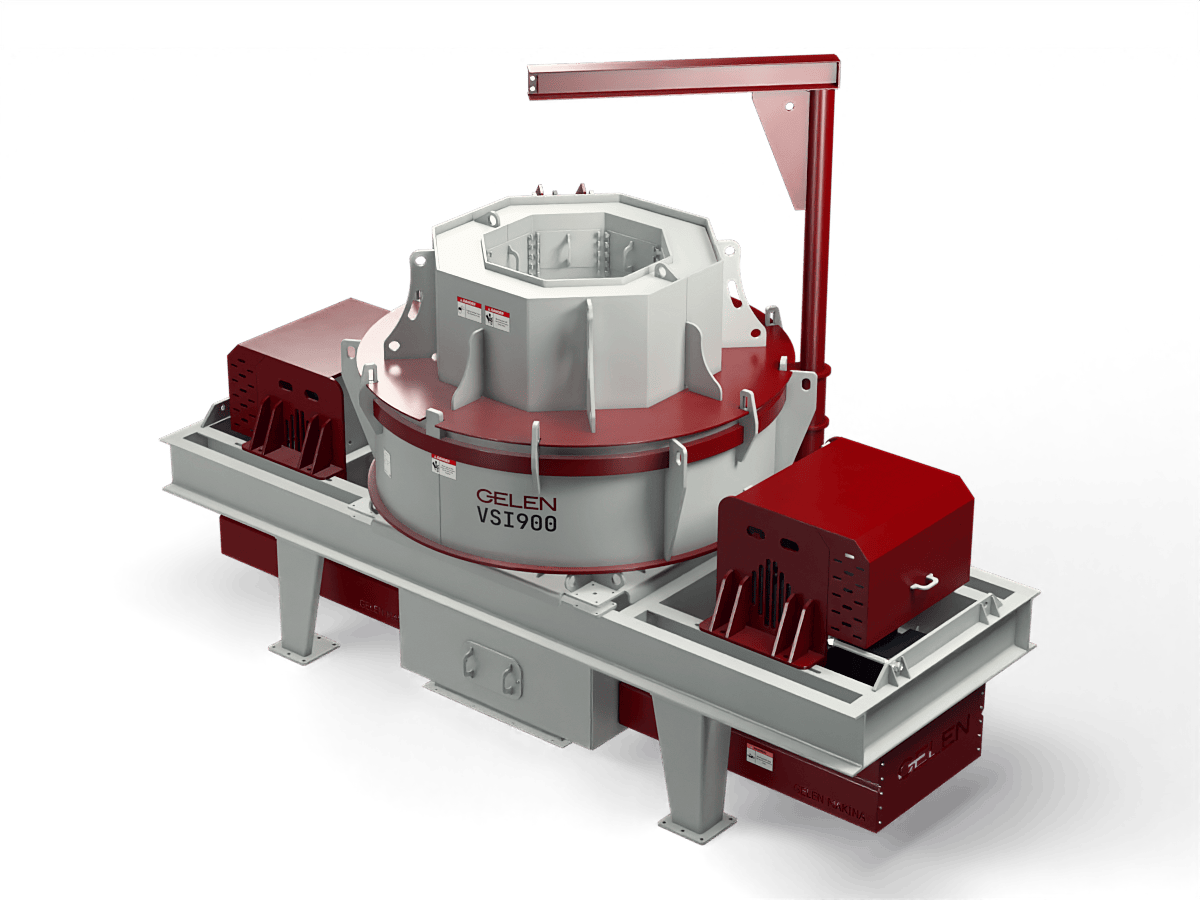
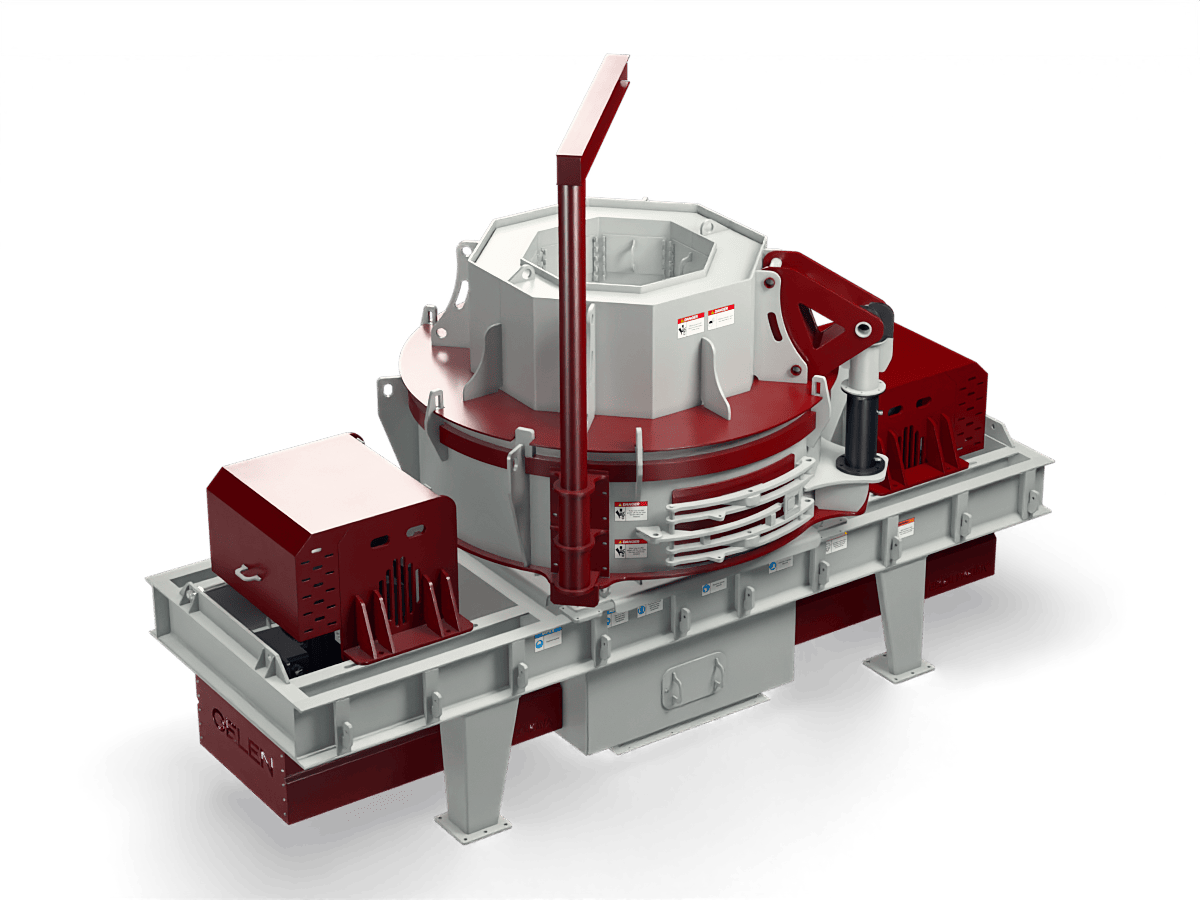
Anatomy
What You Are Looking At
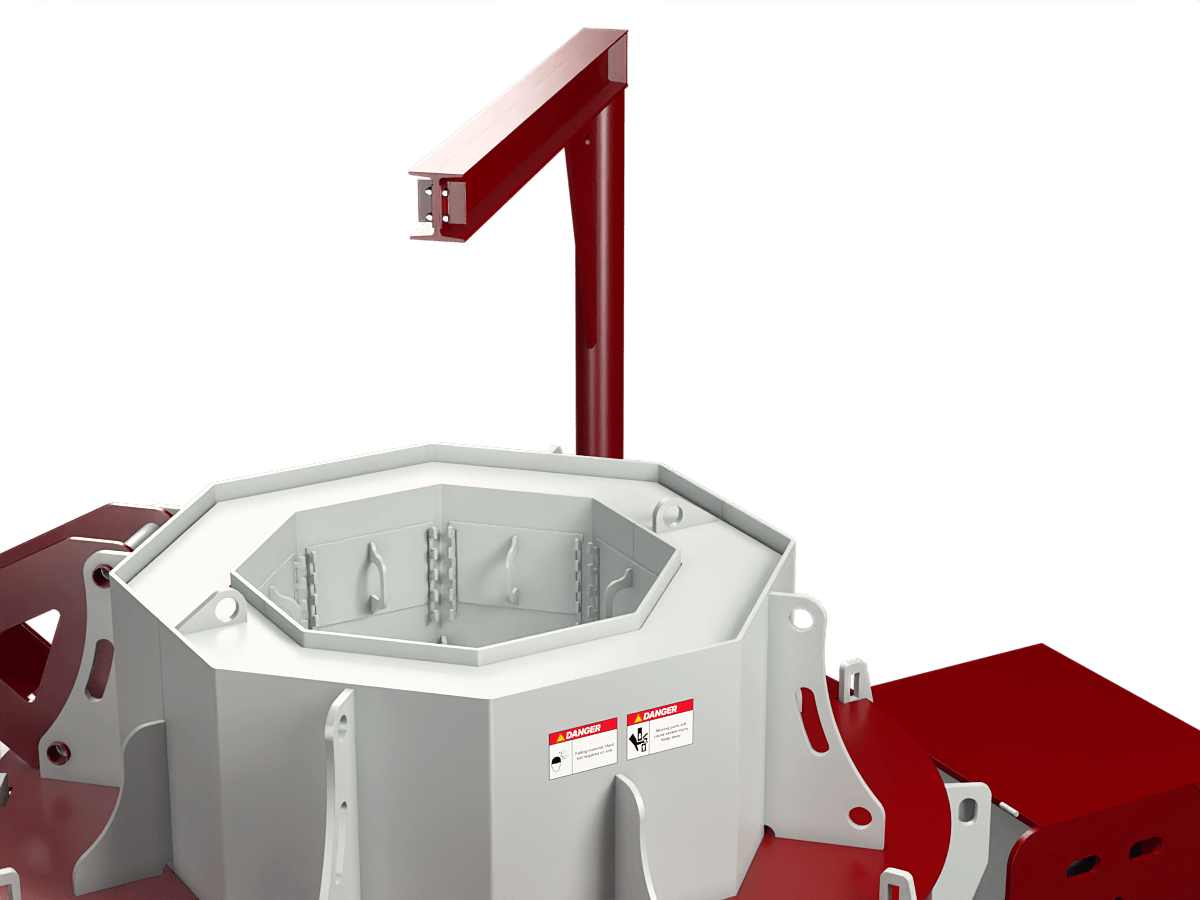
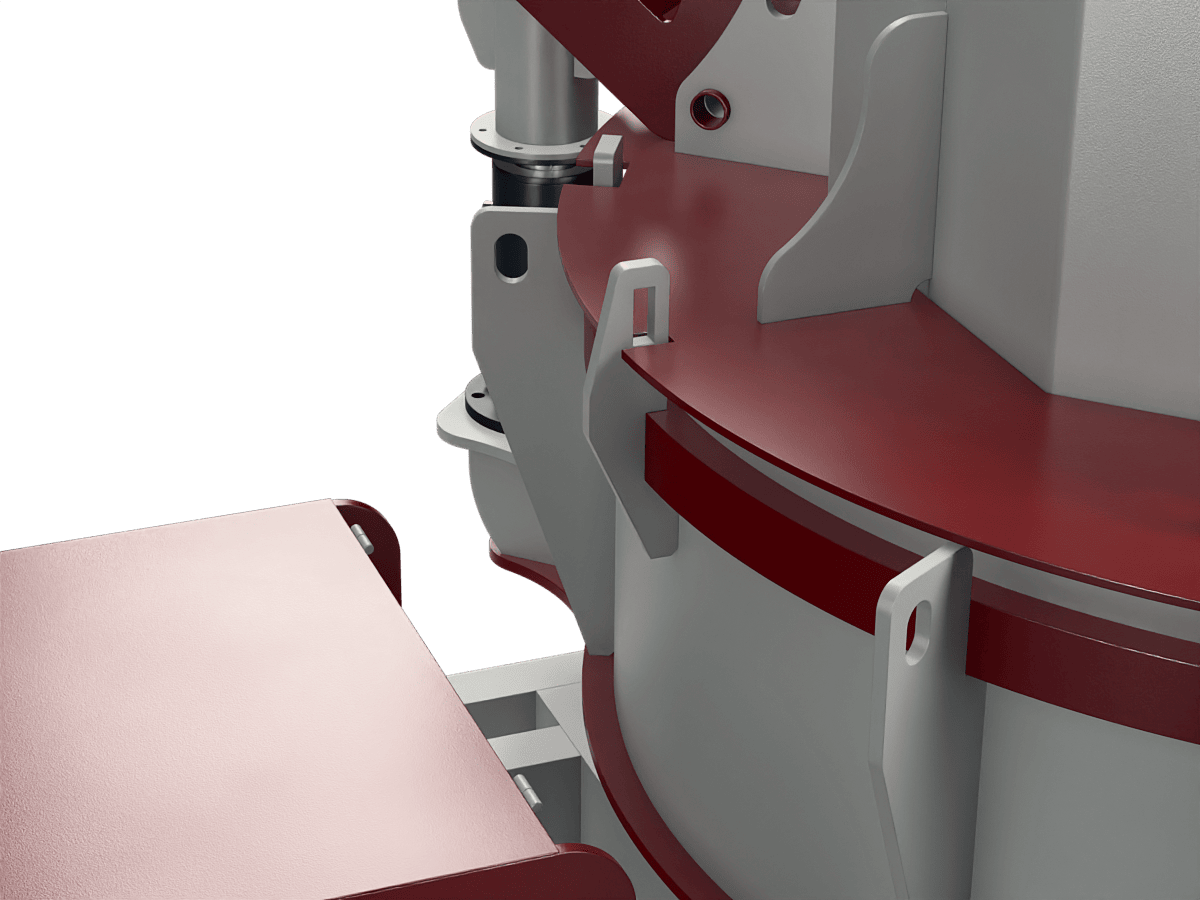
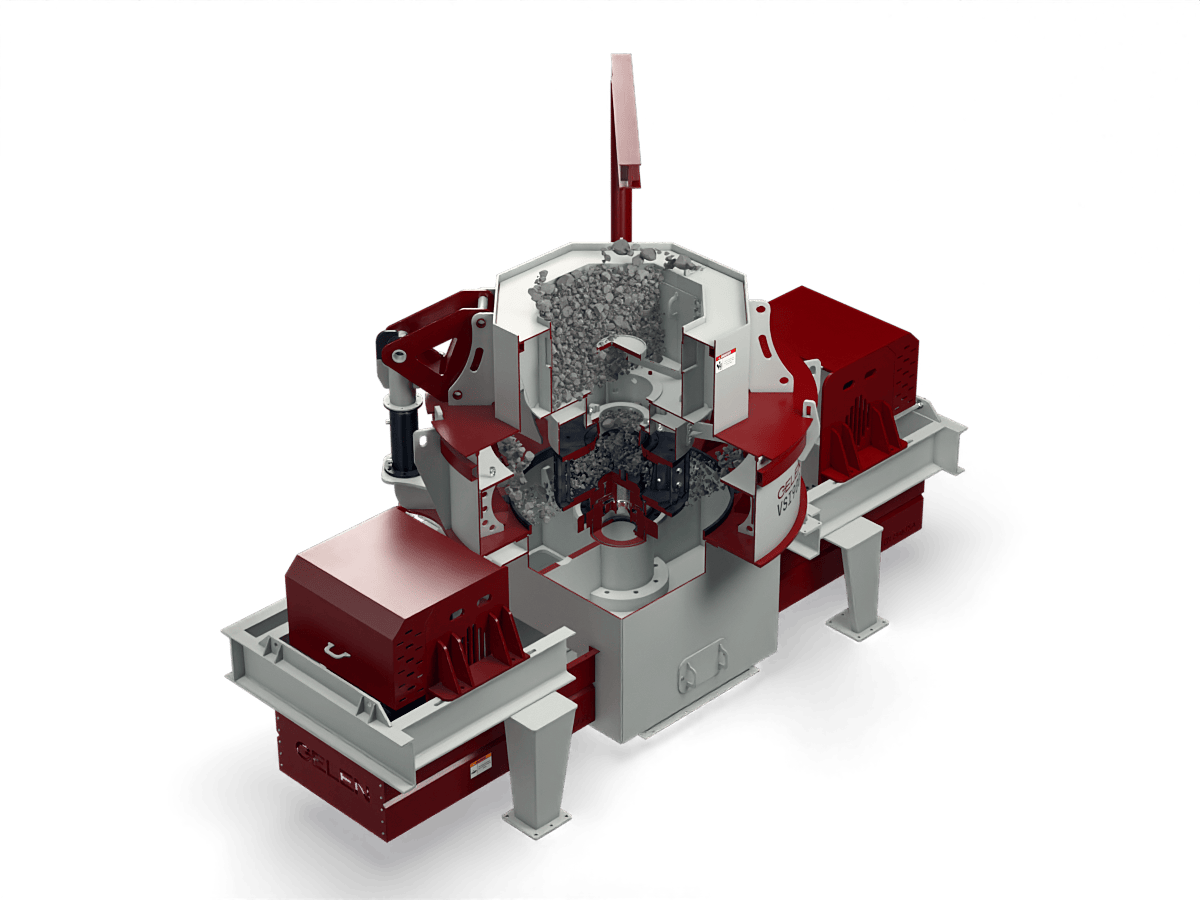
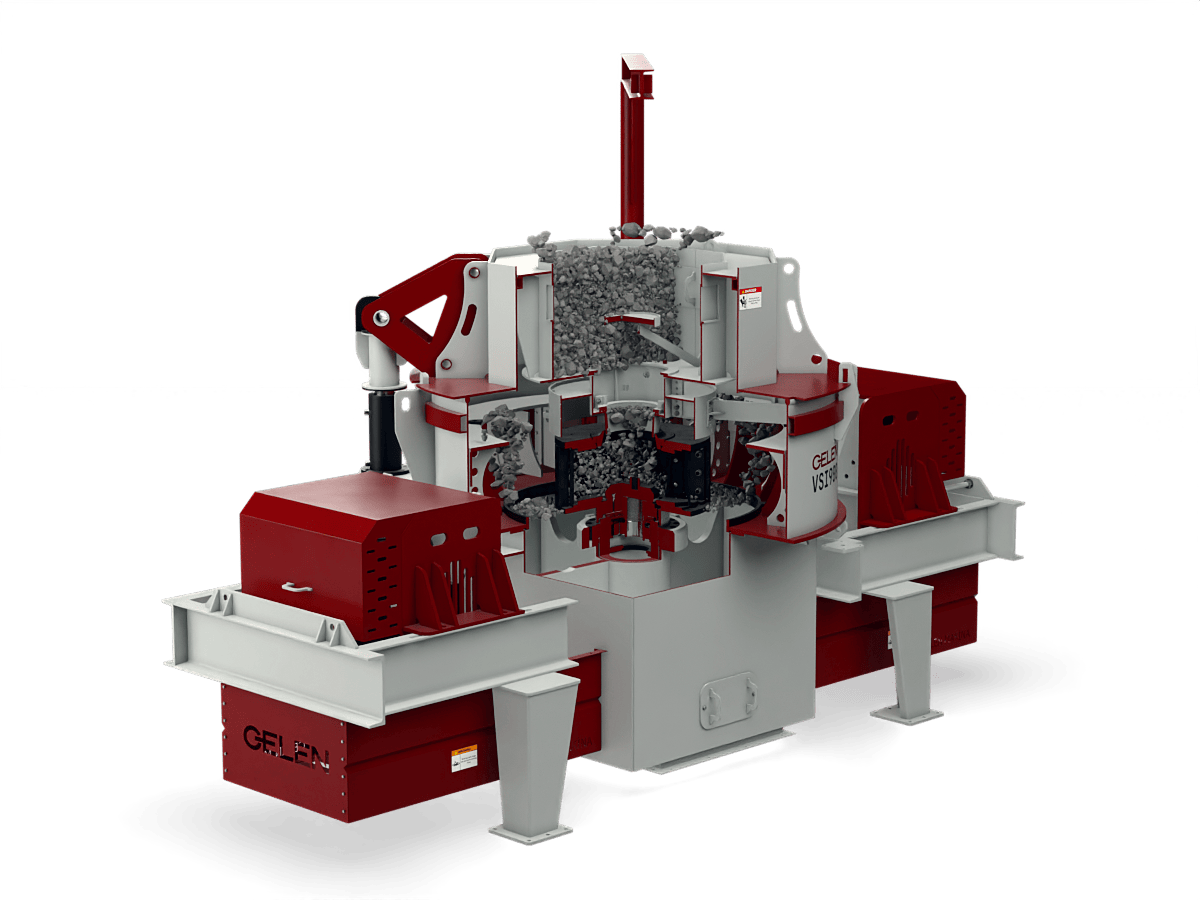
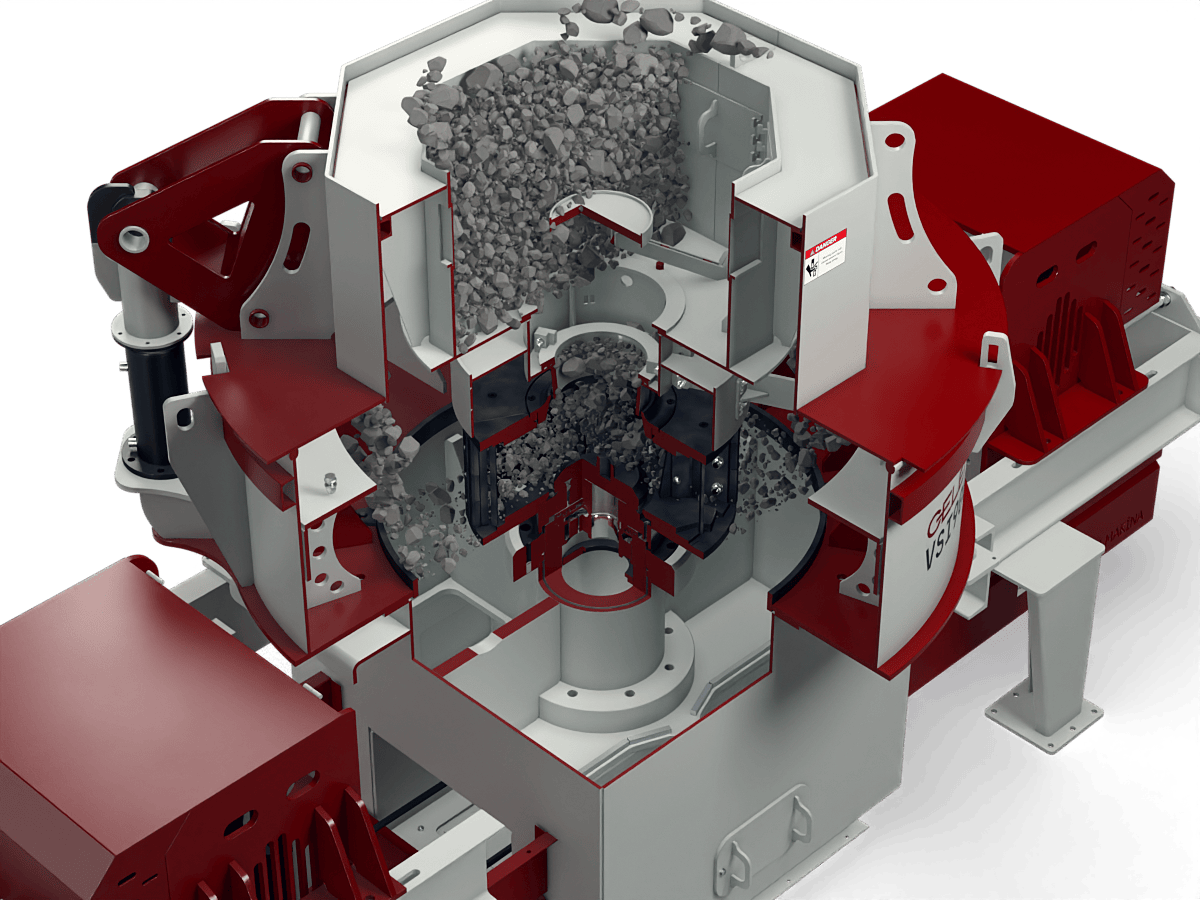
A VSI on its frame. Almost everything that matters is inside the housing, so the parts worth naming are the ones you reach to service it.
1 · Feed tube
Material drops through here onto the middle of the rotor. Feed has to arrive centred and steady, or the rotor unbalances and the vibration switch stops the machine.
2 · Crushing chamber
The rotor spins inside, throwing stone outward at 40 to 70 m/s against the rock shelf that builds up around the wall. Rock breaks against rock, not against steel.
3 · Service davit
The rotor is a wear part and it is heavy. The davit lifts it out through the top rather than stripping the machine down around it.
4 · Support frame
The machine arrives on its own frame with the motor mounted beside it, so it is set down and aligned as one piece rather than built up on site.
5 · Drive
Twin V-belts from a motor under the deck to the vertical shaft. Rotor speed is the product curve, so this is where a variable-frequency drive earns its place.
Performance Charts
Performance Charts
Product Gradation
Typical gradation modelled on published curves for machines of this class (Gaudin–Schuhmann). Indicative only, not a GELEN test result.
Output Range by Model
From the specification table. Values are nominal and vary with material and operating conditions.
Technical Specifications
GELEN VSI Series vertical shaft impact crushers cover rotor diameters of 700, 800 and 900 mm with throughputs from 50 to 350 t/h and drive power from 120 to 500 kW. Closed rotor (CR) models accept feed up to 40–50 mm and deliver the best particle shape; the open rotor VSI900-OR accepts coarser feed up to 120 mm.
Product control: Rotor speeds of 40–70 m/s and an adjustable cascade ratio let operators fine-tune the product curve, fines content and particle shape for each application.
What is included, and what is specified per project.
Item
Standard
Optional
Closed or open rotor with replaceable wear tips
Yes
No
Rock shelf or anvil ring, to the duty
Yes
No
Cascade feed gate
Yes
No
Cartridge bearing assembly
Yes
No
Twin V-belt drive with guards
Yes
No
Vibration switch and thermal protection
Yes
No
Hydraulic lid for chamber access
No
Yes
Variable-frequency drive for rotor speed
No
Yes
Dust extraction connection
No
Yes
Lifting frame for rotor service
No
Yes
Mobile chassis
No
Yes
How It Works
How a Vertical Shaft Impact Crusher Works
Five steps from feed to shaped product.
Feed enters the centre
Material drops through the feed tube onto the middle of the spinning rotor. The cascade gate decides how much bypasses the rotor and falls straight into the chamber.
The rotor accelerates it
Ports in the rotor throw the stone outward at 40 to 70 m/s. All of the crushing energy is put in here, as velocity, before the stone touches anything.
Rock breaks against rock
The stream strikes the rock shelf that has built up around the chamber — or an anvil ring on the open rotor — and breaks along its own weak planes.
Shape comes out of the fracture
Because the break follows the grain rather than a steel edge, flats and elongated pieces fracture first. The product leaves close to cubical.
Speed and cascade trim the curve
Rotor speed and cascade ratio adjust the gradation and the fines content without changing a single wear part.
Applications & Industries
GELEN VSI crushers work in the final crushing stage of aggregate, mining and recycling plants, where product shape and sand quality decide the value of every ton produced.
Manufactured Sand Production
Mechanical sand with a consistent, cubical grain for concrete production. The rock-on-rock chamber grinds as it crushes, producing well-graded sand in a single pass.
Well-graded mechanical sand
Fines controlled via rotor speed and cascade ratio
Consistent cubical shape
Aggregate Shaping
Final-stage shaping of limestone, granite and basalt aggregates downstream of jaw and cone crushers, for concrete, asphalt and base mixtures with strict particle-shape specifications.
Cubical final product for concrete and asphalt
Third or fourth crushing stage
Crushing and grinding combined in one machine
Mining & Industrial Minerals
Fine crushing of abrasive, brittle and moist materials where conventional crushers wear quickly. Rock-on-rock action lets the material crush itself, keeping wear costs low.
Handles abrasive and brittle materials
Processes moist feed
Rock-on-rock action minimizes wear part costs
Key Features & Benefits
The VSI Series applies GELEN's four decades of crushing experience to the stage of the plant where product quality is decided.
Superior Particle Shape
Impact crushing at high rotor speed produces the cubical product that concrete and asphalt specifications demand.
Rock-on-Rock Crushing
In closed rotor models the material fed into the machine crushes itself against a rock-lined chamber, minimizing wear on components and reducing maintenance costs.
Crushing + Grinding in One
Combines crushing and grinding processes in a single third- or fourth-stage machine, simplifying the flowsheet and saving plant space.
Abrasive & Moist Feed
Designed for abrasive, brittle and moist materials that punish conventional crushing chambers.
Adjustable Product Curve
Rotor speed (40–70 m/s) and cascade ratio adjust the gradation and fines content without changing wear parts.
Closed & Open Rotor Options
Closed rotor (CR) for the finest shape and sand duty; open rotor (OR) for coarser feed up to 120 mm when upstream preparation is limited.
Plant Circuit
Where a VSI Fits
A VSI is a finishing machine. It works on what the stages above it have already reduced.
Primary Crusherjaw or impactor on blasted rock
Secondary Stagecone or impactor, down to 40–120 mm
Screenreturns oversize, feeds the VSI on size
VSIshapes and makes sand
Final Screensplits the products, closed circuit on oversize
Every circuit is different. Send us yours and we will say where a VSI fits and what it changes downstream.
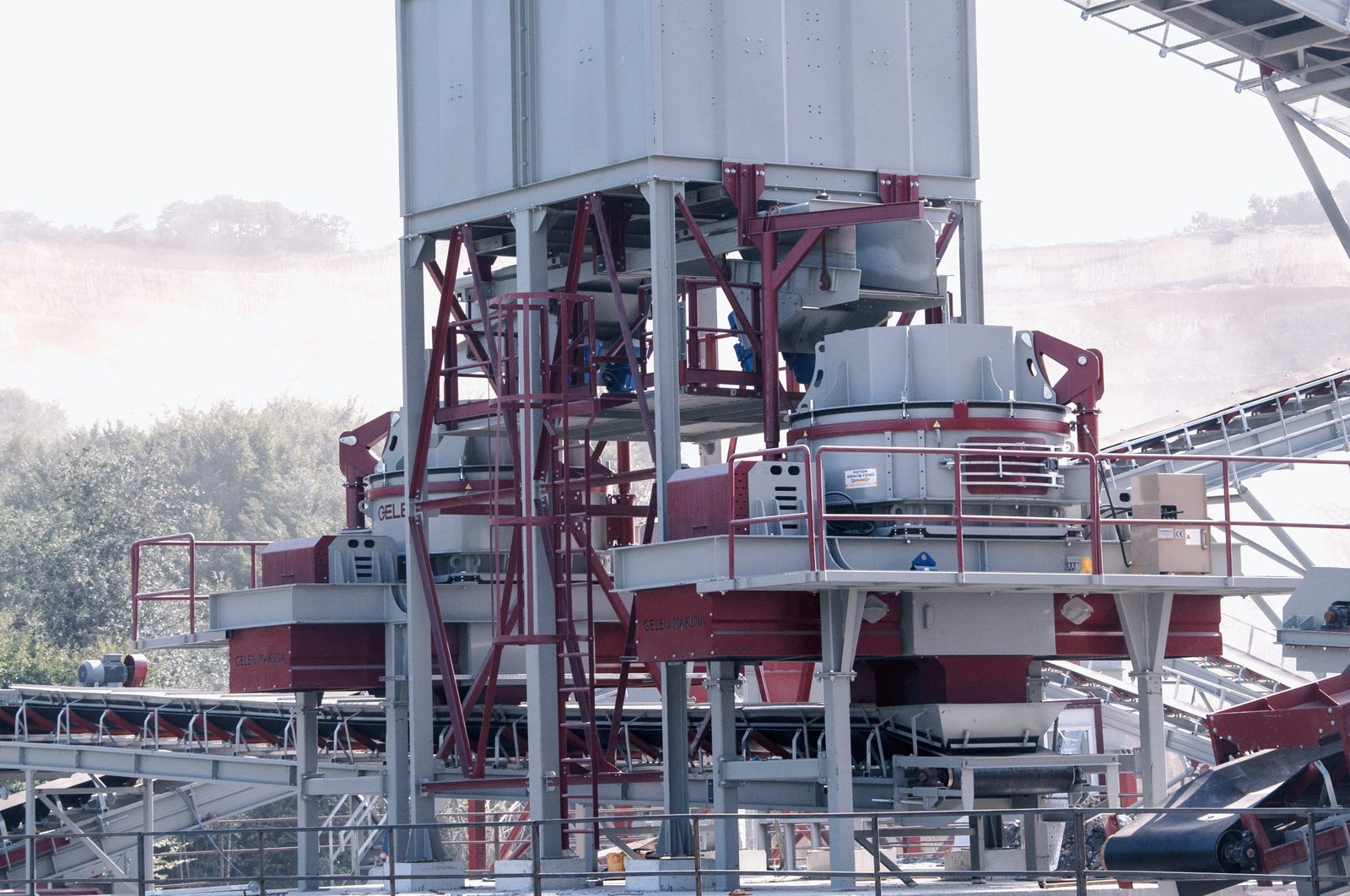
GELEN vertical shaft impact crusher on a steel structure below the feed silo 2 / 4
2 / 4
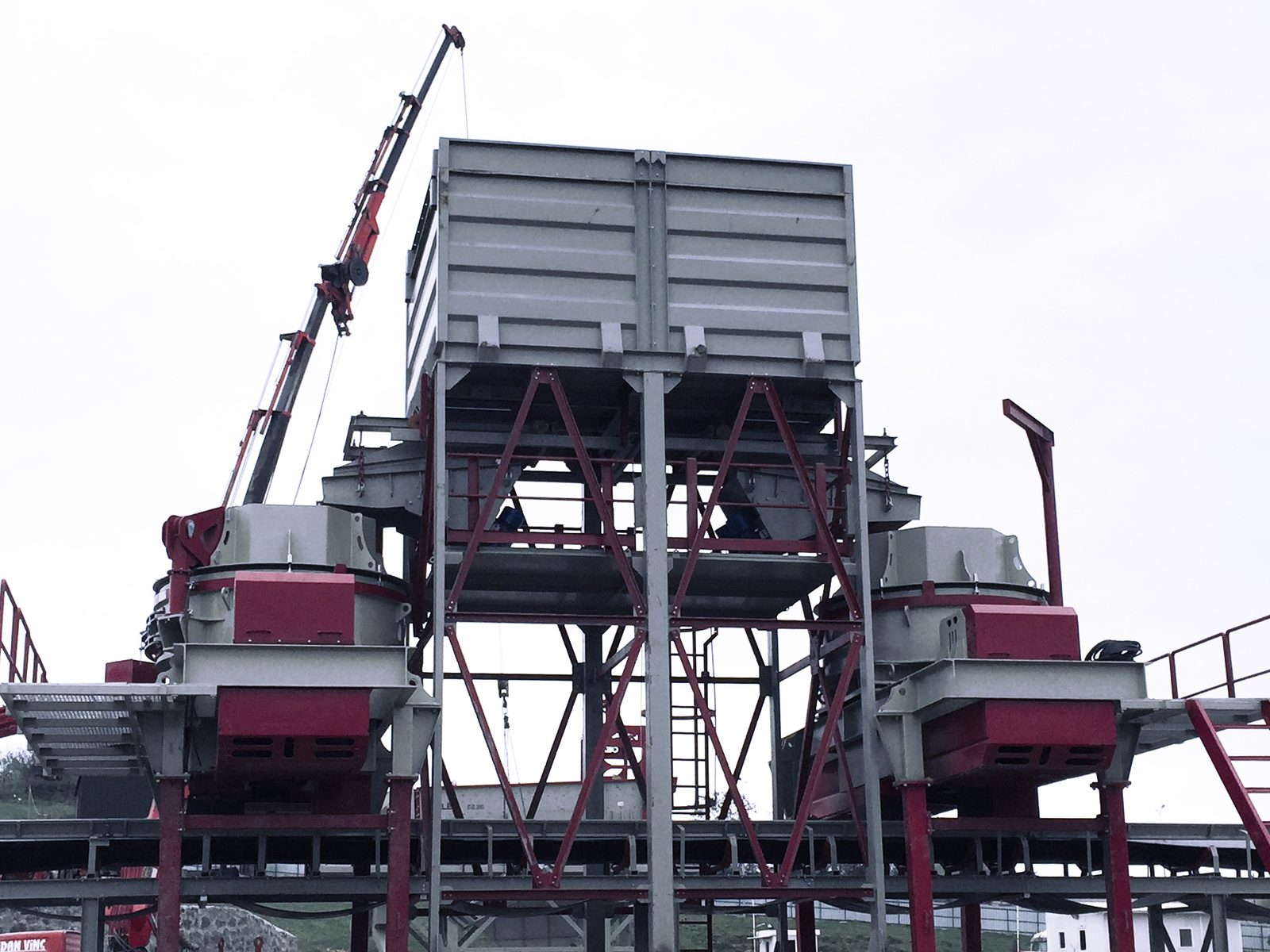
Two GELEN vertical shaft impact crushers under feed bins during plant installation 3 / 4
3 / 4
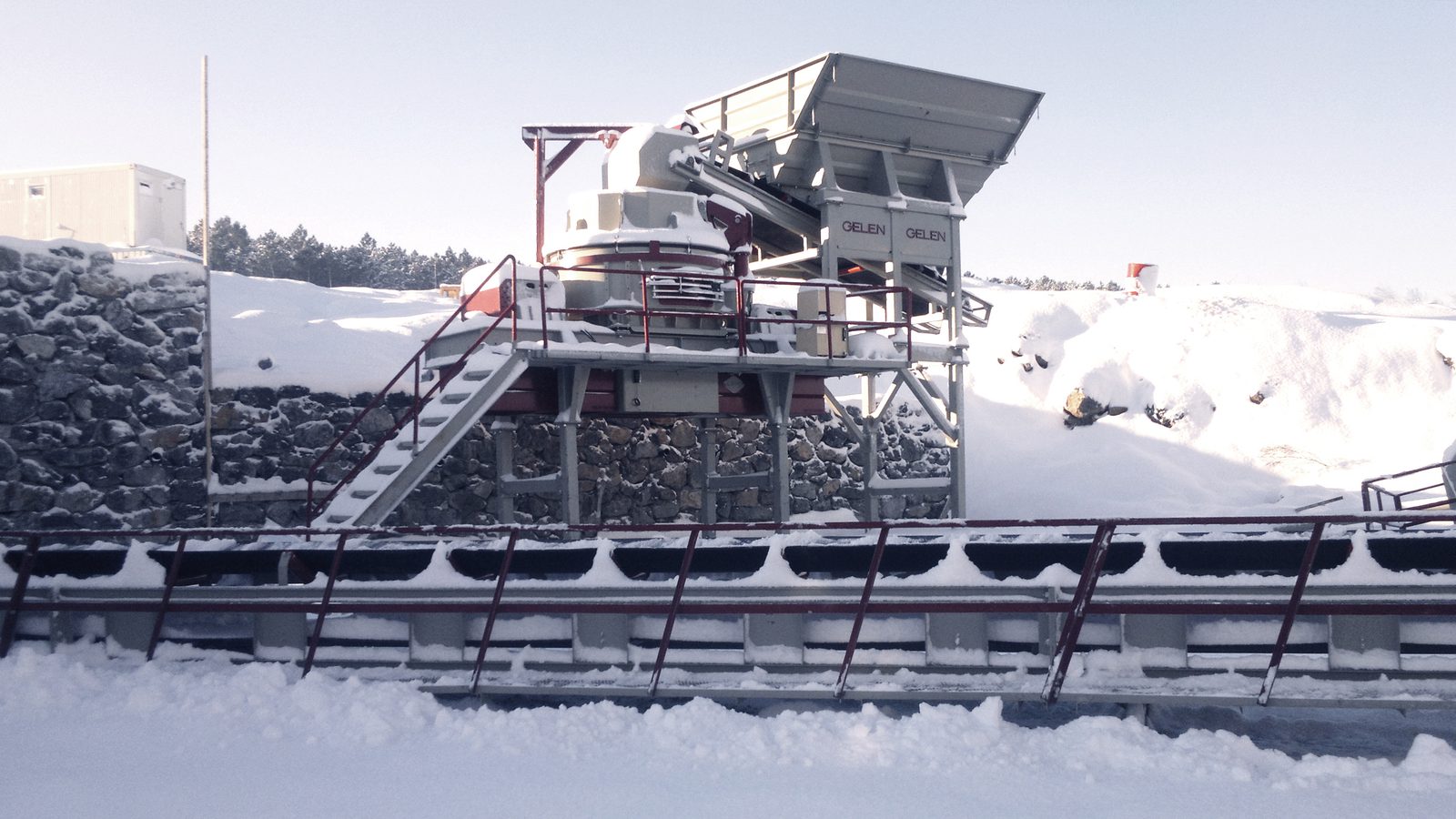
GELEN vertical shaft impact crusher with feed hopper at a quarry in winter 4 / 4
4 / 4
Mobile GELEN vertical shaft impact crusher plant on a semi-trailer with feed hopper
Documents
Downloads
PDFThe GELEN product catalogue carries the crushing range with the screening, feeding and washing equipment it works with. A VSI is configured around the feed and the product curve, so its data sheet is issued with the quotation.Download Catalogue
PDFThe product brochure covers this series on its own — eight pages with a cutaway of the working parts, the applications it is built for, and a capacity table for every model.Download Brochure
Industry Resources
Expand your knowledge with these technical guides and connect with the global crushing and aggregate community.
Vertical Shaft Impact (VSI) crushers are versatile machines primarily used in the third or fourth stage of crushing. They are ideal for processing abrasive, brittle, and moist materials, making them perfect for producing high-quality aggregates for concrete, asphalt, and base mixtures.
VSI crushers are also widely used in the production of mechanical sand, where a consistent and cubical product shape is required. Their ability to combine crushing and grinding processes in a single machine makes them a cost-effective solution for industries requiring precise particle sizing and high-quality end products.
The rock-on-rock crushing system in a VSI crusher is a unique feature that allows the material fed into the machine to crush itself. This is achieved by accelerating the material within the rotor and throwing it against a solid rock-lined chamber.
This self-impact mechanism minimizes wear on the machine's components, reduces maintenance costs, and ensures a consistent, high-quality output. The closed rotor design of GELEN VSI crushers enhances this process, making them highly efficient for producing well-graded, cubical aggregates and mechanical sand.
VSI crushers offer several advantages over traditional crushing technologies. They provide superior particle shape, making them ideal for producing high-quality aggregates and mechanical sand. The rock-on-rock crushing system reduces wear and tear, leading to lower maintenance costs and longer operational life.
Additionally, VSI crushers combine crushing and grinding processes in one machine, improving efficiency and reducing energy consumption. GELEN VSI crushers are designed to handle abrasive and moist materials, ensuring consistent performance even in challenging conditions. Their ability to produce a well-graded, cubical product makes them a preferred choice for concrete and asphalt production.
Optimizing the performance of a VSI crusher involves several key factors. First, ensure the feed material is evenly distributed and within the recommended size range to prevent blockages and uneven wear. Regularly inspect and maintain the rotor, anvils, and liners to ensure they are in good condition.
Adjusting the rotor speed and cascade ratio can help achieve the desired product shape and size. GELEN VSI crushers are designed with user-friendly controls and adjustable parameters, allowing operators to fine-tune the machine for optimal performance. Proper maintenance and timely replacement of wear parts are essential to maximize efficiency and extend the crusher's lifespan.
Closed rotor (CR) models — VSI700-CR, VSI800-CR and VSI900-CR — use the rock-on-rock crushing system: material accelerated by the rotor crushes itself against a rock-lined chamber. They accept feed up to 40–50 mm and deliver the best particle shape with the lowest wear part consumption, which makes them the first choice for sand production and final shaping.
The open rotor VSI900-OR accepts coarser feed up to 120 mm at slightly lower rotor speeds. It is chosen when upstream feed preparation is limited and a larger top size must go straight into the machine.
A horizontal shaft impact (HSI) crusher breaks rock with blow bars mounted on a horizontal rotor and is typically used in primary or secondary duty with much larger feed sizes. A VSI accelerates the material itself and uses impact against rock or anvils, which makes it a shaping and sand-making machine for the third or fourth stage.
In many plants the two work together: an HSI or cone crusher handles the reduction, and the VSI finishes the product. See the HSI vs VSI comparison guide for a full breakdown.
Yes — manufactured (mechanical) sand is one of the main applications of the VSI. The rock-on-rock chamber grinds as it crushes, producing well-graded sand with a consistent, cubical grain that concrete producers require.
Operators control the fines content and gradation by adjusting the rotor speed and the cascade ratio, so one machine can serve different sand specifications without changing wear parts.
GELEN closed rotor models accept feed up to 40 mm (VSI700-CR, VSI800-CR) or 50 mm (VSI900-CR); the open rotor VSI900-OR accepts up to 120 mm. Feed should be clean and consistent — screened, free of tramp metal, and within the recommended size range — to prevent blockages and uneven rotor wear.
1981
Manufacturing since
1,000+
Screens delivered
6
Continents served
1,000 t/h
Largest plant
Talk to a GELEN Engineer
Send your material, your capacity and the product sizes you need. An engineer answers, not a form.