
Clay-Bound Gravel & Stone
Removing clay balls, coatings and conglomerates from pit gravel and crushed stone that rinsing screens cannot clean.
- Breaks up clay and conglomerates
- Feed up to 100 mm on GLW models
- 25–175 t/h log washers

When clay, conglomerates and soft stone cling to gravel and crushed stone, rinsing alone will not clean it. GELEN log washers, blade mills and coarse material washers scrub the material with heavy paddles, blades or spirals in water, break up the clay and deliver a clean coarse product to the rinsing screen. Three series cover 25 to 600 t/h.
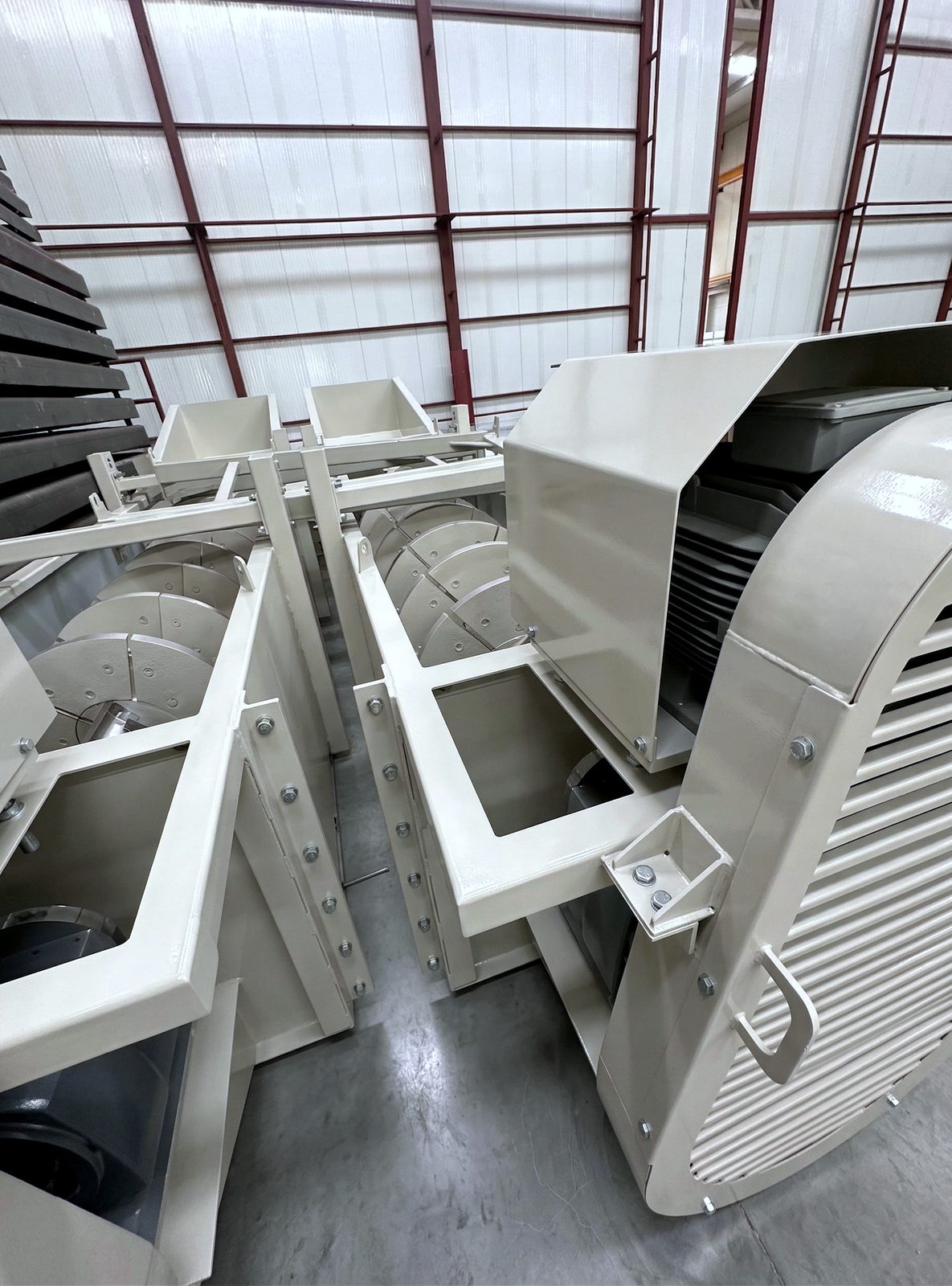
Scrubbing, not just rinsing: heavy paddle shafts tumble and grind material against material in the tub, breaking up clay balls and conglomerates that spray bars cannot remove.
A machine for each feed: log washers for the heaviest clay and largest stone, blade mills to condition cohesive feed into slurry, and coarse material washers for gravel with lighter contamination.
Heavy-duty drives: the drive gearboxes are sized for high-torque scrubbing, with log washer drives from 30 kW to 160 kW.
Published water demand: every model's water requirement is listed, so the water supply and rinsing screen can be sized with the washer.
The GLW log washer is the heavy scrubber of the washing range. Long shafts fitted with heavy paddles turn in an inclined tub. Material and water enter at the lower end; the paddles lift, tumble and grind the stone against itself as they push it up the tub, breaking up clay, conglomerates and soft stone. Clay and light debris float away with the water, and the scrubbed stone discharges at the upper end.
Five models range from 610 × 6,100 mm to 1,120 × 10,500 mm shafts, handling material up to 50–100 mm at 25 to 175 t/h. High-torque drives from 30 kW to 160 kW turn the shafts at 13 to 40 rpm, and the machines weigh from 9,200 kg to 23,100 kg.
| SIZE (DIA x LENGTH) mm | Weightkg | Max Material Sizemm | Max Capacityt/h | Est. Water Requiredm³/h | PowerkW | Speedrpm | |
|---|---|---|---|---|---|---|---|
| GLW2420 | 610 x 6100 | 9,200 | 50 | 25–60 | 68.2 | 30 | 20–40 |
| GLW3630 | 910 x 8650 | 17,500 | 75 | 50–125 | 113.4 | 90 | 16–32 |
| GLW3635 | 910 x 10500 | 20,200 | 75 | 50–125 | 113.4 | 110 | 16–32 |
| GLW4430 | 1120 x 8650 | 21,750 | 100 | 75–175 | 170.5 | 132 | 13–26 |
| GLW4435 | 1120 x 10500 | 23,100 | 100 | 75–175 | 170.5 | 160 | 13–26 |
Water requirement is the estimated volume for the maximum capacity.
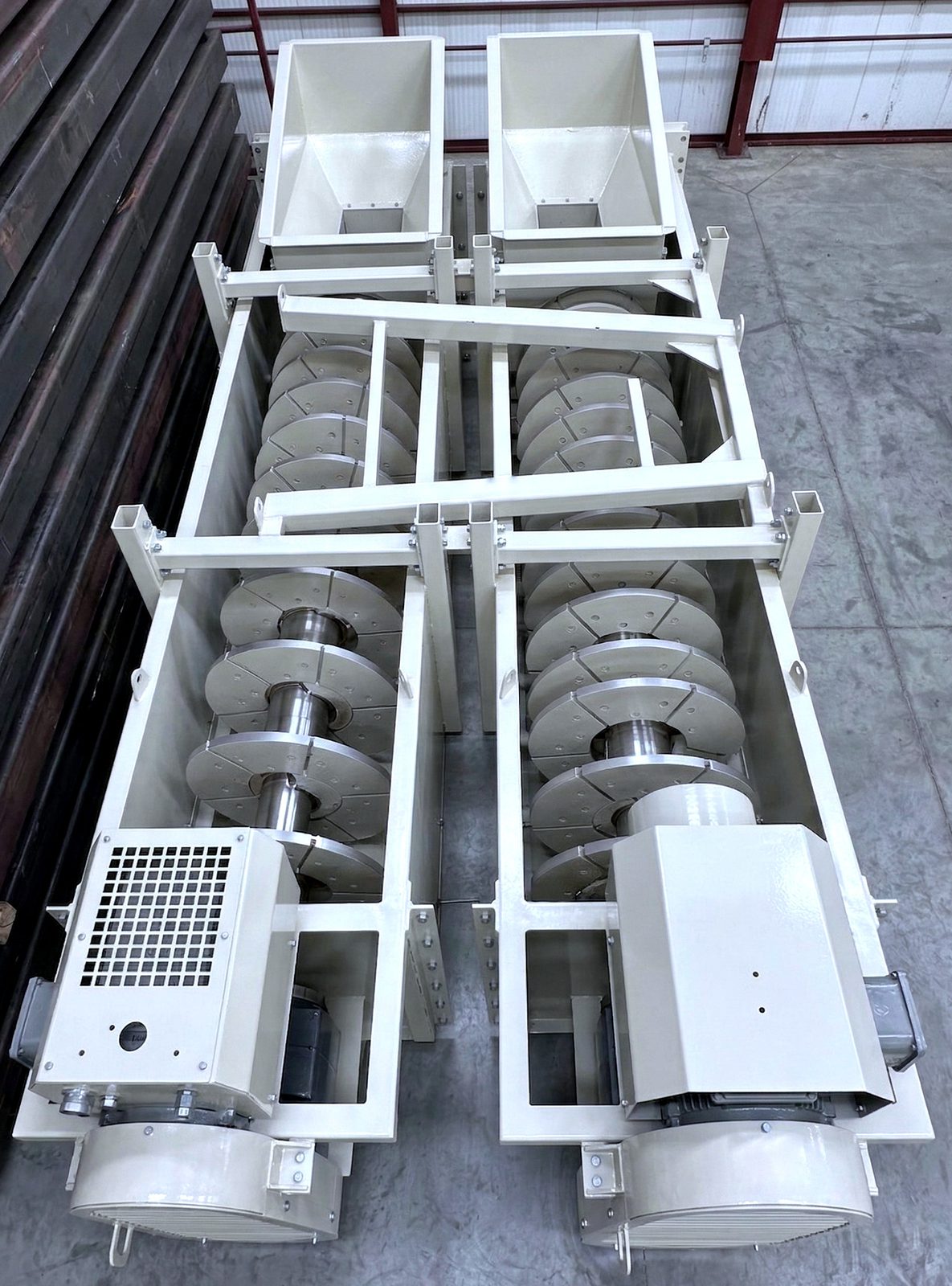
A blade mill conditions tough, cohesive feed before screening. Its blades cut and mix dry or sticky material with water in the trough and turn clays, mud and organic debris into a uniform slurry that the following screen can wash away. Conditioning the feed this way can improve screening efficiency by up to 15%.
GBM blade mills are built with 930 × 5,450 mm and 1,120 × 6,350 mm troughs, in single or twin versions, for 120 to 600 t/h and feed sizes up to 65–75 mm. A blade mill runs almost flat, at 0–5°, with no overflow weir, so all material and water leave at the discharge end; that is why it passes more tonnage than a coarse material washer of the same diameter and needs less water, about a third of the material weight. Abrasion-resistant components and easy access for maintenance keep downtime low.
| Trough Sizemm | Weightkg | Max. Feed Sizemm | Capacityt/h | Est. Water Requiredm³/h | Max PowerkW | Speedrpm | |
|---|---|---|---|---|---|---|---|
| GBM3618S | 930 X 5450 | 5,300 | 65 | 120–190 | 65 | 30 | 16–32 |
| GBM4420 | 1120 X 6350 | 7,500 | 75 | 180–300 | 100 | 37.5 | 13–26 |
| GBM3618T | 930 X 5450 | 8,600 | 65 | 240–380 | 125 | 2 X 30 | 16–32 |
| GBM4420T | 1120 X 6350 | 13,800 | 75 | 360–600 | 200 | 2 X 37 | 13–26 |
S = single, T = twin. Capacity and water are typical values for blade mills of these sizes; water is the estimated volume for the maximum capacity.
The GCW coarse material washer is a heavy spiral washer for gravel and crushed stone. Spiral flights turning in an inclined tub scrub the material and carry it up and out of the water, while clays, silts and lightweight contaminants such as wood and roots float away with the overflow.
Two sizes, 915 × 5,450 mm and 1,120 × 6,350 mm, are built as single (S) or twin (T) machines for 135 to 450 t/h and feed up to 65–75 mm. Heavy-duty gearboxes and corrosion-resistant components are built for long, continuous duty.
| Spiral Sizemm | Approximate Weightkg | Max. Feed Sizemm | Max Capacityt/h | Est. Water Requiredm³/h | Power RequiredkW | Speedrpm | |
|---|---|---|---|---|---|---|---|
| GCW3618S | 915 x 5450 | 6,200 | 65 | 135–155 | 136.2 | 22 | 16–32 |
| GCW4420S | 1120 x 6350 | 9,300 | 75 | 175–225 | 170.5 | 30 | 13–26 |
| GCW3618T | 915 x 5450 | 10,990 | 65 | 270–315 | 203.8 | 2 x 22 | 16–32 |
| GCW4420T | 1120 x 6350 | 16,350 | 75 | 360–450 | 249.4 | 2 x 30 | 13–26 |
S = single spiral, T = twin spiral. Water requirement is the estimated volume for the maximum capacity.
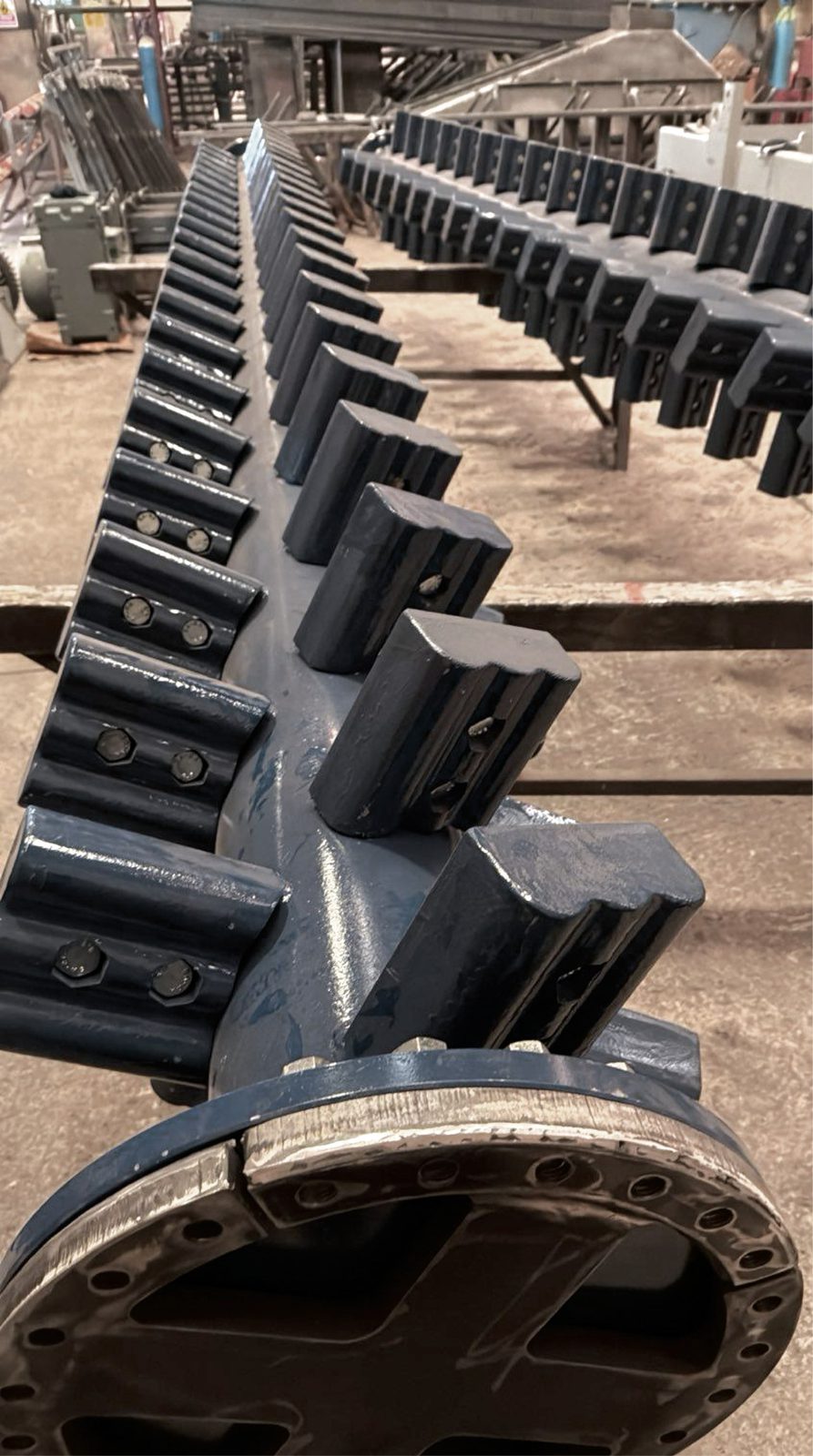
A GLW shaft out of the tub. This is the part that does the work, and the part you replace.
Bolted, not welded. Clay is removed by stone hitting stone, so these wear out by design — and they come off one at a time without lifting the shaft.
Two bolts per paddle through the hub. A worn set changes in a shift; a welded set means a torch, a fitter and a cold tub.
Each paddle sits a few degrees around from the last, so the shaft both scrubs and conveys. It is the reason a shaft moves the load along instead of just churning it.
One shaft carries every paddle load. The flange at the end is where it couples to the drive, outside the water.
The GLW, GBM and GCW series cover scrubbing and coarse washing duties from 25 to 600 t/h. Log washers take the largest and most clay-bound material (up to 100 mm); blade mills and coarse material washers take feed up to 65–75 mm at higher tonnages. Water requirements run from about 65 m³/h on the smallest blade mill to about 249 m³/h on the twin 1,120 × 6,350 mm coarse material washer. Tell us about your clay content, feed size and tonnage, and GELEN engineering will recommend the right machine.
Every log washer is built to its duty. Send those numbers and an engineer comes back with a size, a drive and what it will do in your circuit.
Size one for meLog washers clean by attrition: stone rubbing against stone in water, driven by heavy paddles.
Clay-bound gravel or crushed stone enters the lower end of the inclined tub together with the process water.
The paddle shafts tumble and grind the material against itself, breaking up clay balls and conglomerates.
Loosened clay, silt and light debris such as wood and roots are carried away with the overflow water.
The paddles push the scrubbed stone up the tub to the discharge, usually onto a rinsing screen with spray bars.
GELEN scrubbing and coarse washing equipment works in aggregate, mining and recycling plants where clay and debris spoil the product.
Removing clay balls, coatings and conglomerates from pit gravel and crushed stone that rinsing screens cannot clean.

Scrubbing ore and industrial minerals to liberate clay and slimes before screening, classification or further processing.

Washing construction and demolition waste to strip soil, clay and floating debris such as wood from recycled aggregate.

Conditioning dry or sticky feed in a blade mill so clays and mud become slurry and wash away on the screen.
What the GLW, GBM and GCW series bring to a washing plant.
Log washers for heavy clay and large stone, blade mills for sticky feed, coarse material washers for gravel with lighter contamination.
GLW log washers scrub with long, heavy paddle shafts that grind material against material for thorough cleaning, with replaceable paddles.
Drives from 30 kW to 160 kW on the log washers, turning slowly at 13 to 40 rpm, deliver scrubbing torque without high wear speeds.
Blade mills and coarse material washers come in single and twin versions, so capacity can be matched from 120 to 600 t/h.
Every model's water requirement is listed, so pumps, pipework and rinsing screens are sized with the washer.
GELEN supplies the feeders, rinsing screens, screw classifiers and sand washing plants that work around the log washer.
Log washers and coarse material washers sit between the feed and the rinsing screen. The sand fraction washed off the screen then goes to a screw classifier or a sand washing plant.
Every circuit is different. Send us yours and we will say where a log washer fits and what it changes downstream.
Check my circuitAll three clean coarse material in water. They differ in how hard they scrub and the feed they suit.
| Log Washer (GLW) | Blade Mill (GBM) | Coarse Material Washer (GCW) | |
|---|---|---|---|
| Action | Paddle shafts scrub material against material | Blades cut and mix feed into slurry | Spiral flights scrub and convey |
| Best for | Heavy clay and conglomerates | Dry, sticky or cohesive feed before screening | Gravel with clay coatings and light debris |
| Max feed size | 50–100 mm | 65–75 mm | 65–75 mm |
| Capacity | 25–175 t/h | 120–600 t/h | 135–450 t/h |
| Drive power | 30–160 kW | 30 kW to 2 × 37 kW | 22 kW to 2 × 30 kW |
Not sure which one? Send us the duty and an engineer will say which, and what you would give up by choosing the other.
Which one fits?Technical guides and industry organisations for aggregate producers.
A log washer is a heavy-duty scrubbing machine for clay-bound gravel and crushed stone. Long shafts fitted with paddles turn in an inclined tub full of material and water. The paddles tumble the stone and grind it against itself, breaking up clay balls, coatings and conglomerates, while pushing the material up to the discharge.
Clay, silt and floating debris leave with the overflow water. The scrubbed stone is then rinsed clean on a screen with spray bars. GELEN GLW log washers cover 25 to 175 t/h with material up to 50–100 mm.
A rinsing screen with spray bars washes off loose dirt and fines. It cannot break clay balls or clay that is stuck to the stone. When clay content is high, or the clay is plastic and sticky, the material needs attrition scrubbing first — which is what a log washer does. The rinsing screen then follows the log washer to wash the loosened clay away.
A log washer scrubs hardest, with heavy paddle shafts grinding material against material; it suits heavy clay and conglomerates. A blade mill cuts and mixes dry or sticky feed with water to turn clays and mud into slurry before screening. A coarse material washer uses spiral flights to scrub and convey gravel with lighter clay coatings and to float off wood and roots.
GELEN builds all three: GLW log washers, GBM blade mills and GCW coarse material washers.
GLW log washers handle 25–175 t/h with maximum material sizes of 50 mm (GLW2420), 75 mm (GLW3630 and GLW3635) and 100 mm (GLW4430 and GLW4435). GBM blade mills handle 120–600 t/h and GCW coarse material washers 135–450 t/h, both with feed up to 65–75 mm, in single and twin versions.
The estimated water requirement at maximum capacity is about 68 m³/h on the GLW2420, 113 m³/h on the GLW3630 and GLW3635, and 171 m³/h on the GLW4430 and GLW4435. GBM blade mills need about 65–200 m³/h and GCW coarse material washers about 136–249 m³/h, depending on size and version. The rinsing screen after the washer needs additional spray water.
Yes. Construction and demolition waste often carries soil, clay and light contaminants such as wood. Scrubbing in a log washer or coarse material washer loosens the soil and floats the light material away, and the following screen rinses the product, producing a cleaner recycled aggregate.
The paddle tips, the tub liners and the shaft seals and bearings carry the load. Paddles on GELEN log washer shafts are replaceable, so worn tips can be changed without replacing the shaft. Inspecting paddle wear and drive condition on a regular schedule keeps scrubbing performance consistent, because worn tips reduce cleaning before they reduce capacity.
A log washer, blade mill or coarse material washer sits after the feeder and before the rinsing screen. It scrubs the clay loose, the rinsing screen washes it off with spray bars and sizes the stone, and the muddy water and sand go on to a screw classifier or a sand washing plant. Placing the scrubber first means the screen and the sand line receive material that is already free of clay balls.
Send your material, your capacity and the product sizes you need. An engineer answers, not a form.