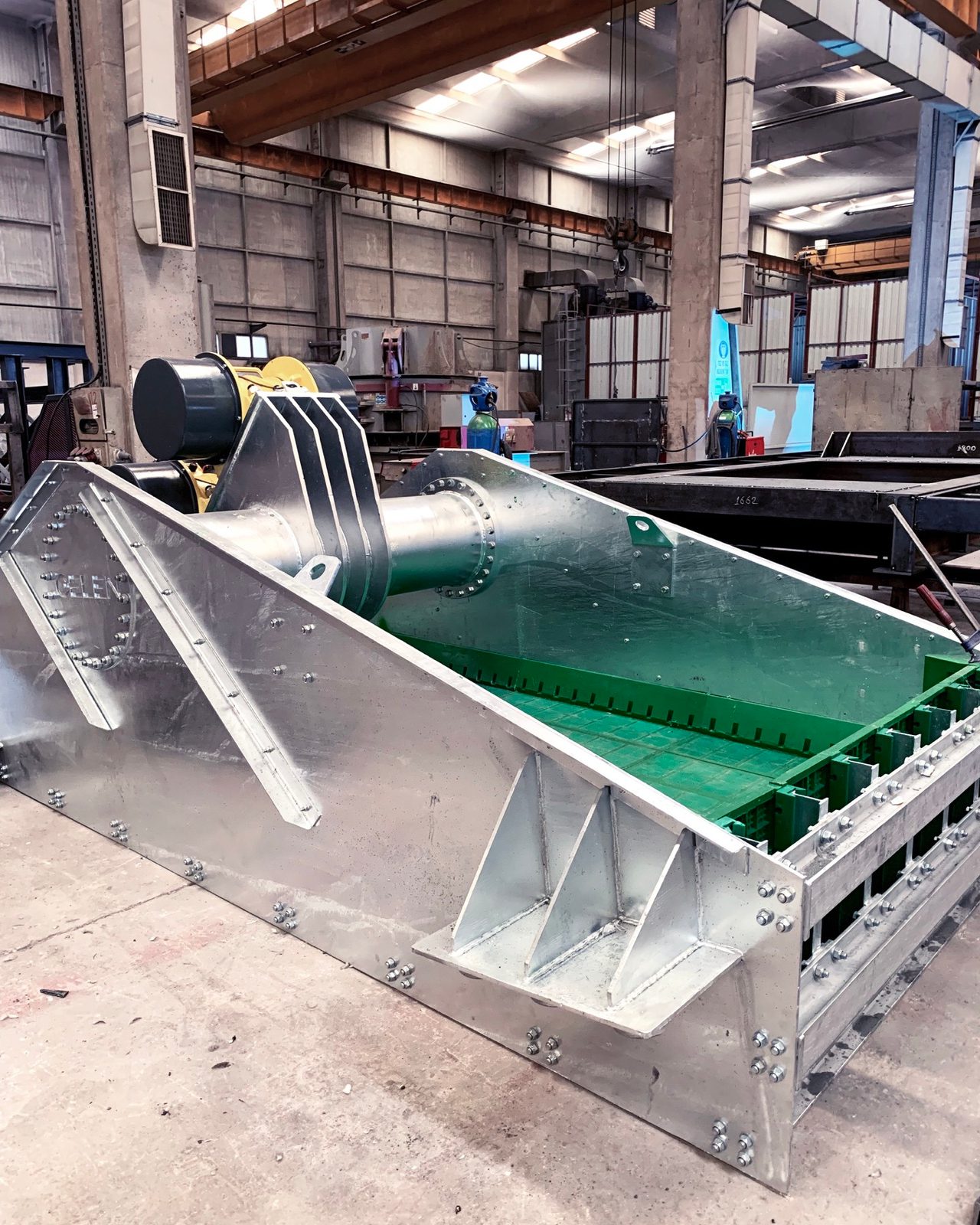
When to Choose Wet Screening
- Material moisture >8%
- Clay content >5%
- Required cut size <5mm
- Product washing needed to meet specifications
Spray Bar Configuration
Nozzle Placement
- 45° angle pushing material down the deck surface.
- 300-450mm spacing between nozzles for overlapping spray fields.
- Full deck coverage is essential — dry spots cause instant blinding.
Water Pressure Guidelines
| Material Type | Pressure (bar) | Flow Rate (m³/h) |
|---|---|---|
| Sand washing | 2-3 | 15-25 |
| Coal cleaning | 3-4 | 20-30 |
| Aggregate washing | 2.5-3.5 | 18-28 |
| Clay removal | 4-5 | 25-35 |
Step-by-Step Commissioning
- Start screen (no feed).
- Verify amplitude symmetry.
- Start water spray and verify full coverage.
- Ramp feed to 50% capacity.
- Check underflow clarity.
- Adjust ellipse angle if material stalls.
- Increase to 100% capacity.
- Final optimization of bed depth and water volume.
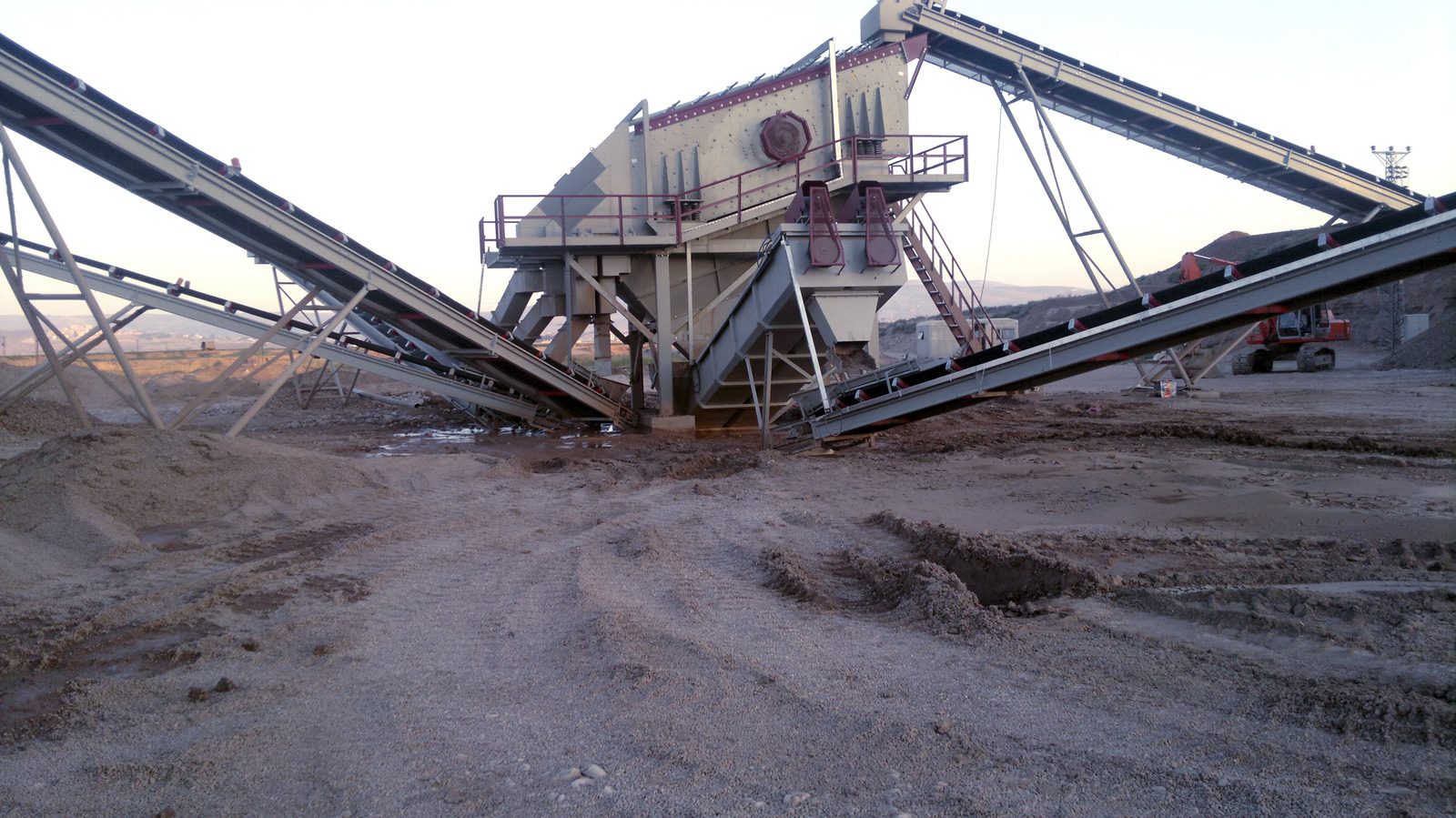
Preventing Common Wet Screening Problems
Blinding Prevention
- Install anti-blinding balls below the mesh.
- Switch from wire to polyurethane panels.
- Maintain optimal water pressure — too little causes packing, too much causes flooding.
Carry-Over Reduction
- Ensure bed depth never exceeds 3x aperture size.
- Adjust the ellipse angle to slow material flow and increase retention time.
- Optimize the feed rate to prevent surging.
Drainage Optimization
- Set deck slope appropriately (0-5°).
- Ensure drain hole sizing can handle the volume of slurry.
- Optimize slurry collection chute design to prevent backing up.