
Wet & Sticky Material
Scalping clay-rich, wet quarry and pit material that would blind a vibrating grizzly.
- Rotating bars resist blinding
- Mud and clay removed before crushing
- Steady feed in wet seasons

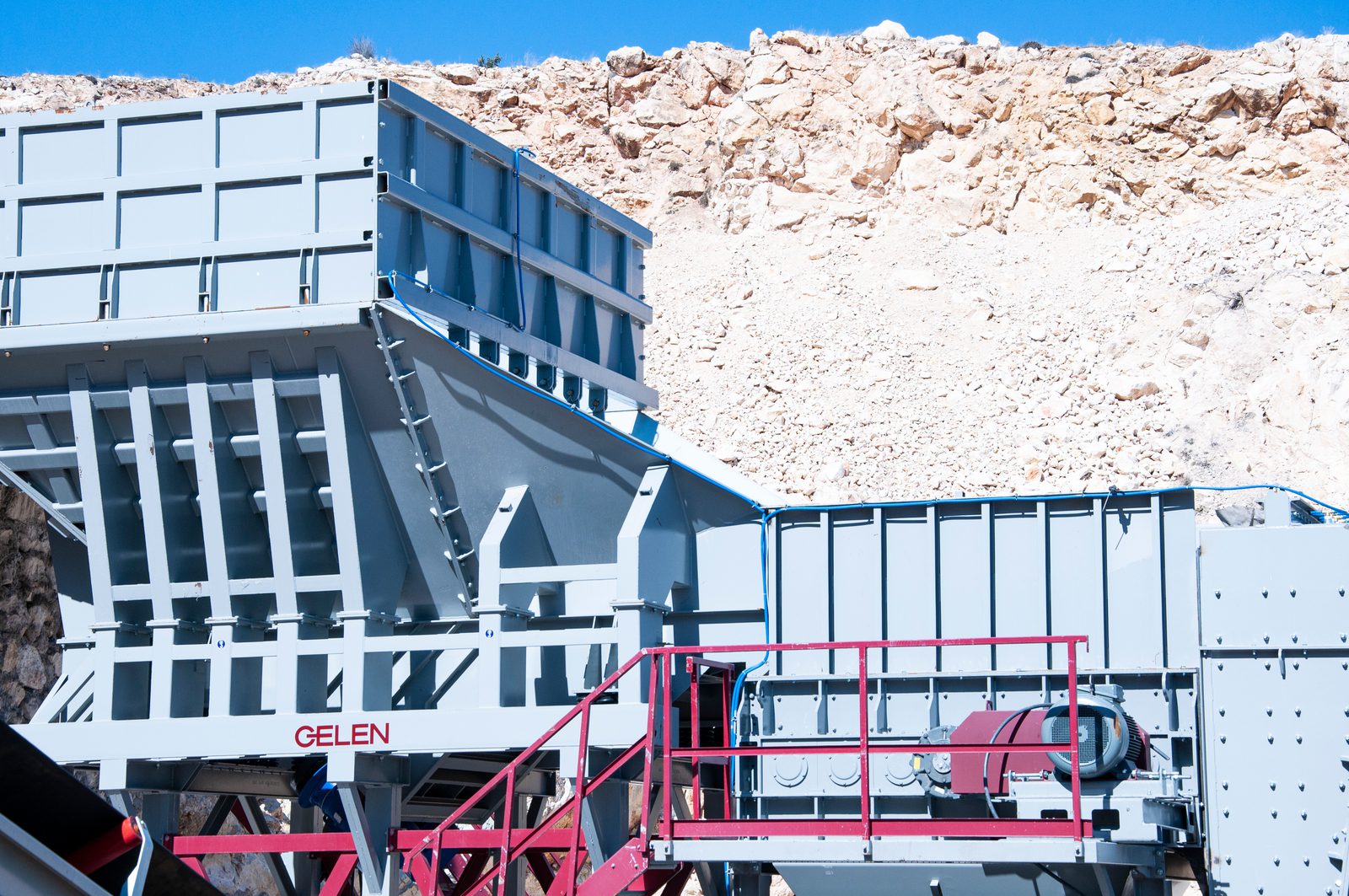
When clay and mud blind a conventional grizzly, a wobbler feeder keeps working. GELEN WB wobbler feeders feed oversized material at a controlled rate and scalp out fines, mud and dirt through the gaps between rotating elliptical bars, which roll the material forward and keep the gaps open. Two models, 1,400 and 1,600 mm wide, suit primary stations in aggregate, mining and recycling plants.
Elliptical bars 90° apart: each bar sits a quarter turn from the next, so as they rotate one tip is up while the next is flat, lifting and rolling the material along the deck.
Gaps that stay open: all bars turn at the same speed and the gaps between them stay constant, so mud and fines fall through instead of plugging the deck.
One machine, two jobs: the wobbler feeds the primary crusher and removes fines, mud and dirt at the same time.
Wide decks: 1,400 and 1,600 mm wide models take the large, mixed feed typical of pits and clay-bound quarries.
WB wobbler feeders feed oversized material at a controlled rate while scalping out the fines. The deck is made of elliptical bars mounted 90 degrees apart: when one bar tip is vertical, the next is horizontal. All bars rotate at the same speed, which moves the loaded material along the deck and separates fines, mud and dirt through the constant gaps between the bars.
Because the bars keep turning, sticky material is continually rolled and broken up rather than resting on a static grizzly, so the gaps stay open. The WB1430 has a 1,400 × 3,000 mm deck and the WB1630 a 1,600 × 3,000 mm deck, both driven by 37 kW.
| Widthmm | Lengthmm | PowerkW | Theoretical Capacityt/h | |
|---|---|---|---|---|
| WB1630 | 1,600 | 3,000 | 37 | 330–520 |
| WB1430 | 1,400 | 3,000 | 37 | 290–450 |
Theoretical capacity is calculated for material with a bulk density of 1.6 t/m³ and calibrated against published wobbler feeders of the same widths. Actual capacity depends on the material, its moisture and clay content, and the lump size.
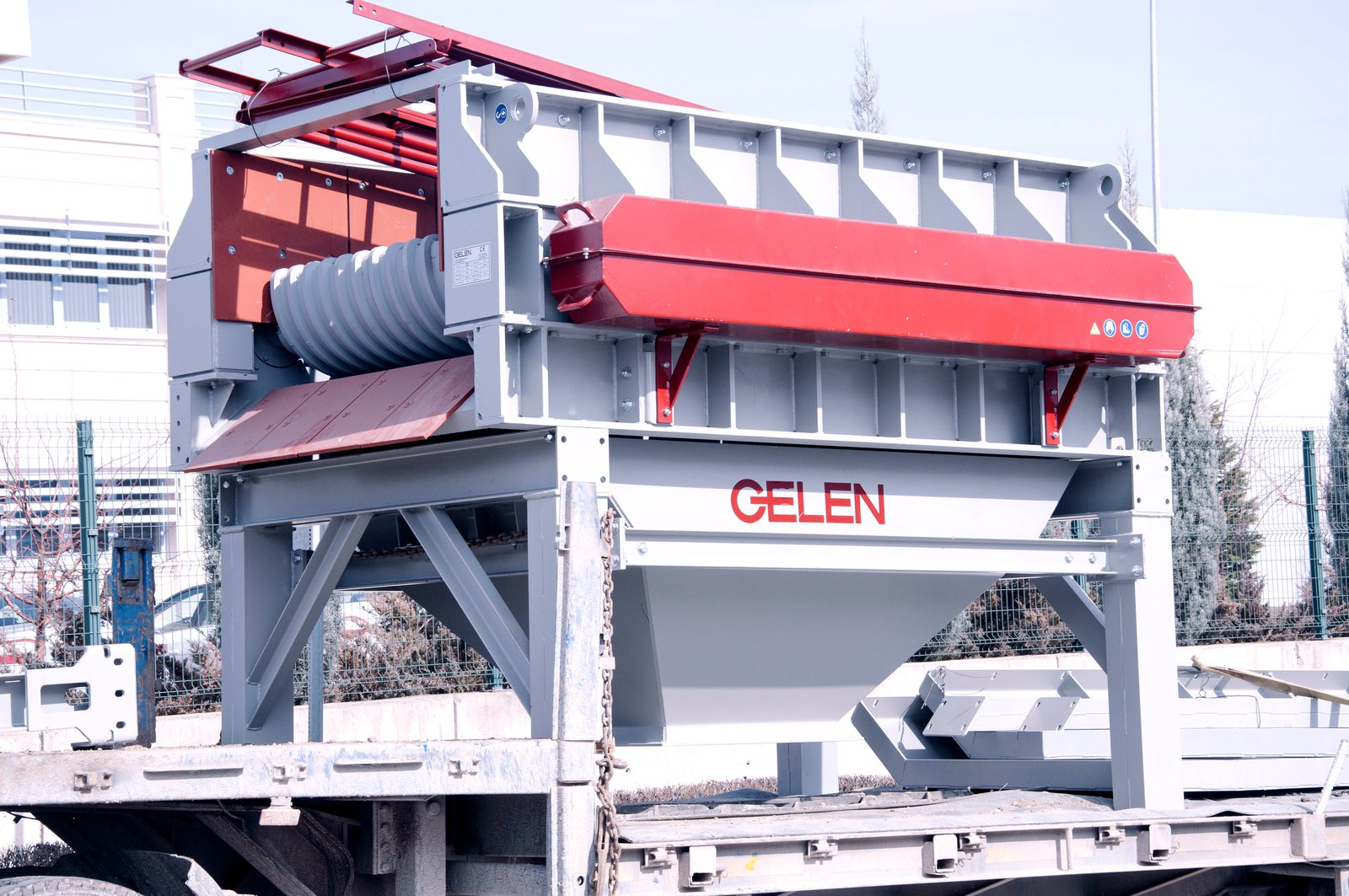
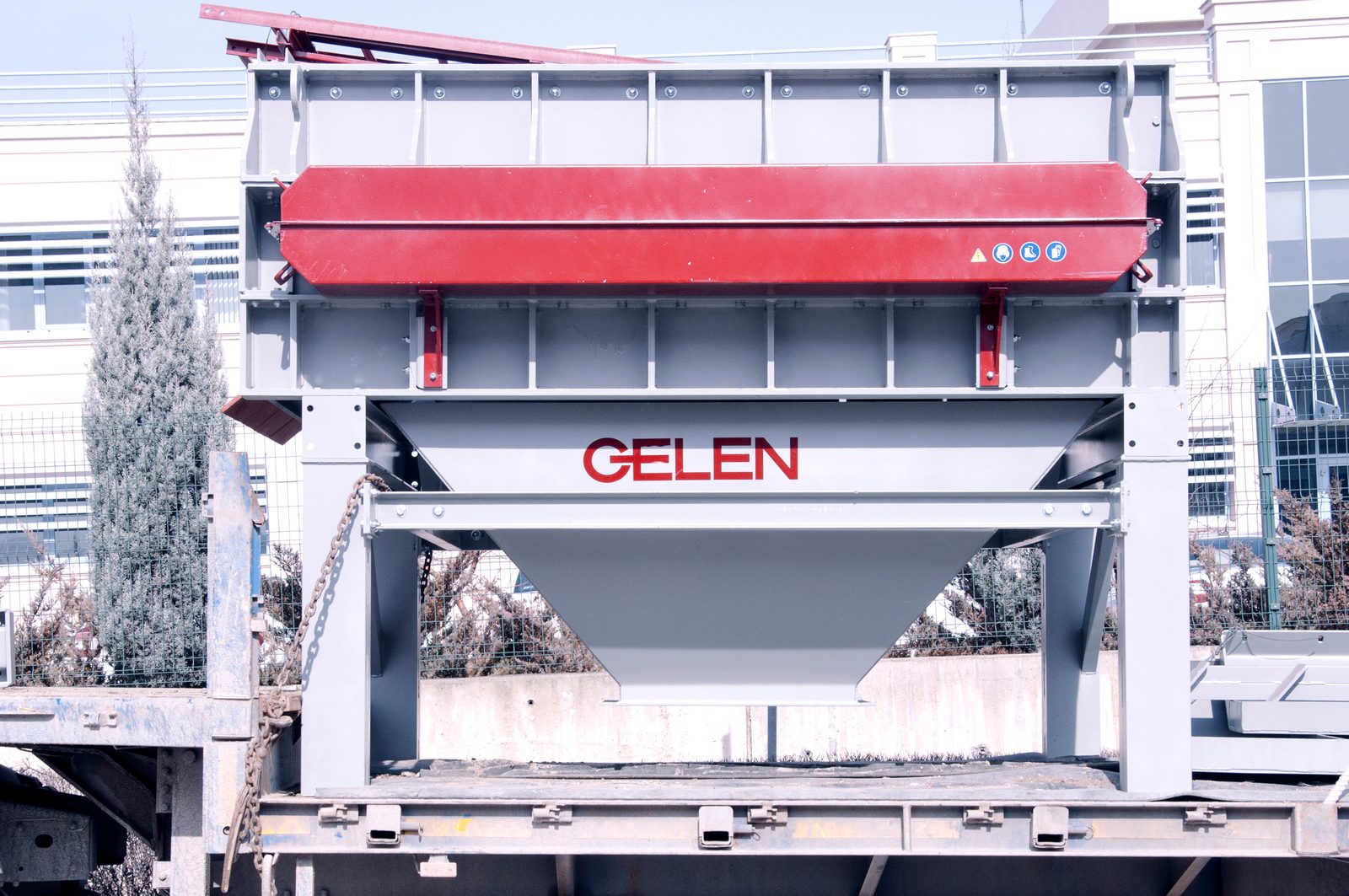
A WB wobbler head-on, with the drive under its guard. Four things worth naming.
Where the loader or the hopper delivers. The box is deliberately wide so material spreads across every bar rather than loading two of them.
Under it, a row of elliptical bars mounted 90 degrees apart: when one bar tip is vertical, the next is horizontal. Every bar turns at the same speed, so the gaps stay constant while the whole deck rocks the load forward — which is what keeps clay moving instead of bridging across it.
Undersize drops straight through the gaps between the bars and leaves here, ahead of the crusher rather than through it.
Bolted, not welded, to the plant steel. A wobbler is usually retrofitted into an existing scalping position, and it has to come out the same way.
WB wobbler feeders are built with 1,400 × 3,000 mm (WB1430) and 1,600 × 3,000 mm (WB1630) decks, each driven by 37 kW. Tell us about the material, its clay and moisture content, the largest lump size and the crusher you are feeding, and GELEN engineering will confirm the model and the bar spacing.
Every wobbler is built to its duty. Send those numbers and an engineer comes back with a size, a drive and what it will do in your circuit.
Size one for meA wobbler feeder replaces the static bars of a grizzly with bars that turn, so the deck keeps itself clear.
Material from the dump hopper lands on a deck of elliptical bars set 90° apart.
All bars rotate at the same speed; their alternating tips lift and roll the material toward the discharge.
Fines, mud and dirt fall through the constant gaps between the bars as the material tumbles.
Oversize leaves the end of the deck into the primary crusher; the fines go to a conveyor or stockpile.
GELEN wobbler feeders handle the difficult feed of aggregate, mining and recycling plants.
Scalping clay-rich, wet quarry and pit material that would blind a vibrating grizzly.

Feeding primary crushers at quarries with clay seams and overburden in the blasted rock.

Scalping sticky ore and removing fines ahead of primary crushing in mineral processing plants.

Separating soil and fines from demolition debris before it reaches the recycling crusher.
What the WB series brings to a primary station.
Rotating elliptical bars keep rolling the material, so wet and sticky feed does not plug the gaps.
All bars turn at the same speed and keep a constant gap, giving a consistent separation of fines, mud and dirt.
The wobbler meters oversize to the crusher and removes fines at the same time, without a separate scalping screen.
1,400 and 1,600 mm widths accept large, mixed feed from dump hoppers.
Removing clay and fines before crushing frees crusher capacity and reduces packing and wear.
GELEN sizes the hopper, wobbler, crusher and fines conveyor of the primary station together.
The wobbler feeder sits under the dump hopper, in front of the primary crusher, and sends the fines it removes to a separate conveyor or stockpile.
Every circuit is different. Send us yours and we will say where a wobbler fits and what it changes downstream.
Check my circuitBoth feed the primary crusher and remove fines. The material decides which works better.
| Wobbler Feeder (WB) | Vibrating Grizzly Feeder (BE) | |
|---|---|---|
| Best for | Wet, sticky, clay-rich material | Dry, free-flowing rock |
| Deck | Rotating elliptical bars | Static grizzly bars on a vibrating pan |
| Blinding | Bars keep rolling and clearing the gaps | Sticky material can blind the bars |
| Theoretical capacity | 290–520 t/h | 380–770 t/h |
See vibrating feeders and grizzly feed screens.
Not sure which one? Send us the duty and an engineer will say which, and what you would give up by choosing the other.
Which one fits?Technical guides and industry organisations for crushing plant operators.
A wobbler feeder is a primary feeder whose deck is made of rotating elliptical bars instead of a vibrating pan or static grizzly. The bars roll the material toward the crusher at a controlled rate while fines, mud and dirt fall through the gaps between them. It is the feeder of choice for wet, sticky and clay-rich material.
On GELEN WB wobbler feeders the elliptical bars are mounted 90 degrees apart, so when one bar tip is vertical the next is horizontal. All bars rotate at the same speed. Their alternating tips lift and roll the material forward, and the constant gaps between the bars let fines, mud and dirt fall through while the oversize travels on to the crusher.
Use a wobbler feeder when the feed is wet, sticky or clay-rich and blinds the bars of a vibrating grizzly. With dry, free-flowing rock a vibrating grizzly feeder is simpler and offers higher throughput for the same width.
Yes. That is what it is built for. The rotating bars keep rolling and breaking up sticky material, so the gaps stay open and mud and fines are separated even in wet conditions where a static grizzly would blind.
Calculated at a bulk density of 1.6 t/m³ and calibrated against published wobbler feeders of the same width, the WB1430 handles about 290–450 t/h and the WB1630 about 330–520 t/h. Actual capacity depends on moisture, clay content and lump size, so GELEN confirms the model for each application.
The name describes the motion of the deck: the elliptical bars turn out of phase with each other, so the material on top rises and falls — it "wobbles" — as it is carried forward. That tumbling action is what separates fines and keeps sticky material moving.
Inspect and replace worn elliptical bars, check the bar spacing, and keep the drive, gearing and bearings in good condition and lubricated as specified. Worn bar tips widen the gaps, which changes how much material bypasses the crusher, so regular inspection keeps the separation consistent.
Send your material, your capacity and the product sizes you need. An engineer answers, not a form.