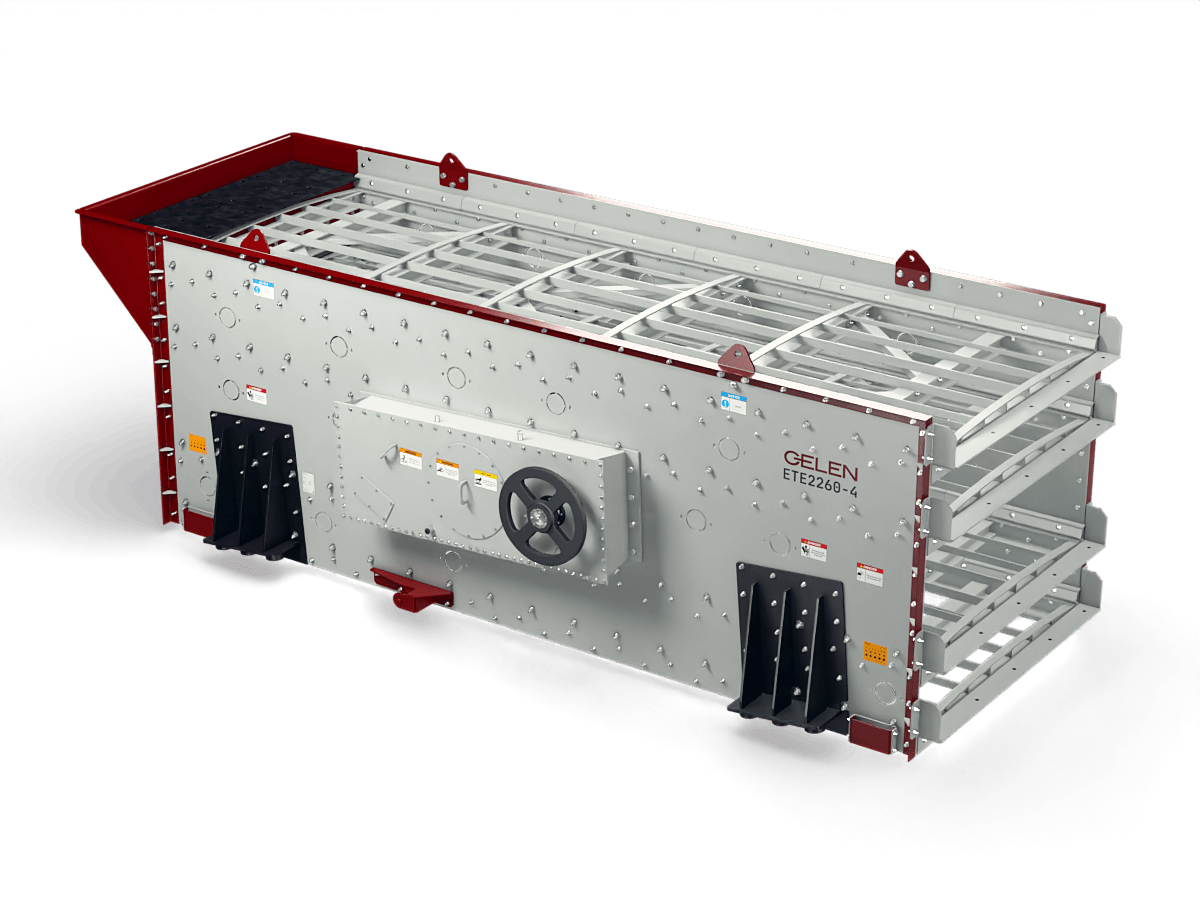
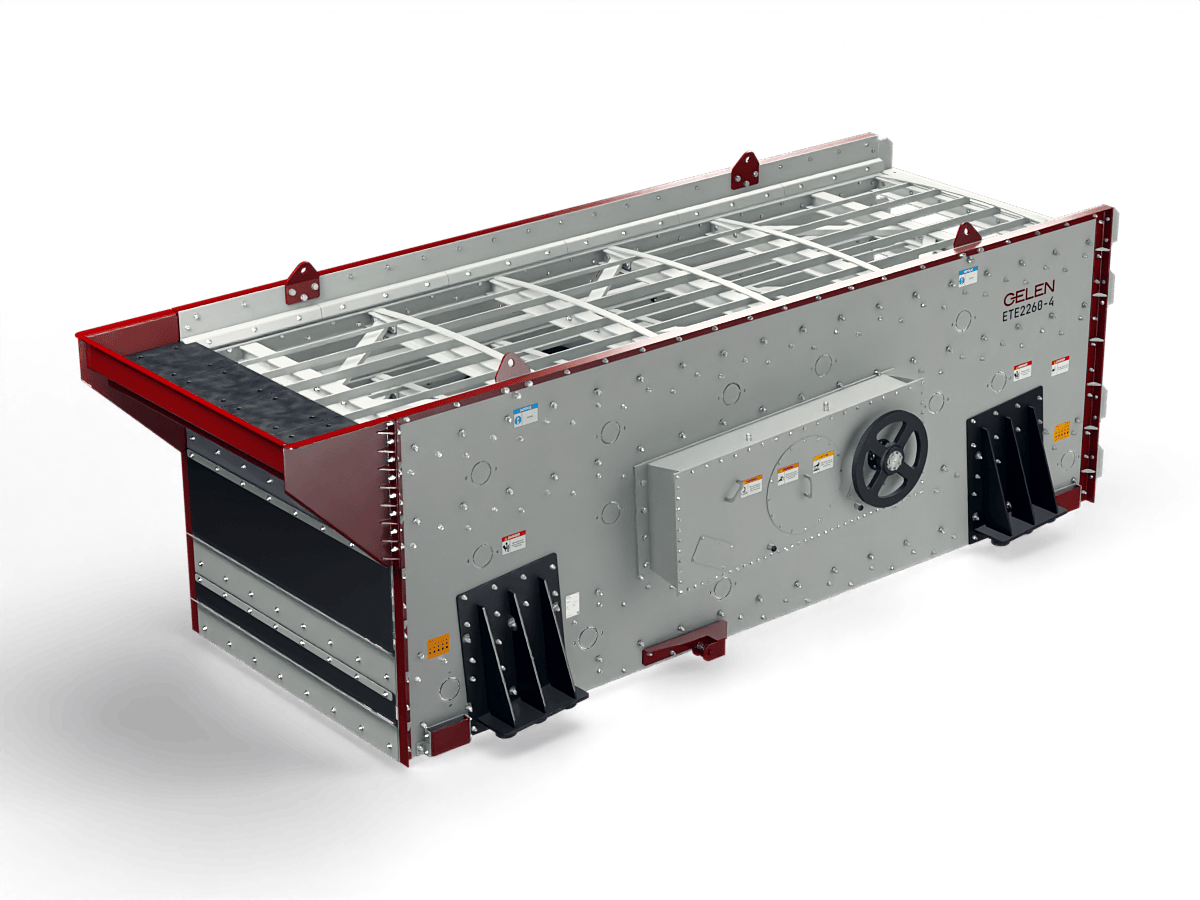
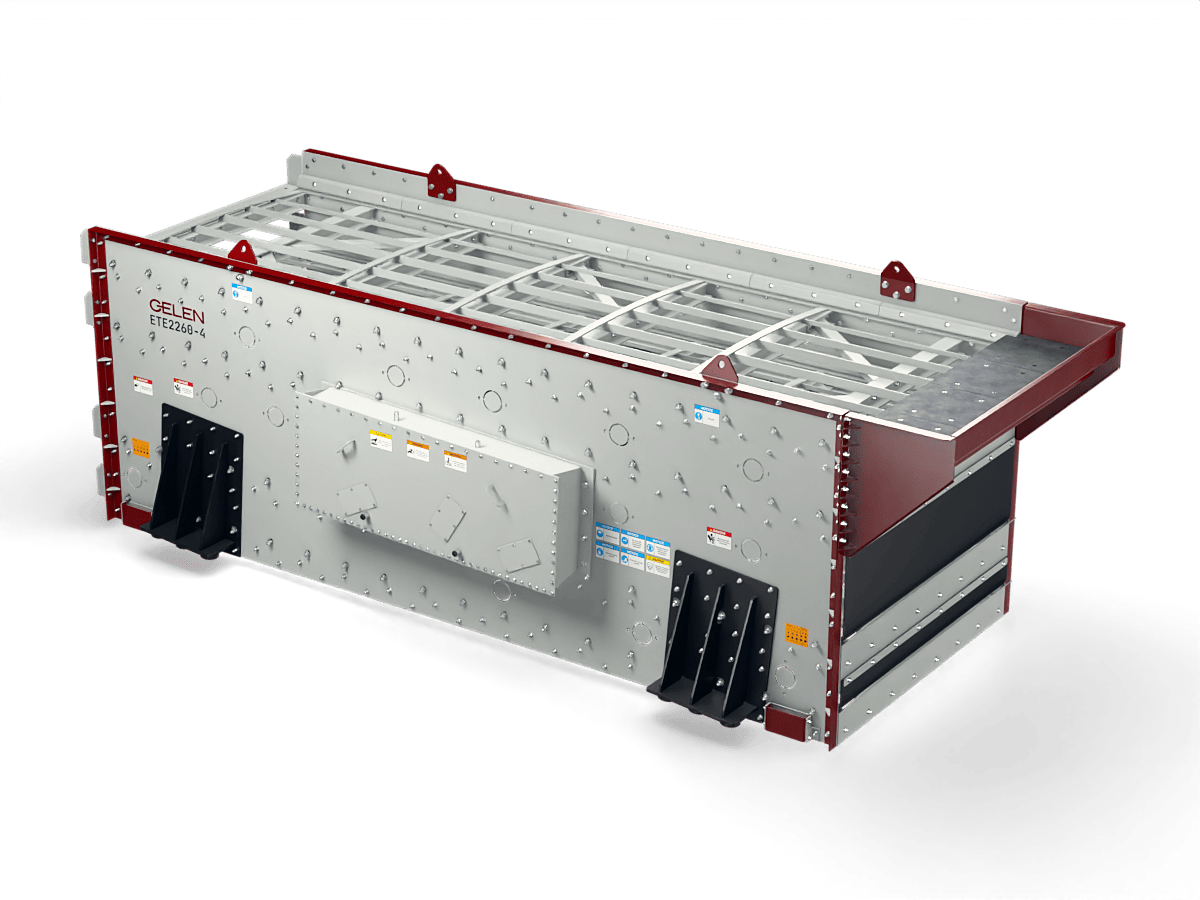
ETE Series Horizontal Screens for Wet and Fine Screening of Sticky Feed
ETE Series horizontal screens use a triple-shaft elliptical motion that keeps sticky, wet, or flaky material moving. Operators can tune the ellipse shape and angle for rapid scalping or precise fine screening, all in a low-profile package for mobile and retrofit plants.
500+ Horizontal Screens sold worldwide and still counting.
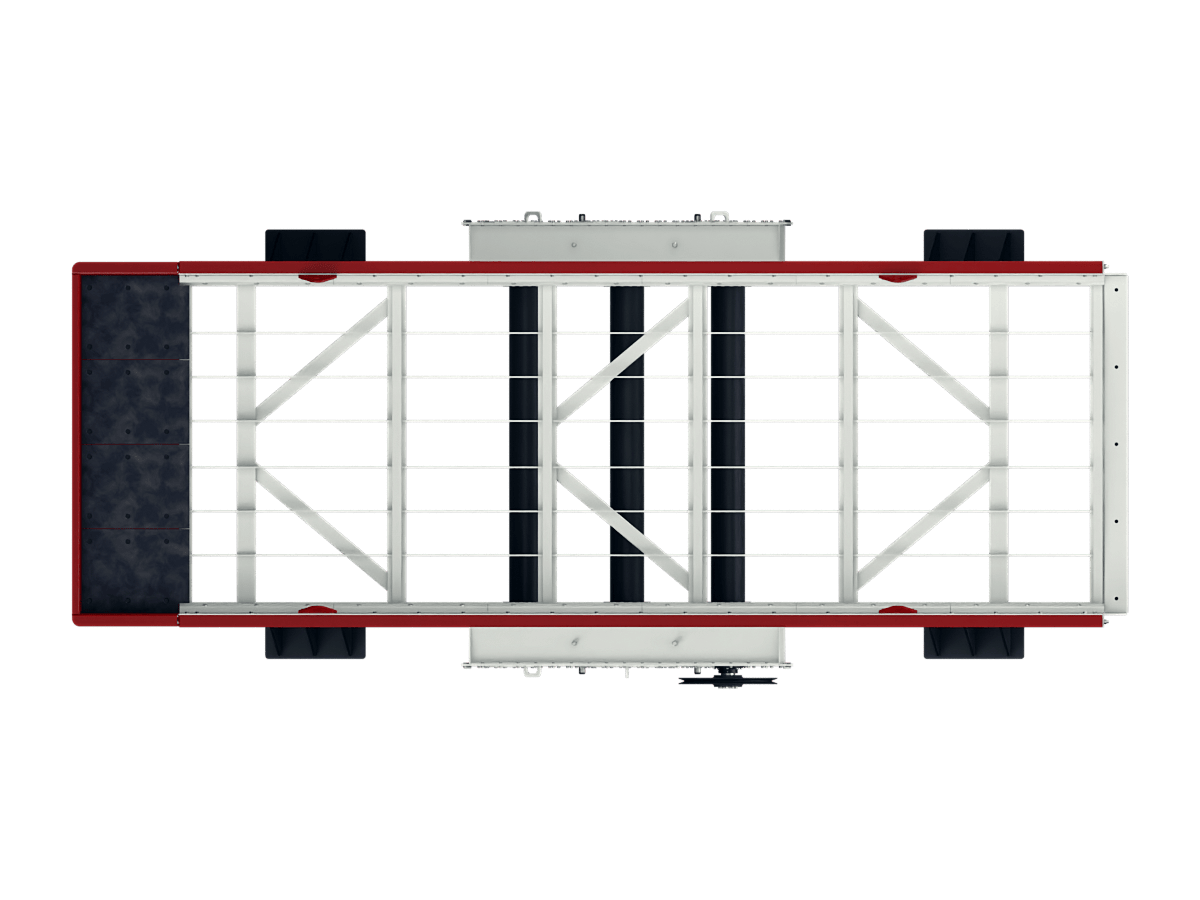
Triple-shaft ellipse: Synchronized shafts create stable elliptical throw; adjustable angle for speed vs. retention.
Anti-blinding by design: Elliptical motion keeps sticky and flaky feeds moving, reducing pegging.
Wet-ready: Spray bar integration and drainage-friendly decks for washing and dewatering.
Low profile: Horizontal layout fits mobile plants and retrofits where headroom is limited.
ETE Series Horizontal Screens
Horizontal screen confidence
ETE Series keeps the horizontal screen stable with a triple-shaft elliptical throw, so sticky or wet feeds clear fast without sacrificing accuracy.
Balanced motion: Adjustable ellipse lets you tune speed versus retention for each deck.
Clean decks: Wet-duty spray bars and open drainage keep the horizontal screen washing efficiently.
Low headroom: Compact profile fits mobile plants and retrofit bays without redesigning the structure.
Anatomy
What You Are Looking At
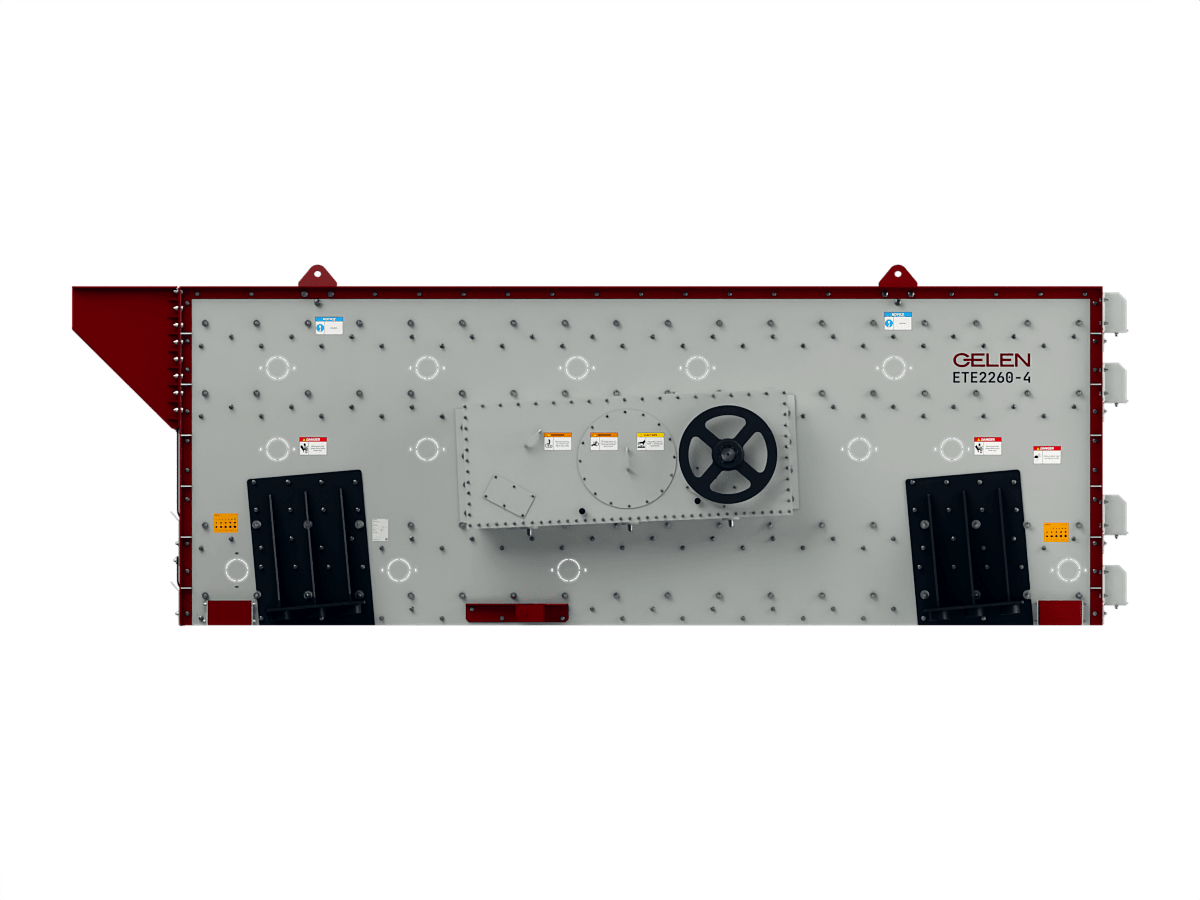
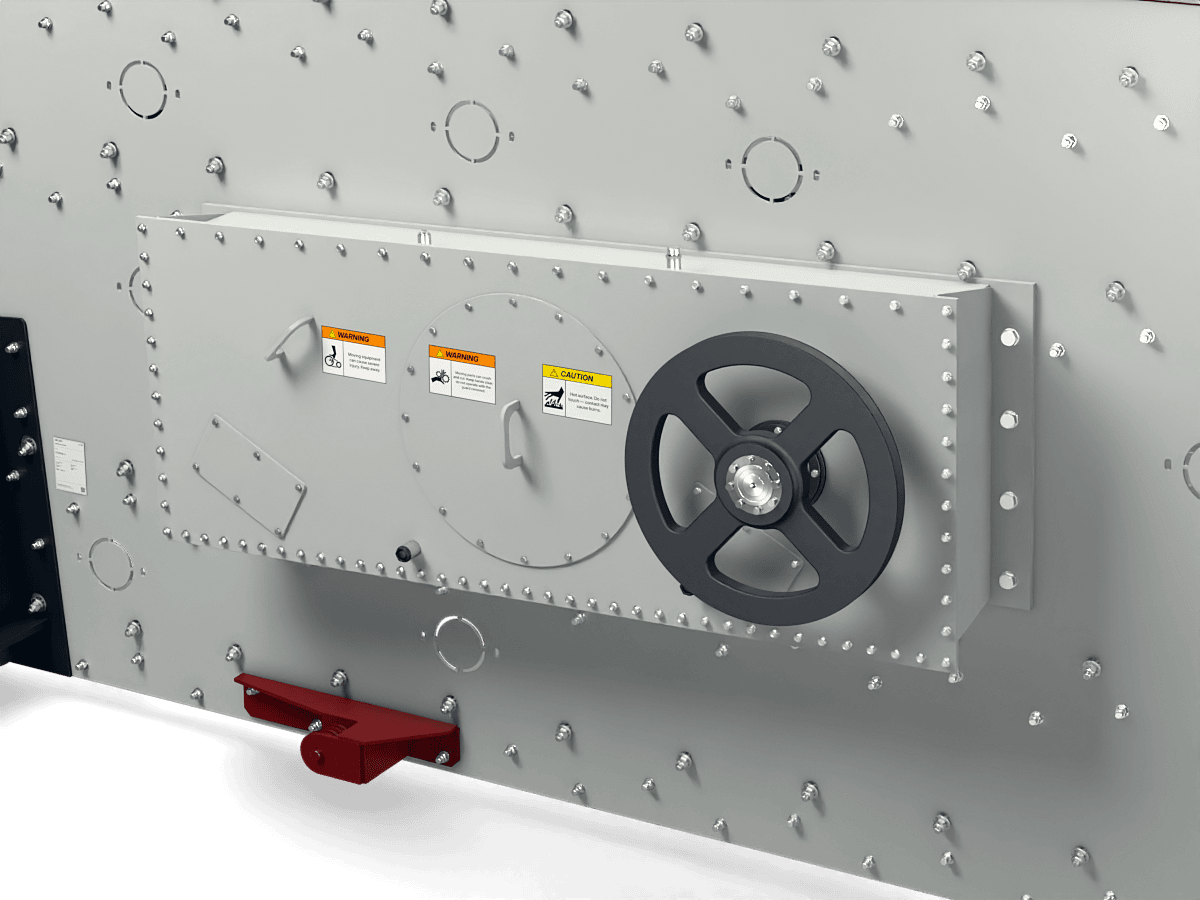
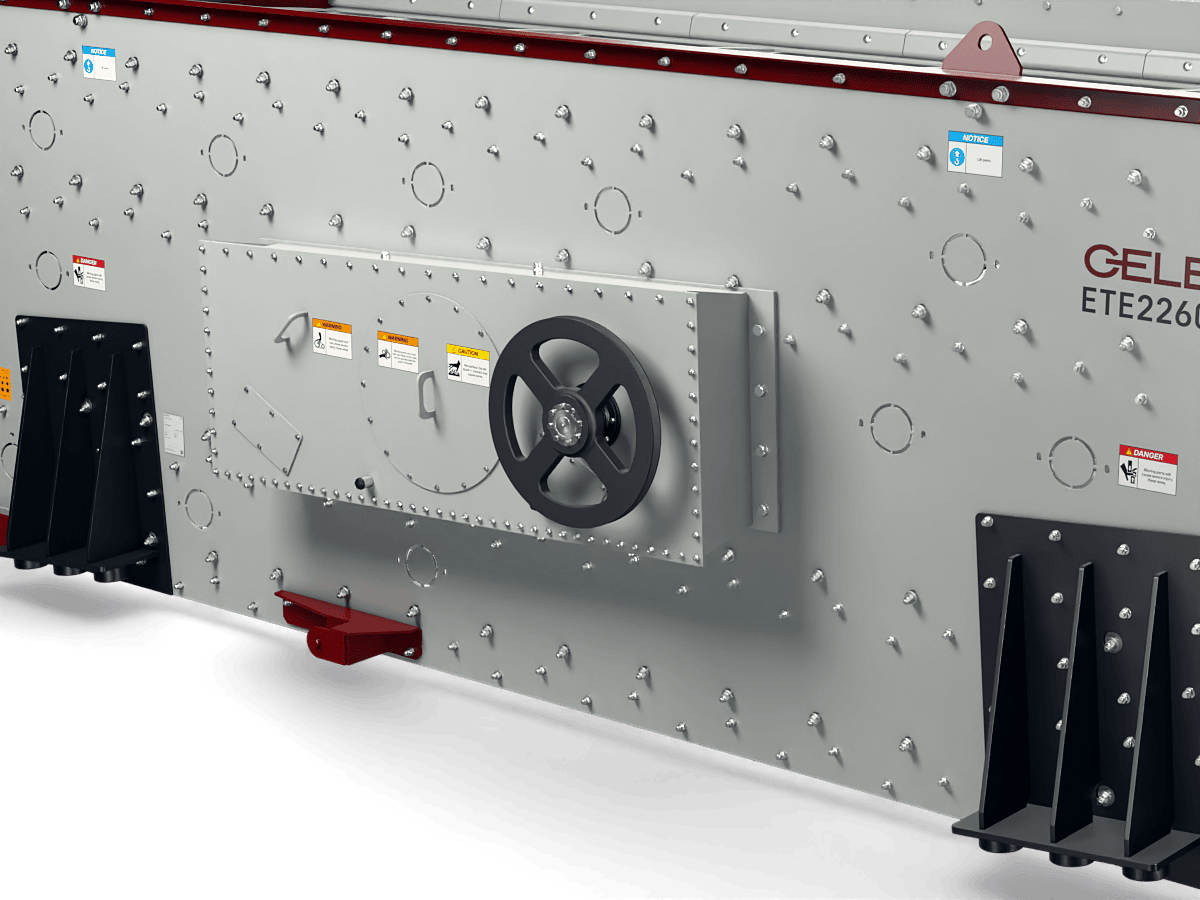
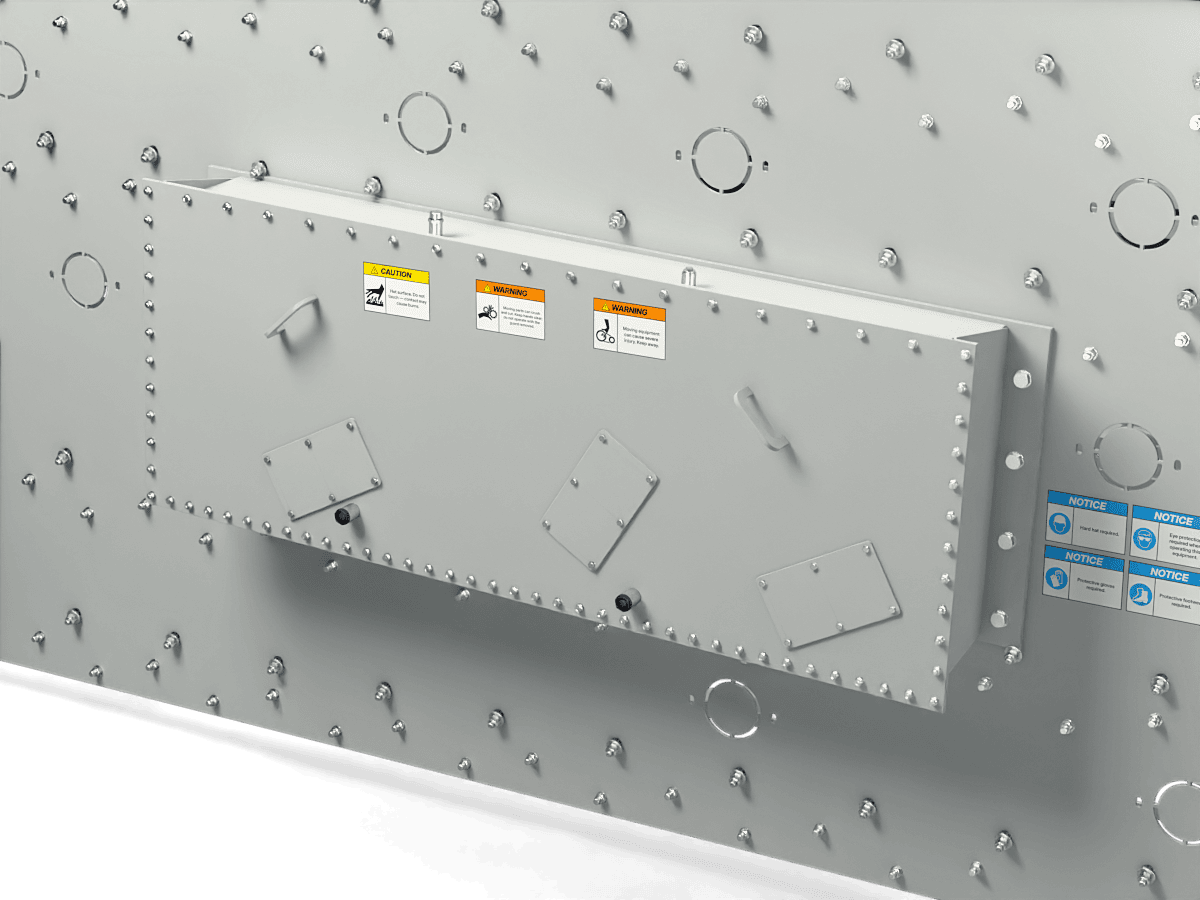
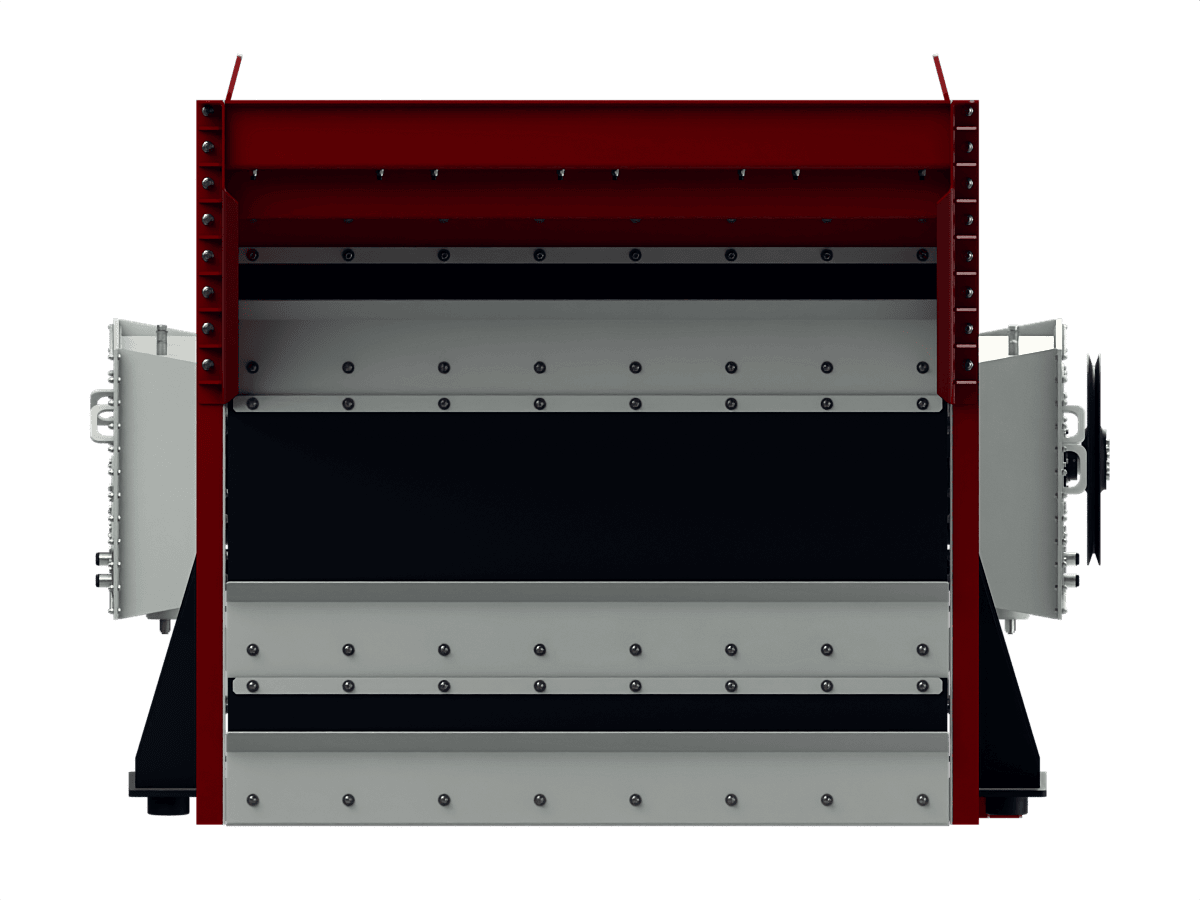
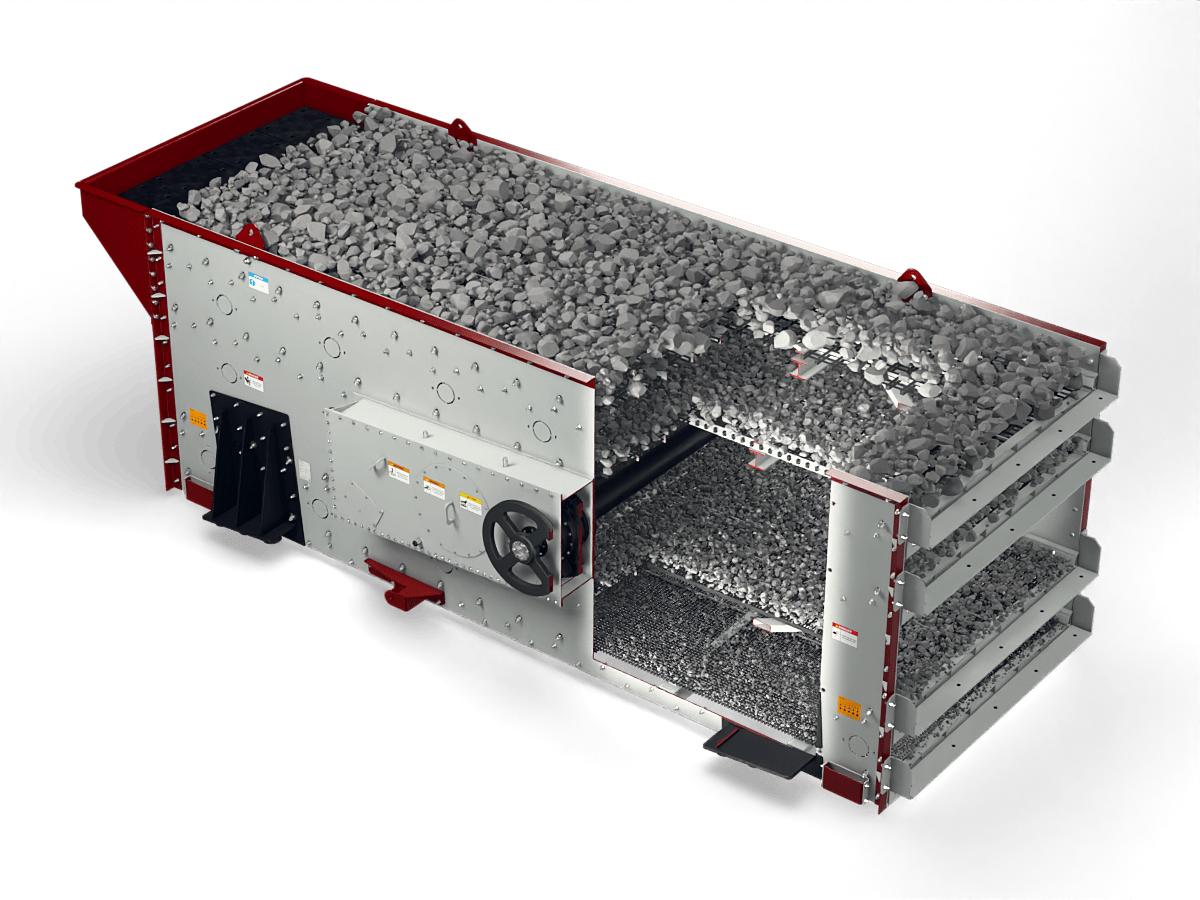
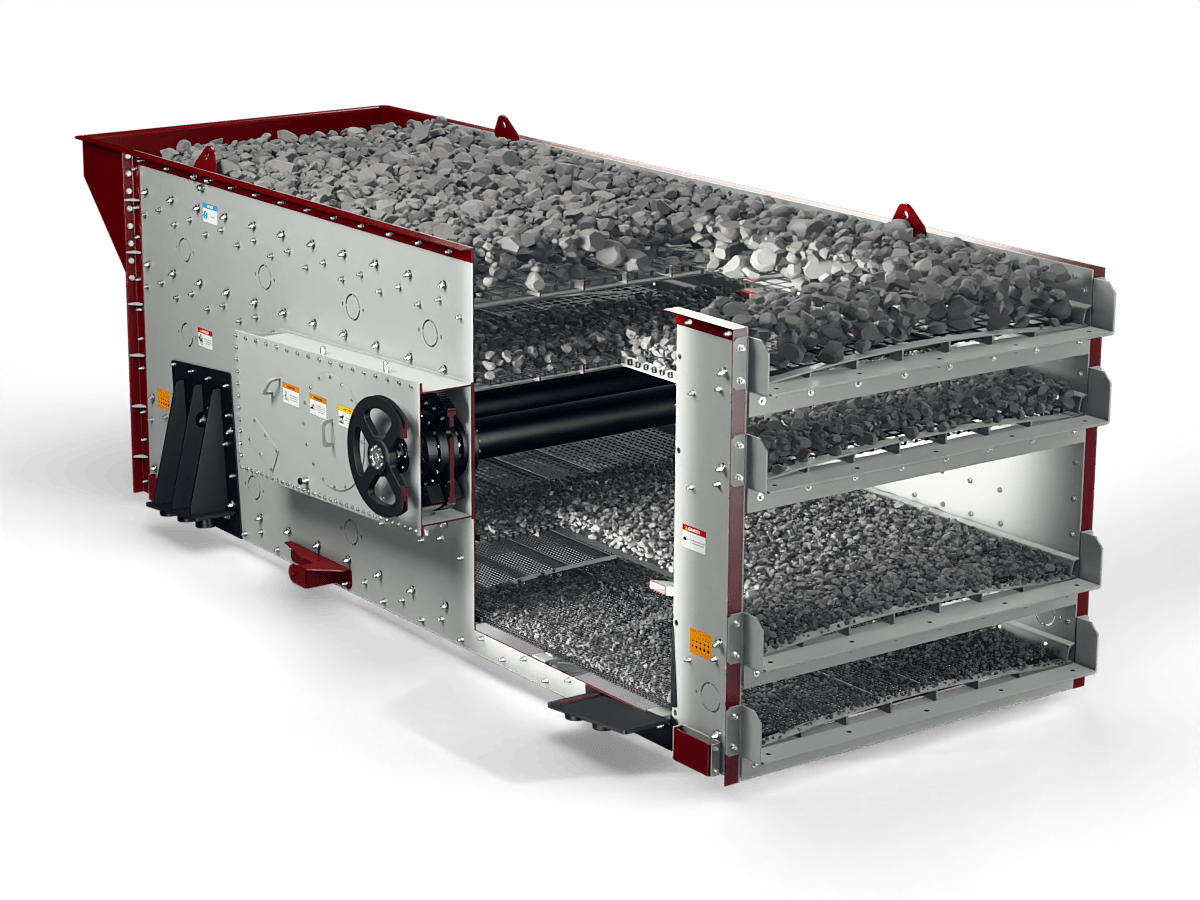
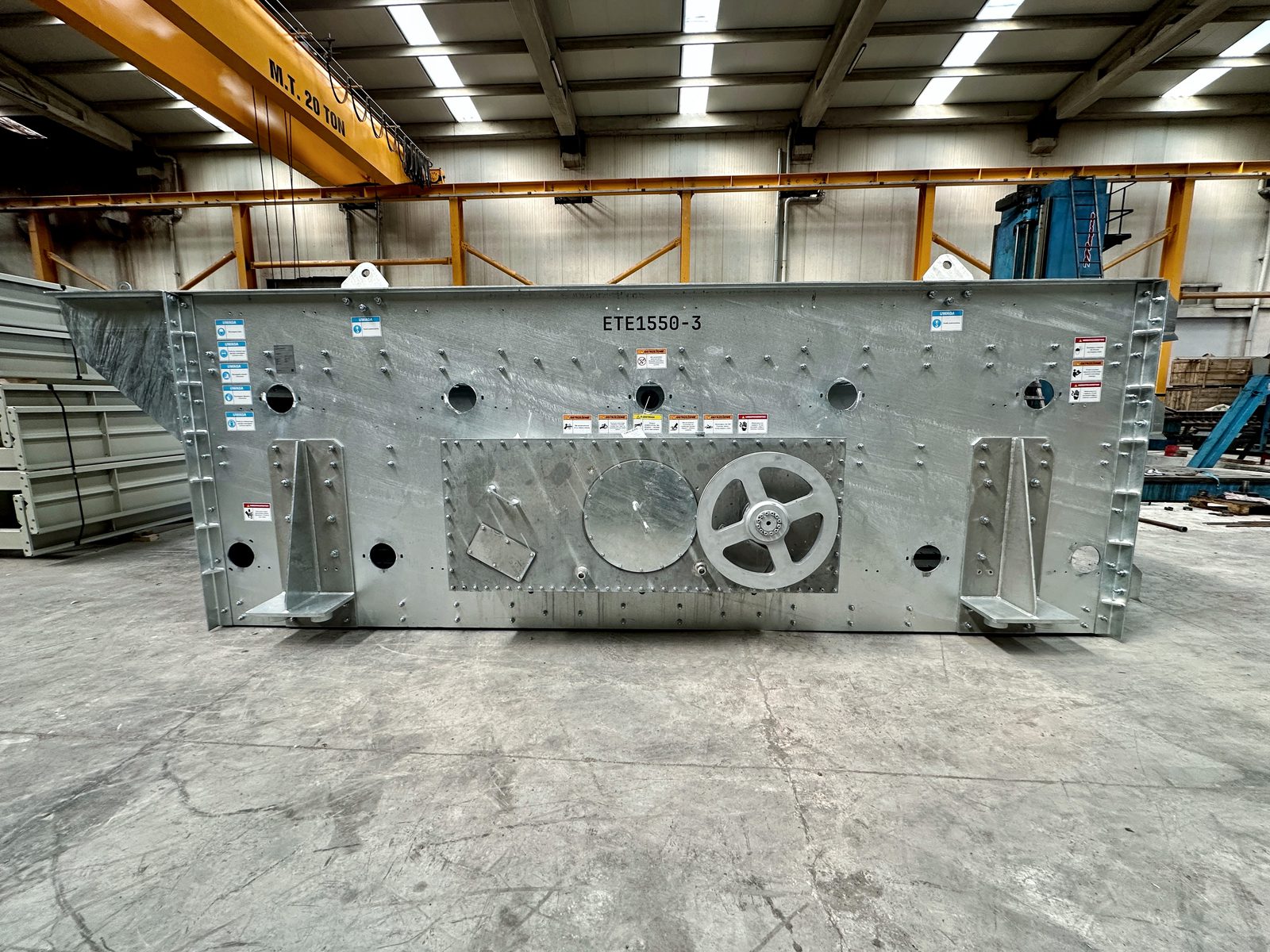
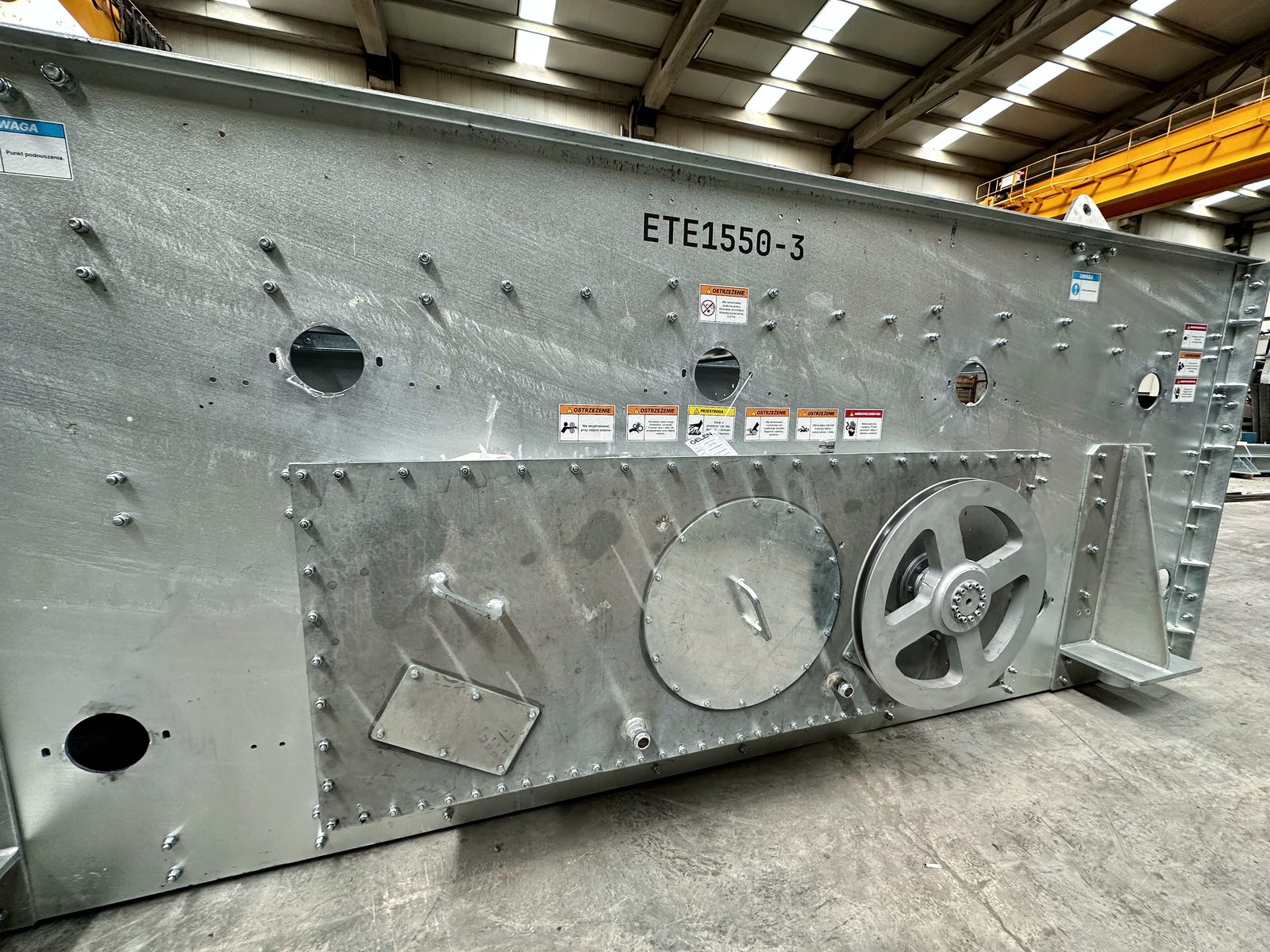
An ETE1550 with three decks, hot-dip galvanised. The whole triple-shaft drive is behind one cover on this side.
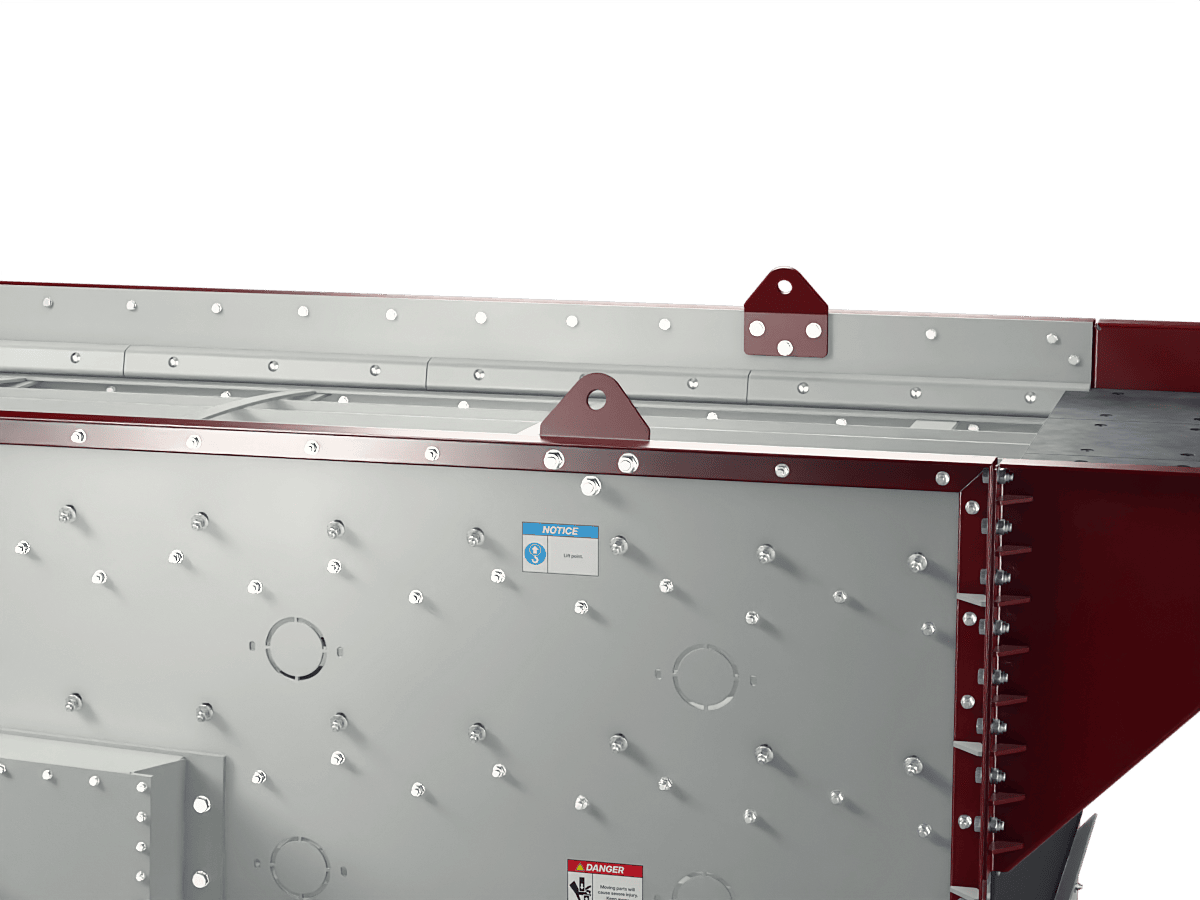
1 · Hot-dip galvanised side plate
Zinc all the way through the section, inside the bolt holes and under the brackets. On a washing duty this is the difference between a frame that lasts and one that does not.
2 · Drive sheave
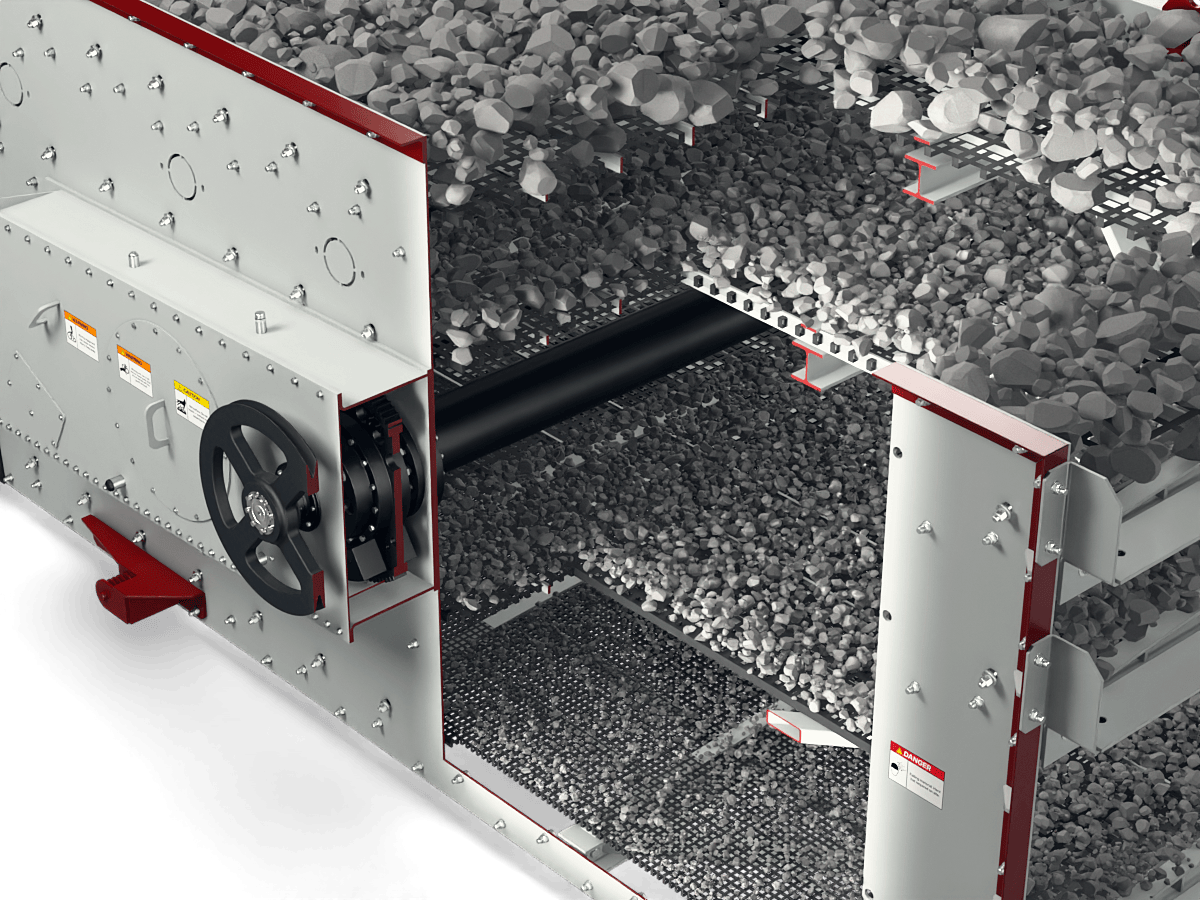
One motor drives all three shafts. They cannot be allowed to drift apart, which is what the coupling behind this cover is for.
3 · Shaft access cover
The three shafts and the gear coupling that keeps them in phase sit behind it. Phase is what turns three circular throws into one ellipse.
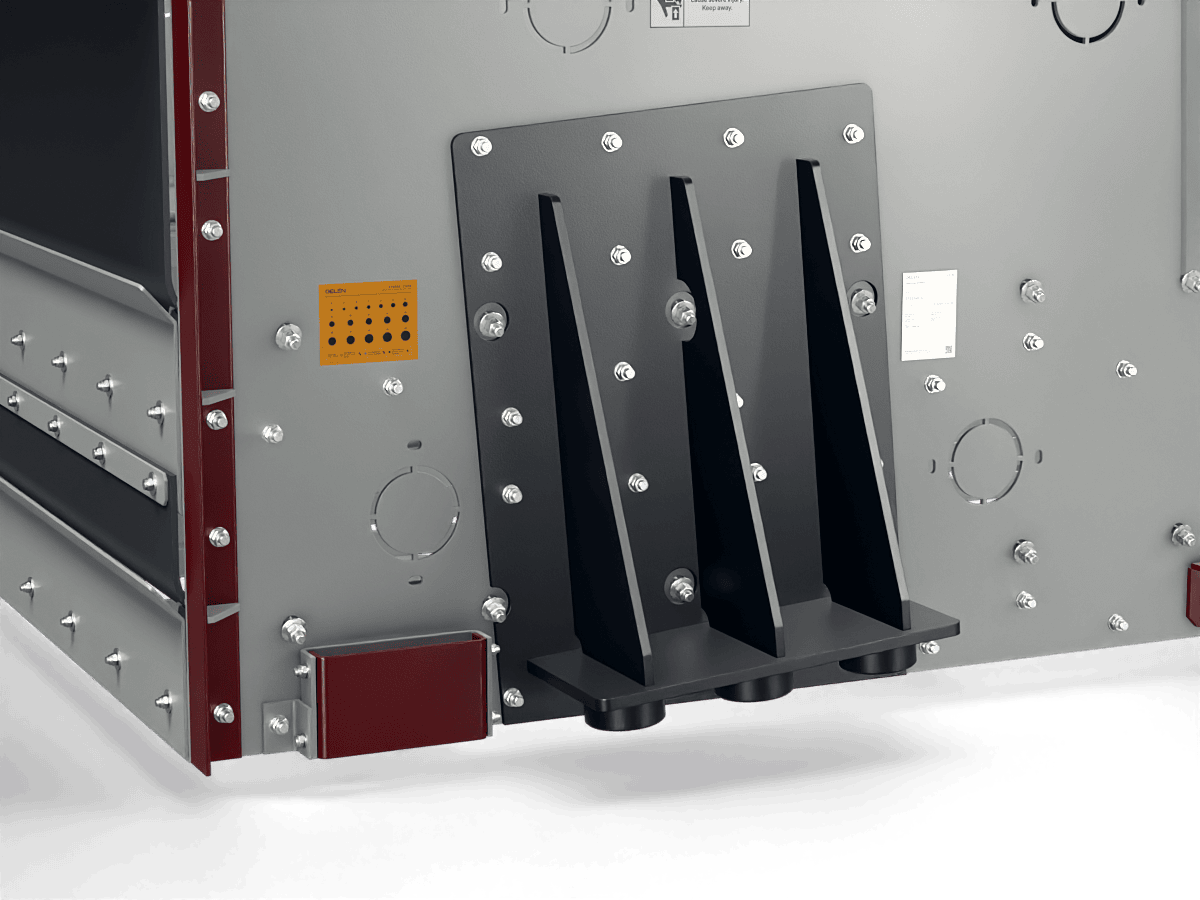
4 · Spring support foot
Takes the body weight into the structure through coil springs. On a horizontal screen the feet carry more of the load than on an inclined one, because gravity is not helping the material along.
5 · Swaged collar joints
The rows of studs along the plate. Each one is swaged rather than torqued, so it holds its clamp load without being re-checked.
Performance Charts
Performance Charts
Screening Area per Deck by Model
Area of one deck (width × length) from the specification table.
Technical Specifications
The ETE series is built in four sizes from 1,500 × 5,000 mm to 2,500 × 6,000 mm with two, three or four decks, 18.5 to 45 kW drives and weights from 5,800 to 15,700 kg. Tell us your material, feed rate, moisture and the products you need, and GELEN engineering will select the size, deck count and screen media.
Main Dimensions mm
Weight kg
Power kW
Width
Length
2-Deck
3-Deck
4-Deck
ETE2560
2500
6000
14,700
15,700
-
45
ETE2260
2200
6000
13,800
14,800
15,700
37–45
ETE1860
1800
6000
7,300
8,600
10,100
22–30
ETE1550
1500
5000
5,800
6,700
7,700
18.5–22
Every horizontal screen is built to its duty. Send those numbers and an engineer comes back with a size, a drive and what it will do in your circuit.
What is included, and what is specified per project.
Item
Standard
Optional
Triple-shaft elliptical drive with gear coupling
Yes
No
Bolted side plates with Huck swaged collars
Yes
No
Helical coil spring suspension
Yes
No
Two, three or four decks
Yes
No
Tensioned wire mesh deck panels
Yes
No
Polyurethane or rubber deck panels
No
Yes
Spray-bar manifold for wet screening
No
Yes
Anti-blinding balls or piano-wire decks
No
Yes
Drainage pans under the decks
No
Yes
Hot-dip galvanised frame
No
Yes
Dust hood and walkways
No
Yes
Stroke and motion sensor
No
Yes
How It Works
How a Triple-Shaft Horizontal Screen Works
Five steps from feed to a precise cut on a flat deck.
Three shafts turn together
Three parallel shafts run in phase, held there by a gear coupling so they cannot drift apart under load.
Their counterweights make an ellipse
The phased unbalance produces an elliptical stroke rather than the circle a single shaft gives — lift on one axis, travel on the other.
The lift stratifies the bed
High-G lift opens the bed so fines can work down to the media instead of riding on top of the coarse fraction.
The forward throw moves it along
The same ellipse carries material down the deck, which is what lets the deck lie flat instead of relying on gravity.
The ellipse angle tunes the cut
Adjusting the stroke angle trades travel speed against screening time, so a precise cut and a sticky feed can both be accommodated.
Applications & Performance
Wet Screening & Washing
Designed for easy integration of high-pressure spray bars. The unique elliptical motion aggressively agitates the material bed, allowing water to thoroughly wash aggregates, sand, and ore, preventing blinding even with heavy clay content.
Scalping & Heavy Duty
By adjusting the ellipse angle to be more aggressive, the ETE series handles high-volume, sticky feed directly from primary crushers or heavy feeders. The robust frame and shock-absorbing spring suspension withstand the impact of large, coarse materials.
Fine Screening Precision
When tight cut points are required, the stroke angle can be tightened. This delays the flow of material over the deck, increasing retention time and allowing near-size fine particles ample opportunity to find and pass through the apertures.
Why Choose the GELEN ETE Series?
Six reasons the triple-shaft ETE horizontal screen is chosen for difficult, wet and high-precision screening.
Triple-Shaft Elliptical Motion
Three synchronised shafts generate an elliptical stroke with a high-G lifting phase and a forward throw, giving clean stratification across the full width of the deck.
Resists Blinding and Pegging
The aggressive elliptical motion keeps sticky, wet and flaky material moving, so near-size stones do not peg the apertures and wet fines do not blind the deck.
Adjustable Ellipse and Angle
Operators tune the ellipse shape and angle to trade speed for retention: more aggressive for scalping sticky feed, tighter for precise fine screening.
Wet-Ready Decks
Spray bar integration and drainage-friendly decks let the same ETE work as a washing and dewatering screen as well as a dry sizing screen.
Low Profile
The horizontal layout needs less headroom than an inclined screen, which suits mobile plants and retrofits in existing structures.
Built for Heavy Feed
A robust frame and shock-absorbing spring suspension take the impact of large, coarse material fed straight from primary crushers or heavy feeders.
Plant Circuit
Where a Horizontal Screen Fits
The ETE is chosen where an inclined screen would struggle: wet feed, fine cuts, or no headroom.
Crusherdischarges onto the feed conveyor
ETE Screenmakes the cut, spray bars where the feed is washed
Undersizeto product stockpiles or to the washing plant
Oversizereturns to the crusher in closed circuit
Every circuit is different. Send us yours and we will say where a horizontal screen fits and what it changes downstream.
Unlike standard single-shaft circular screens or twin-shaft linear screens, the GELEN ETE Series utilizes three synchronized shafts grouped in a precisely aligned mechanism to generate an intense elliptical stroke. This motion consists of a high-G lifting phase combined with an aggressive forward throw. This synergy uniquely resists pegging by near-size stones and resists blinding by wet fines, while ensuring excellent material stratification across the entire width of the screen deck.
How ETE Series Compares
FEATURE
GELEN ETE SERIES
STANDARD INCLINED
STANDARD LINEAR
Drive Mechanism
Triple-Shaft (Elliptical)
Single-Shaft (Circular)
Twin-Shaft (Linear)
Blinding Resistance
Excellent (Aggressive Stroke)
Moderate
Poor (Plugging Risk)
Installation Profile
Low-Profile (Horizontal)
High Headroom (15-20° pitch)
Low-Profile
Stroke Adjustability
Adjustable Angle & Amplitude
Amplitude Only
Amplitude Only
Not sure which one? Send us the duty and an engineer will say which, and what you would give up by choosing the other.
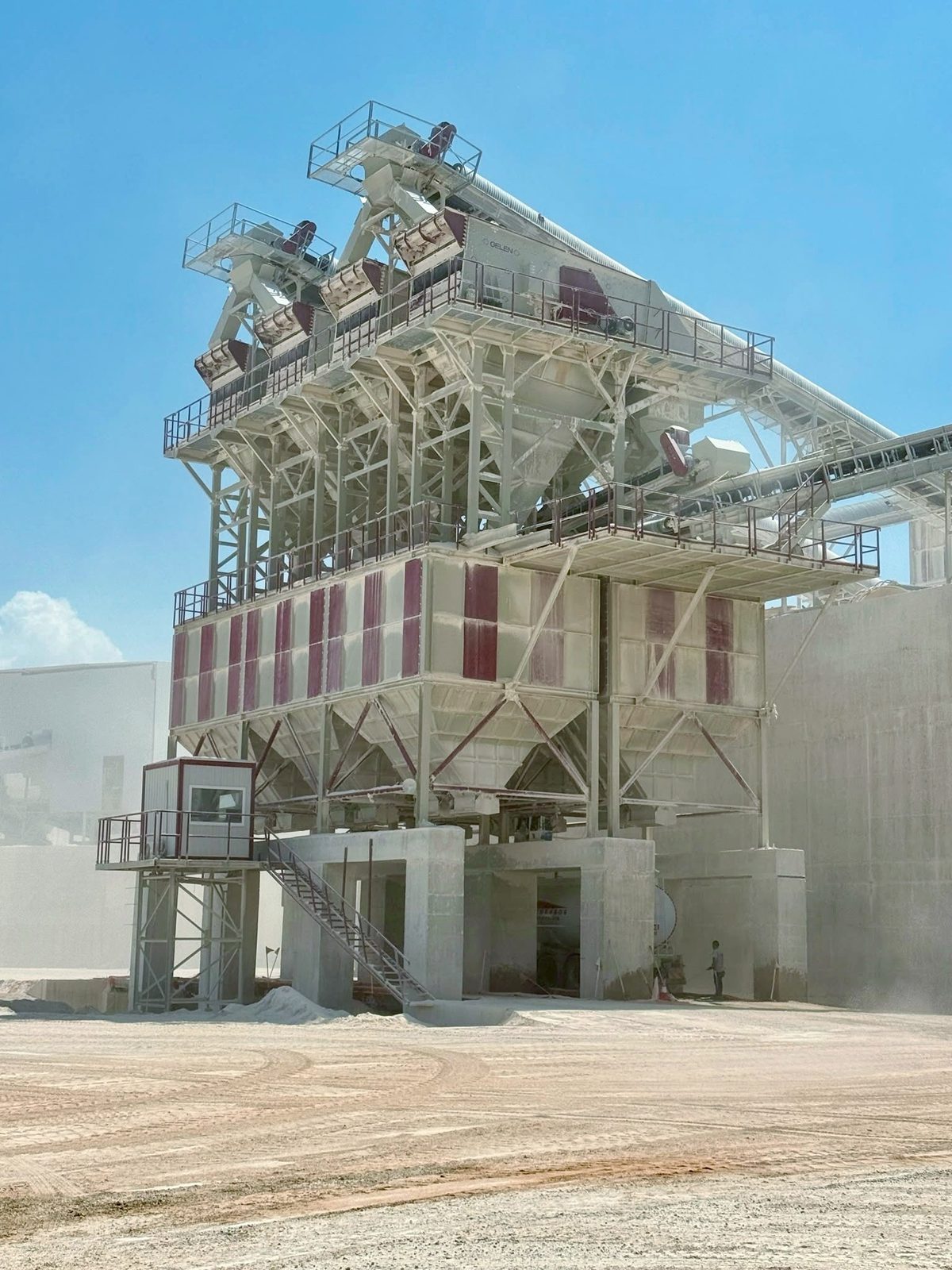
Screening tower with four GELEN ETE horizontal screens at the Antalya 800 t/h plant
11 / 13
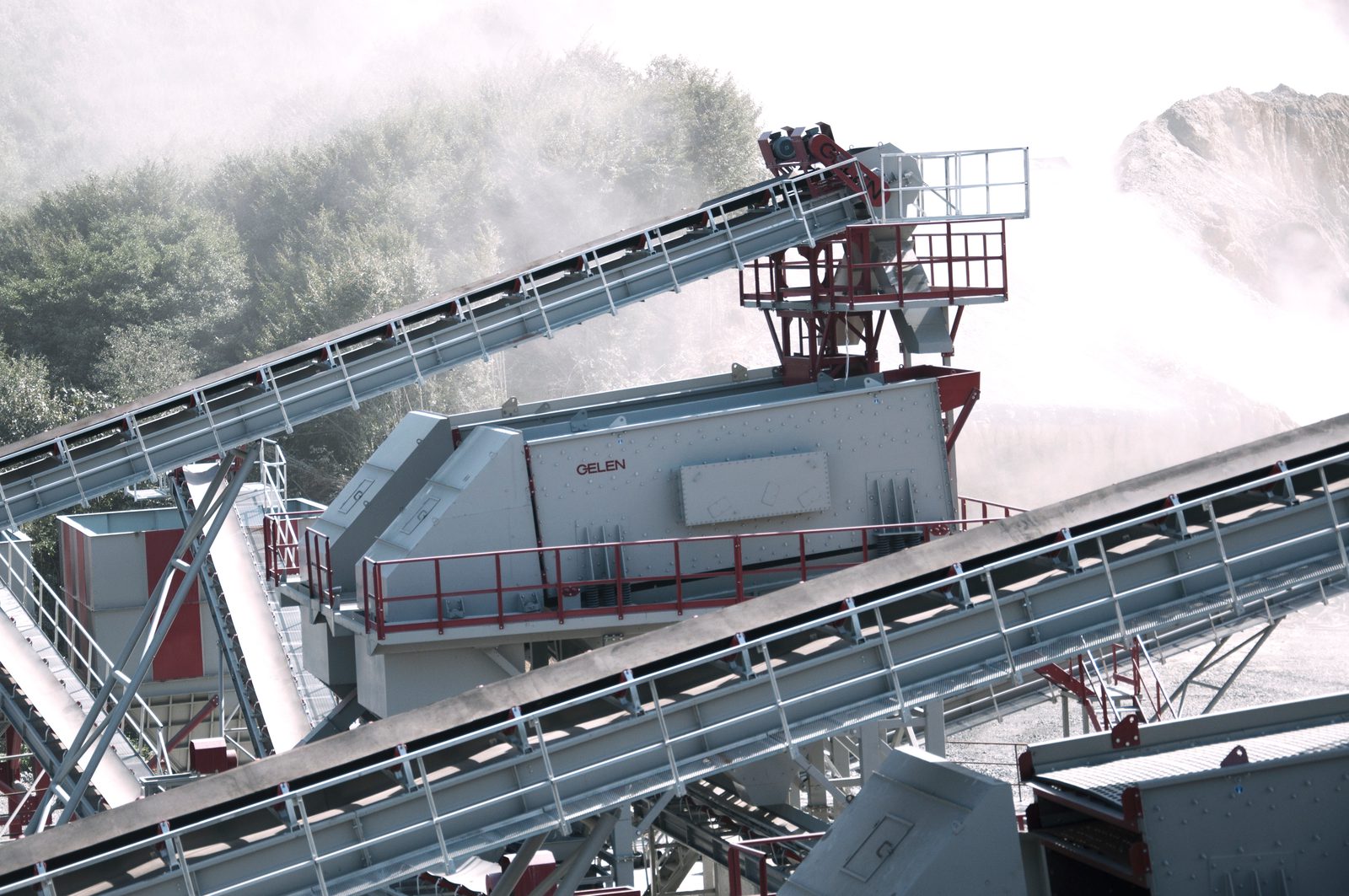
GELEN ETE horizontal vibrating screen between conveyors in a crushing plant
12 / 13
Hot-dip galvanised GELEN ETE1550 three-deck horizontal screen built for washing duty
13 / 13
Galvanised GELEN ETE horizontal screen for a washing plant, at the factory
Documents
Downloads
PDFThe GELEN product catalogue carries the screening range with the crushing, feeding and washing equipment it works with. Deck count, media and stroke are set against your feed, so the per-model data sheet is issued with the quotation.Download Catalogue
PDFThe product brochure covers this series on its own — eight pages with a cutaway of the working parts, the applications it is built for, and a capacity table for every model.Download Brochure
Industry Resources
Technical guides and industry organisations for aggregate producers.
A horizontal vibrating screen is a screening machine whose deck sits flat or at a very shallow angle (typically 0–5°) and is driven by mechanical exciters that push material along the deck while stratifying it through the apertures.
Because the deck is horizontal, material residence time is longer than on an inclined screen, so horizontal screens deliver higher screening accuracy in a much lower-profile machine — ideal for mobile plants and retrofit installations where headroom is limited.
Inclined screens use gravity and a circular throw to move material down a 15–25° slope, while horizontal screens use a linear or elliptical throw to push material across a flat deck. Horizontal screens give longer retention time and higher screening efficiency for fine cuts, dewatering, and wet washing, and they fit into much shorter chassis heights — which is why they dominate mobile and modular plants.
Inclined screens still win on raw throughput when headroom is available, but a horizontal vibrating screen is the right pick whenever cut accuracy or compact installation matter more than peak tons-per-hour.
The ETE Series horizontal vibrating screen runs a triple-shaft elliptical drive instead of the more common twin-shaft linear motion. Three synchronized shafts generate a tunable ellipse, so operators can widen the throw for sticky and wet feeds or tighten it for precision dry sizing — without changing the machine.
That tuning range is what lets one ETE Series horizontal screen cover scalping, sizing, dewatering, and fine screening duties that would otherwise need separate machines.
ETE Series horizontal screens are built for the feeds that punish other machines: sticky clay-bound aggregates, wet sand, flaky shale, recycled construction debris, and high-moisture mineral ores. The elliptical throw constantly shears the bed, which prevents the pegging and blinding that would clog a circular-motion inclined screen on the same feed.
They also handle clean dry stone perfectly well — the elliptical motion just gives operators more headroom to stay on-spec when the feed turns nasty.
Yes — ETE horizontal screens are wet-ready out of the box. Spray-bar mounts run across each deck, the side plates are sealed for spray containment, and the decks themselves use open-area panels designed for fast drainage.
The horizontal layout helps water sheet evenly across the bed instead of running off the low end of an inclined screen, so washing and dewatering duty give cleaner cuts with less reagent or makeup water.
The ETE Series is built in four sizes, from the ETE1550 (1500 × 5000 mm) to the ETE2560 (2500 × 6000 mm), in 2-deck, 3-deck and 4-deck configurations. Drive power ranges from 18.5 kW on the smallest ETE1550 up to 45 kW on the ETE2260 and ETE2560.
That covers throughput requirements from compact mobile plants through full stationary aggregate and mining lines.
ETE horizontal screens are most often specified in mobile and modular crushing-and-screening plants where chassis height is the limiting constraint, in retrofit projects where the existing screen house cannot accept a tall inclined unit, and in wash plants where dewatering and fines recovery decide the product spec.
They are common in aggregates, sand and gravel, recycling, mineral processing, and coal preparation.
Routine maintenance on a horizontal vibrating screen focuses on five items: inspect screen media weekly for wear and tensioning, grease the bearings on the schedule the OEM specifies (typically every 200–400 operating hours), check spring suspension and rubber buffers for fatigue, verify drive belt or coupling alignment, and re-torque deck and side-plate fasteners after the first 50 hours and then quarterly.
ETE Series machines are designed for tool-friendly access — bearings, springs, and screen panels can all be reached without dismantling adjacent equipment, which keeps maintenance windows short.
1981
Manufacturing since
1,000+
Screens delivered
6
Continents served
1,000 t/h
Largest plant
Talk to a GELEN Engineer
Send your material, your capacity and the product sizes you need. An engineer answers, not a form.