
Who this is for: Plant managers, process engineers, and maintenance teams deciding between horizontal, inclined, and banana screens — and looking for practical guidance on sizing, setup, and troubleshooting.
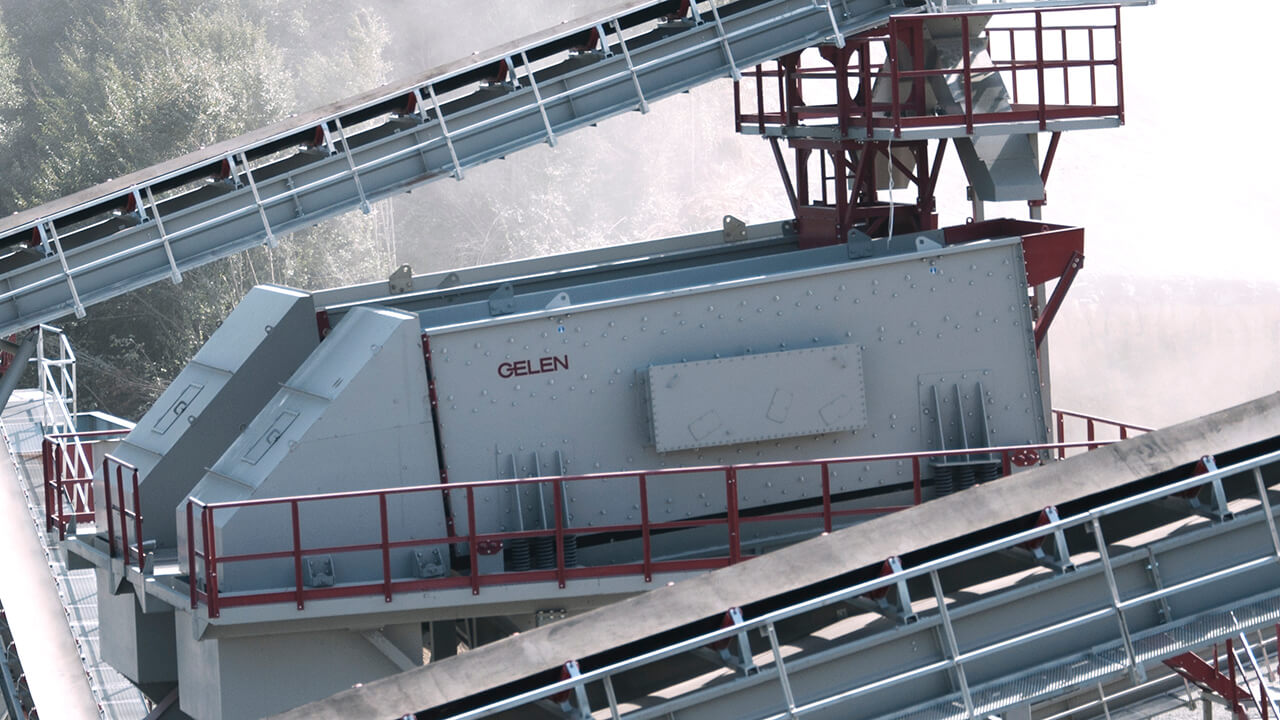
What Is a Horizontal Vibrating Screen?
How it differs from an inclined screen
- Orientation: 0°–10° deck angle vs. 15°–35° on inclined screens.
- Motion: Elliptical/linear vs. circular. Elliptical keeps material on the deck longer for finer sizing.
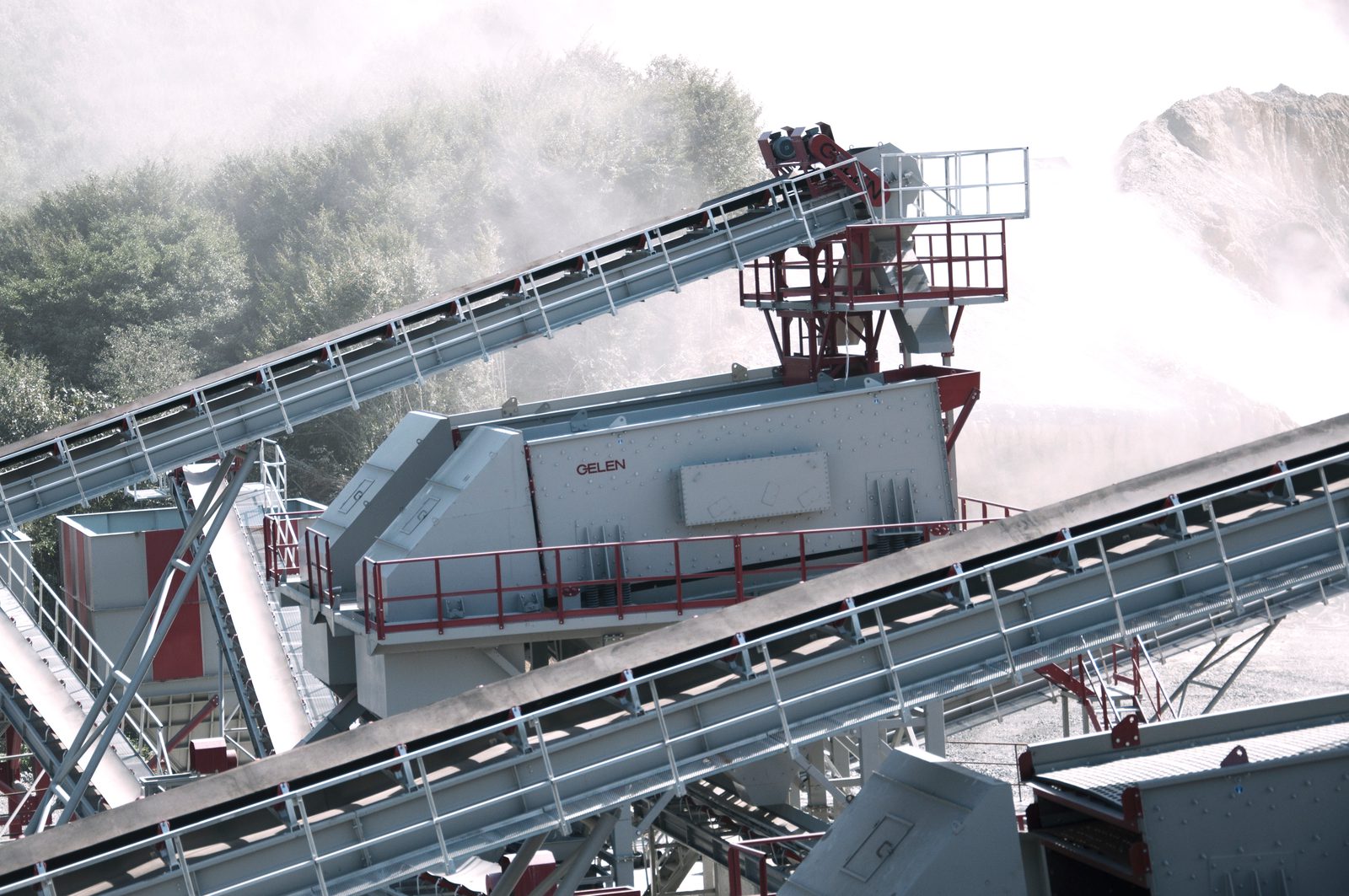
- Headroom: Lower profile — easier retrofits and mobile plants.
The three motion types
- Circular: Simple, robust, less control of bed depth.
- Linear: High acceleration; can be harsh on mesh and bearings.
- Elliptical: Used on the ETE Series — better for sticky, flaky, or wet feeds and reduces blinding.
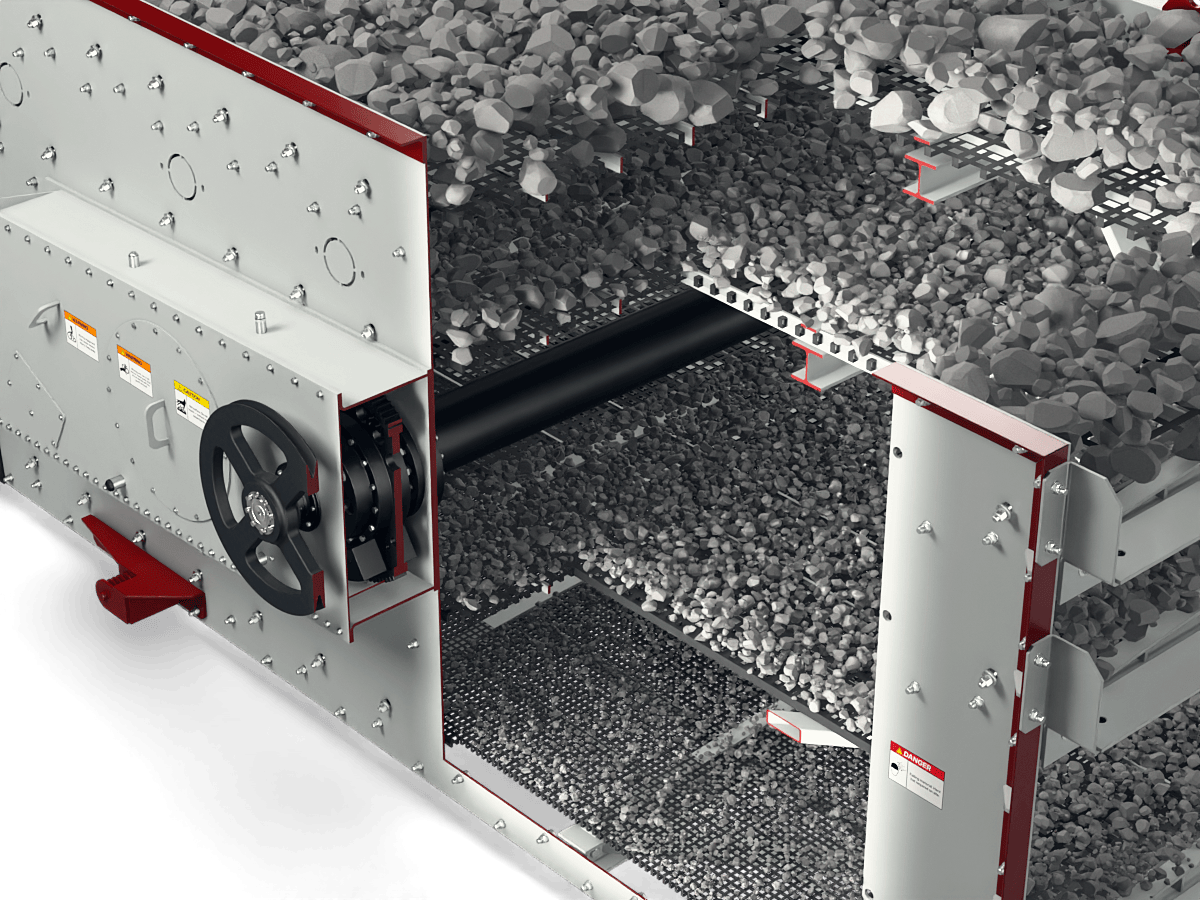
Inside the ETE Series Triple-Shaft Elliptical Drive
Plain-language explanation
- Three synchronized shafts with matched gears create a controlled elliptical throw, not a loose circle.
- Adjustable ellipse angle lets you trade speed for retention: wider throw for scalping, tighter throw for precision sizing.
- Heavier flywheels store energy, keeping amplitude stable under variable load.
Operator tweak: shift ellipse angle toward 40–45° for wet/sticky feeds; reduce toward 25–30° for dry precision screening.
Horizontal vs. Inclined vs. Banana — Decision Guide
| Criterion | Horizontal (ETE) | Inclined | Banana |
|---|---|---|---|
| Sizing accuracy | |||
| Throughput (coarse) | |||
| Wet/sticky material | |||
| Headroom | Low | High | High |
| Fine screening (<10 mm) |
Practical decision steps
- Wet, sticky, flaky feed? → Horizontal (ETE).
- Need >500 t/h coarse throughput? → Inclined (STE).
- Need <10 mm precision? → Horizontal.
- Limited headroom or mobile plant? → Horizontal.
- 4+ fractions at once? → Multi-deck horizontal.
If your feed needs heavy-duty scalping before sizing, pair a grizzly ITE screen ahead of the horizontal deck.
How to Size a Horizontal Screen
5 inputs you need
- Feed rate (t/h)
- Feed size distribution (PSD)
- Material density and moisture
- Number of product fractions
- Open area % of selected mesh
Worked example — 200 t/h limestone
- Feed: 0–80 mm limestone, 5% moisture; target fractions: +40, 20–40, 0–20 mm.
- Select ETE2260 3-deck; verify area using A = Q / (k × v × ρ) with k=1.2–1.4, v based on ellipse setting.
- Check installed power (37–45 kW range) and deck media open area >55% for top deck.
Tip: Keep bed depth ≤3× aperture on top deck; if deeper, widen the ellipse to accelerate conveyance.
Wet Screening Setup — Step by Step
Commissioning checklist
- Install spray bars ~45° to deck; set 2–4 bar water pressure.
- Start screen before feed; ramp feed after stable amplitude.
- Adjust ellipse angle more aggressive for sticky slurry; trim after 10–15 minutes.
- Watch underflow clarity and carry-over; fine-tune feed rate and water.
Mesh choices
- Polyurethane/rubber for wet, abrasive, or blinding-prone feeds.
- Woven wire for dry, sharp sizing; consider heavier wire on top deck.
How to Prevent Blinding and Pegging
Root causes
- Blinding: fines packing apertures (often clay or wet fines).
- Pegging: near-size cubical particles wedging in openings.
7 practical fixes
- Increase vibration intensity (g-force) within spec.
- Switch to polyurethane or rubber panels.
- Add anti-blinding balls beneath the mesh.
- Use spray bars to wash fines; avoid over-watering.
- Open the ellipse angle for a more aggressive throw.
- Reduce bed depth by trimming feed rate.
- Use ultrasonic/ball deck on ultra-fine duties.
When to replace mesh: Elongated apertures, broken wires, or undersize yield dropping — typically 4–8 weeks on granite/limestone, 6–12 weeks on wet sand, 2–4 weeks on highly abrasive ores.
Maintenance Schedule You Can Trust
| Interval | Tasks |
|---|---|
| Daily (10 min) | Visual bolt check; listen for bearing noise; verify amplitude symmetry; inspect springs. |
| Weekly | Grease 3–5 nipples/shaft; check belt tension; inspect mesh; clean drainage. |
| Monthly/Quarterly | Check shaft alignment; measure amplitude/frequency vs. nameplate; torque structural fasteners; check gearbox oil. |
| Bearing indicators | Temperature >90°C, rising noise/vibration, metallic grease = plan replacement (6,000–12,000 h typical). |
Where a Horizontal Screen Fits in Your Plant
- Primary jaw → scalping screen → secondary cone → ETE horizontal for final sizing → conveyors to stockpile.
- As tertiary finishing screen: close the circuit; recirculate oversize to the cone.
- Mobile integration: low profile and quick-change mesh frames for portable plants.
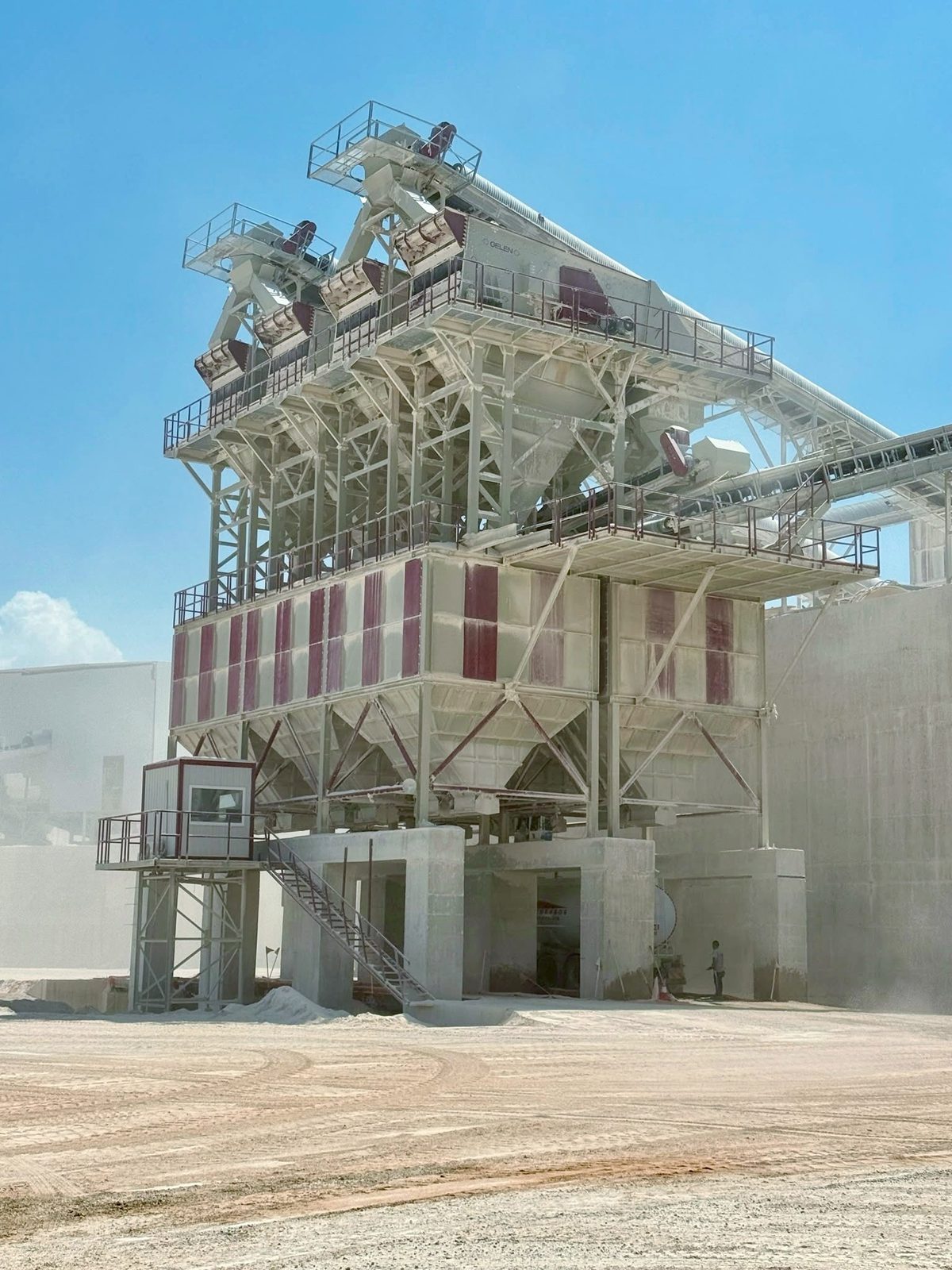
Industries and Real-World Examples
- Aggregates: ETE2260 3-deck for EN 0/4, 4/8, 8/16, 16/32 sizing.
- Sand & gravel: Wet screening and dewatering of river material with high fines.
- Coal: Final sizing with high moisture without blinding.
- Recycling / C&D: Elliptical motion handles flaky, mixed streams.