
Primary Crusher Feed
Feeding jaw and impact crushers from dump hoppers at a controlled rate that keeps the crusher choke-fed but never overloaded.
- Even feed from truck tipping
- Matched to the crusher inlet
- Heavy models for run-of-quarry rock

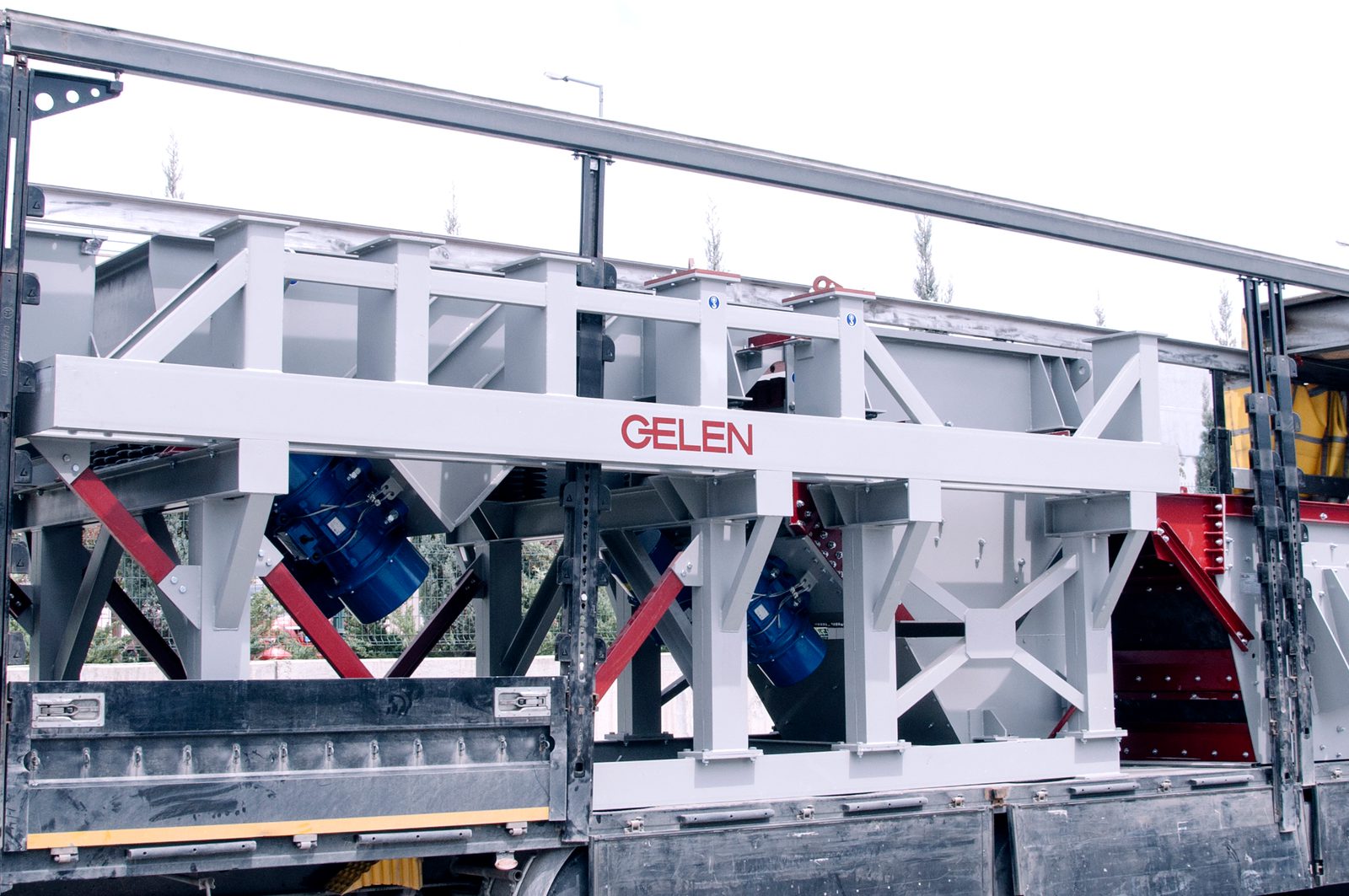
A crusher is only as efficient as its feed. GELEN TB vibrating feeders, also called pan feeders, draw material from the hopper at a steady, controllable rate, and BE grizzly feed screens add a grizzly section that removes fines before the primary crusher. Fifteen TB and two BE models cover pan widths from 600 to 1,500 mm for hard and abrasive rock in aggregate, mining and recycling plants.
Controlled feed rate: speed and stroke are adjustable, so the flow to the crusher can be set to its capacity instead of surging with every truck tipped into the hopper.
Scalping before the crusher: BE grizzly feed screens let fines fall through the bars and bypass the primary crusher, freeing crusher capacity and reducing wear.
Grizzly bars made for service: grizzly bars are replaceable, and the grizzly section can be configured for the application, so changing a gap or a worn bar does not stop the plant for long.
A width for every crusher: fifteen TB widths and lengths let the feeder match the crusher inlet, from small secondary lines to large primary stations.
TB vibrating feeders move material from a hopper to a crusher, screen or conveyor with a linear vibrating motion. Two unbalanced vibrator motors drive the pan, and the material travels in a steady bed toward the discharge. Speed and stroke can be adjusted to set the feed rate, so the equipment downstream receives an even flow.
Fifteen models range from the TB615 (600 × 1,500 mm, 2 × 0.9 kW) for small secondary feeding to the TB1455 (1,400 × 5,500 mm, 2 × 13 kW) under large primary hoppers. The long, heavy models are designed for hard and abrasive run-of-quarry rock; the short models feed secondary crushers, screens and conveyors.
| Widthmm | Lengthmm | PowerkW | Theoretical Capacityt/h | |
|---|---|---|---|---|
| TB615 | 600 | 1,500 | 2 x 0.9 | 90–160 |
| TB817 | 800 | 1,700 | 2 x 1.2 | 160–280 |
| TB917 | 900 | 1,700 | 2 x 1.2 | 200–360 |
| TB920 | 900 | 2,000 | 2 x 2.6 | 200–360 |
| TB930 | 900 | 3,000 | 2 x 5.5 | 200–360 |
| TB940 | 900 | 4,000 | 2 x 7.1 | 200–360 |
| TB9540 | 950 | 4,000 | 2 x 7.6 | 220–400 |
| TB9555 | 950 | 5,500 | 2 x 7.6 | 220–400 |
| TB1020 | 1,000 | 2,000 | 2 x 2.6 | 240–440 |
| TB1255 | 1,200 | 5,500 | 2 x 9.8 | 350–630 |
| TB1320 | 1,300 | 2,000 | 2 x 2.6 | 320–570 |
| TB1335 | 1,300 | 3,500 | 2 x 8.5 | 410–740 |
| TB1355 | 1,300 | 5,500 | 2 x 11.5 | 410–740 |
| TB1445 | 1,400 | 4,500 | 2 x 11.5 | 480–820 |
| TB1455 | 1,400 | 5,500 | 2 x 13 | 480–820 |
Theoretical capacity is calculated for free-flowing material with a bulk density of 1.6 t/m³, using the standard volumetric method for the pan width. Actual capacity depends on the material, lump size, moisture and hopper design.
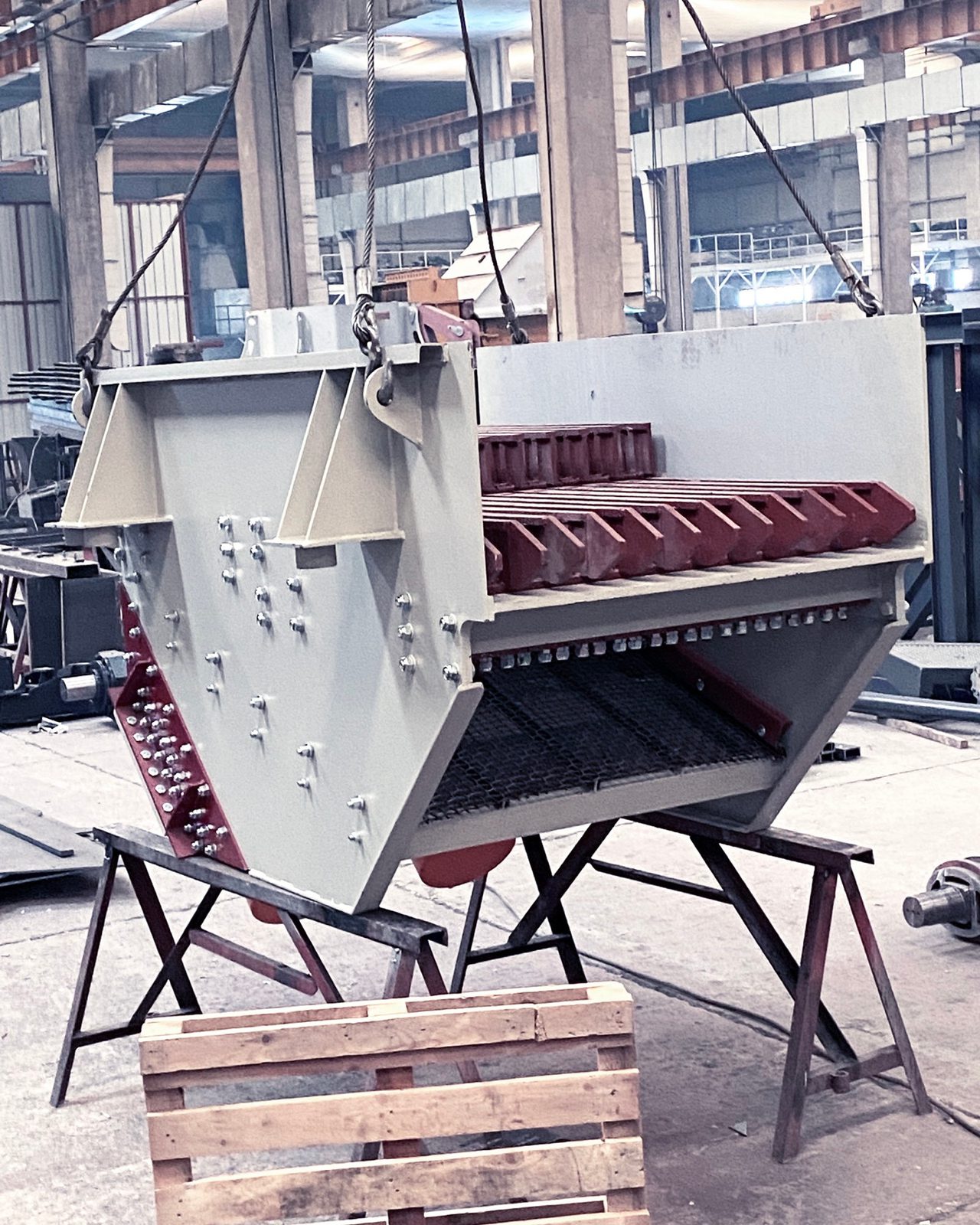
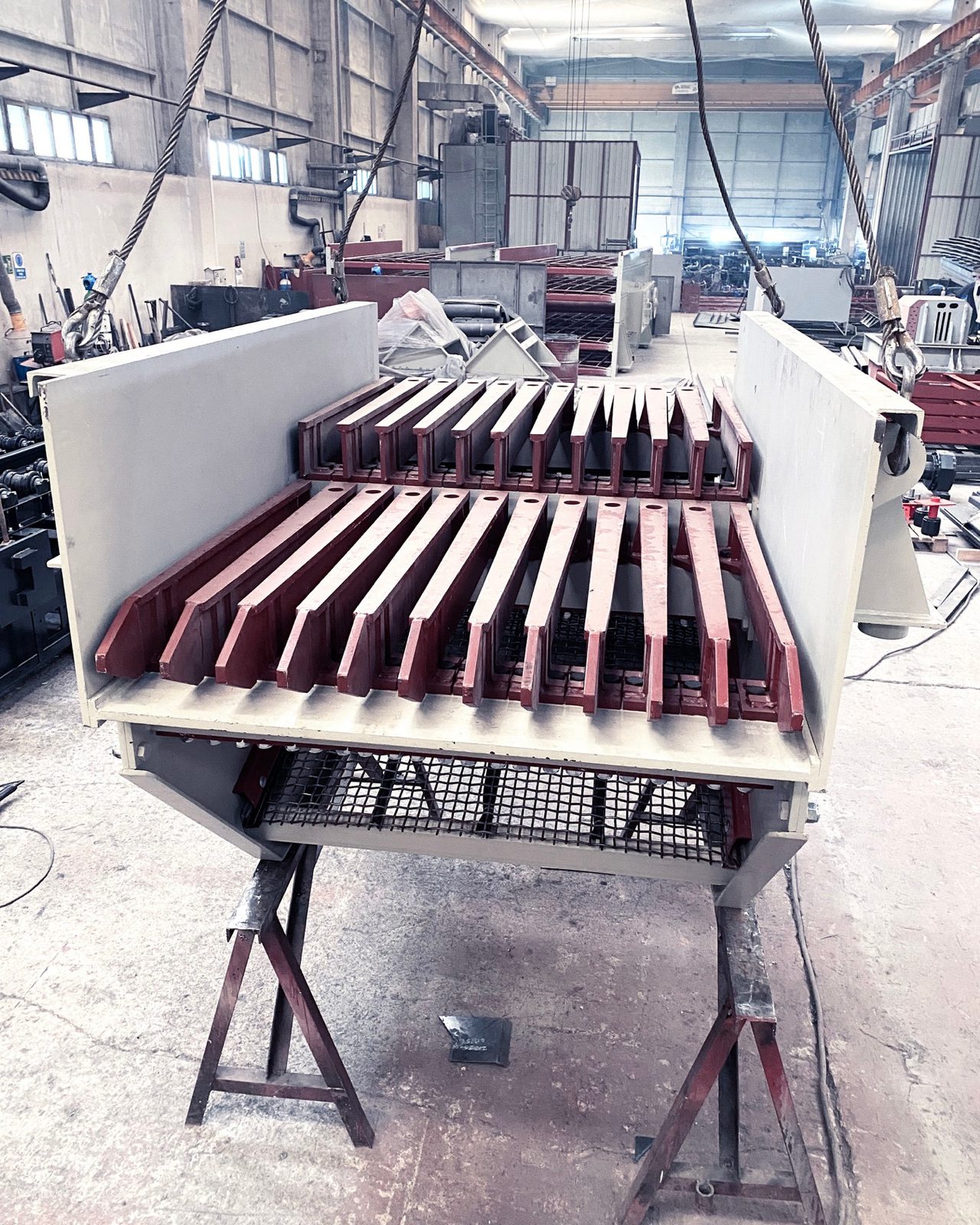
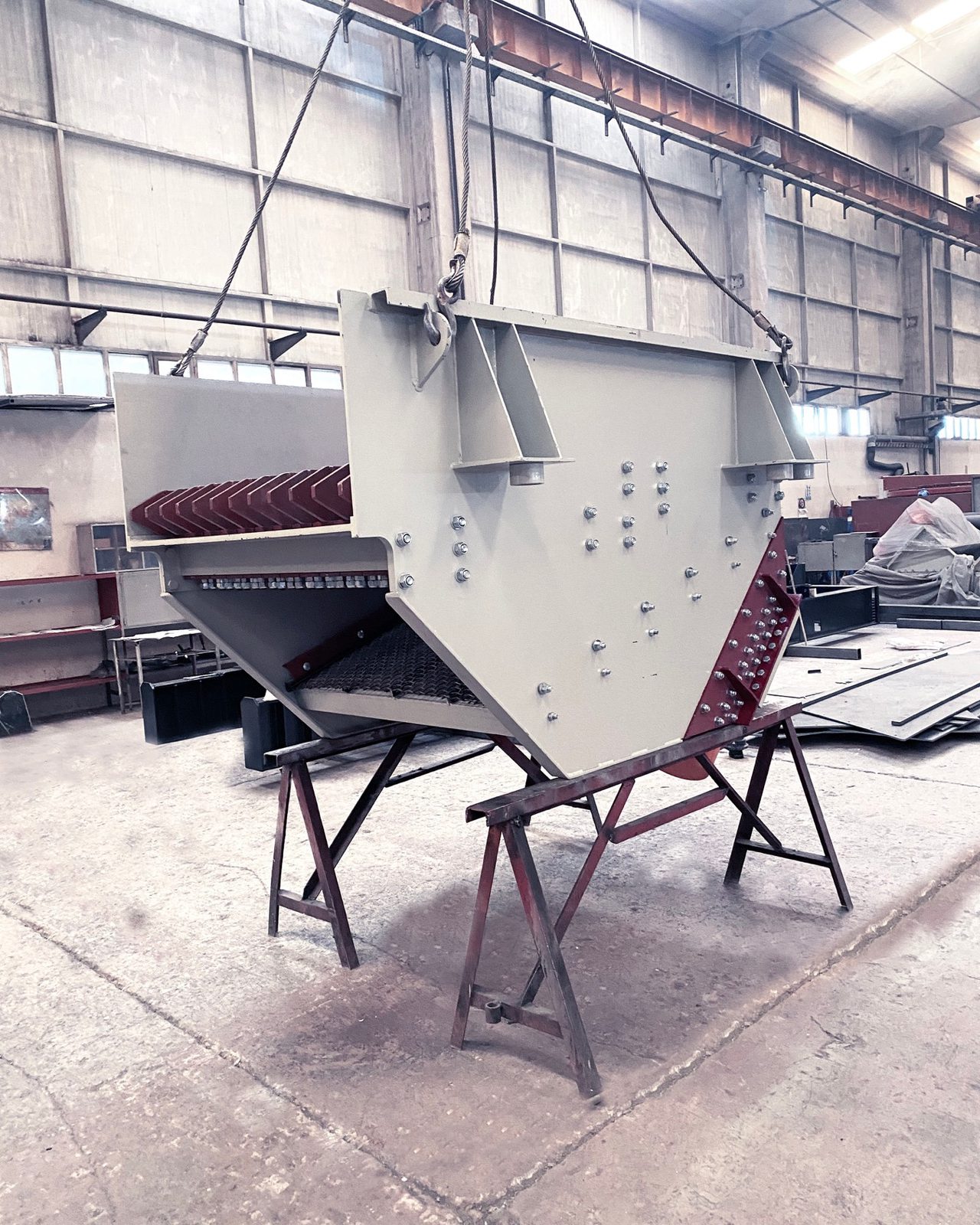
BE grizzly feed screens combine a vibrating feeder with a grizzly section. As the material travels over the grizzly bars, fines fall through and bypass the primary crusher, and only the oversize enters the crusher. This scalping raises plant capacity, reduces crusher wear and helps keep clay and fines out of the crushed product.
The BE1423 (1,400 × 2,300 mm) and BE1525 (1,500 × 2,500 mm) are designed to match GELEN primary vibrating feeders. Speed and stroke are adjustable for control over the feed, the grizzly design can be configured for the application, and grizzly bars are quick to change, which keeps downtime short over the machine's service life.
| Widthmm | Lengthmm | PowerkW | Theoretical Capacityt/h | |
|---|---|---|---|---|
| BE1525 | 1,500 | 2,500 | 2 x 8 | 440–770 |
| BE1423 | 1,400 | 2,300 | 2 x 5.3 | 380–720 |
Theoretical capacity is calculated for free-flowing material with a bulk density of 1.6 t/m³. Material passing through the grizzly bars is not added.
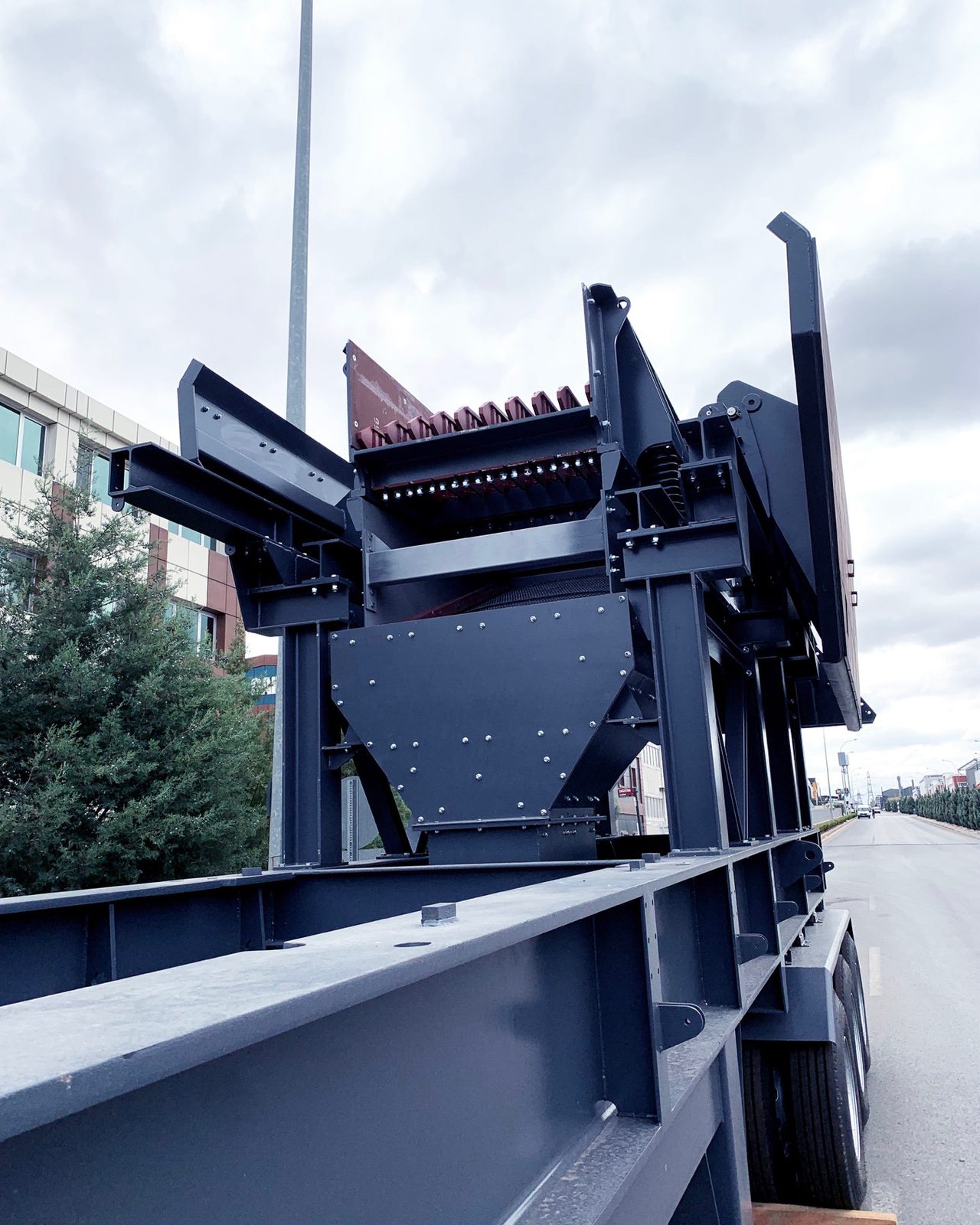
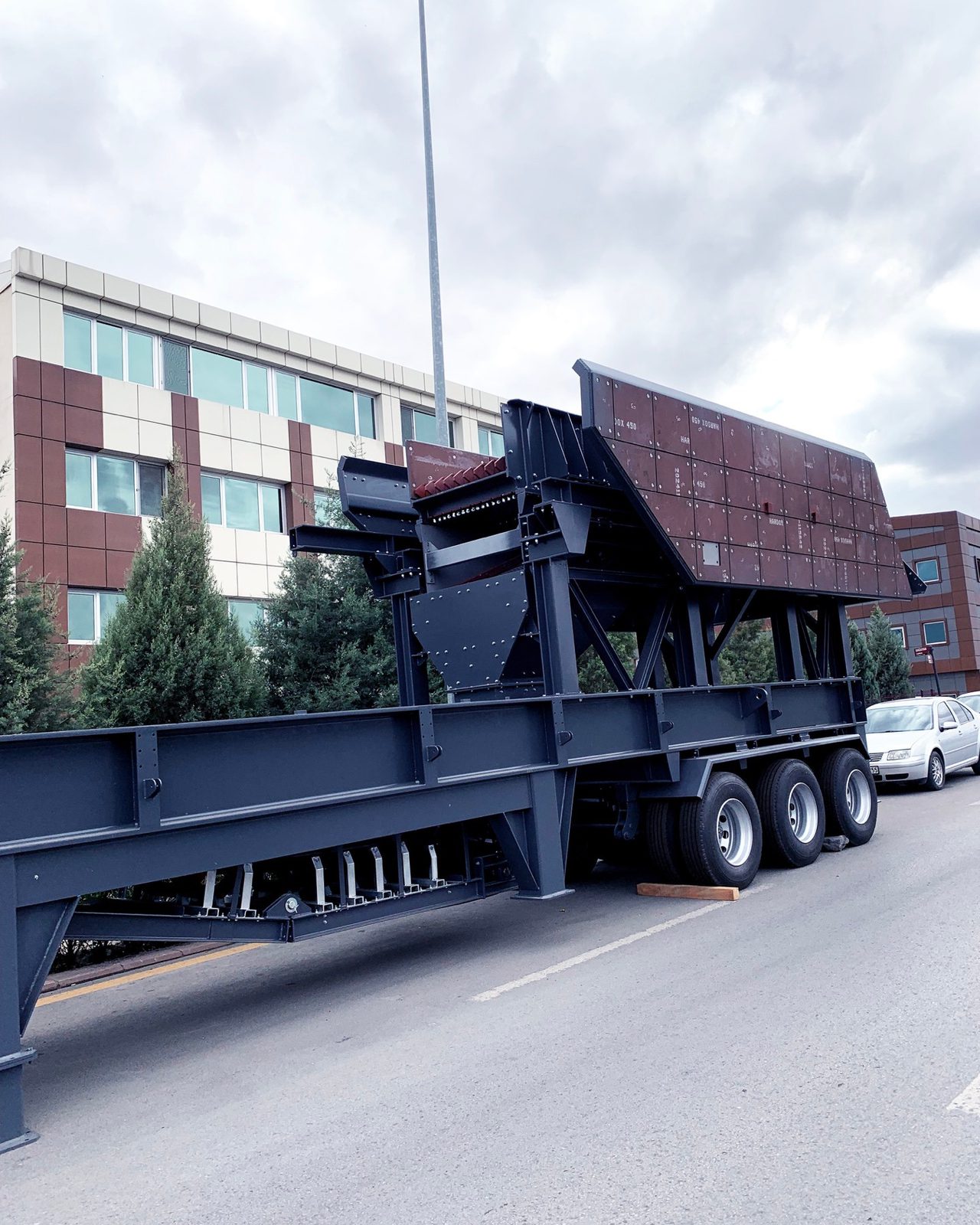
A TB feeder in its transport frame, where the drive and the suspension are both in plain view.
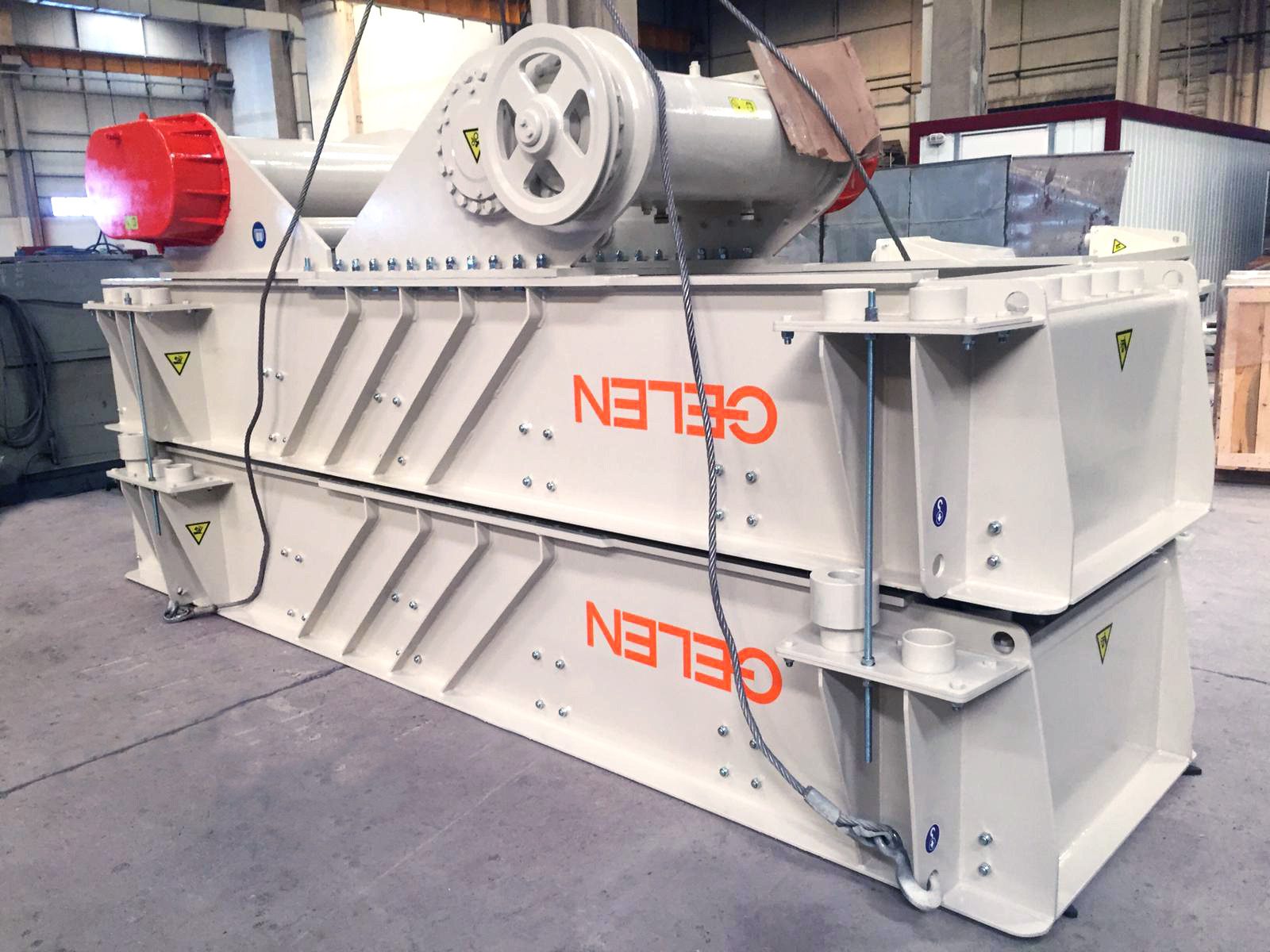
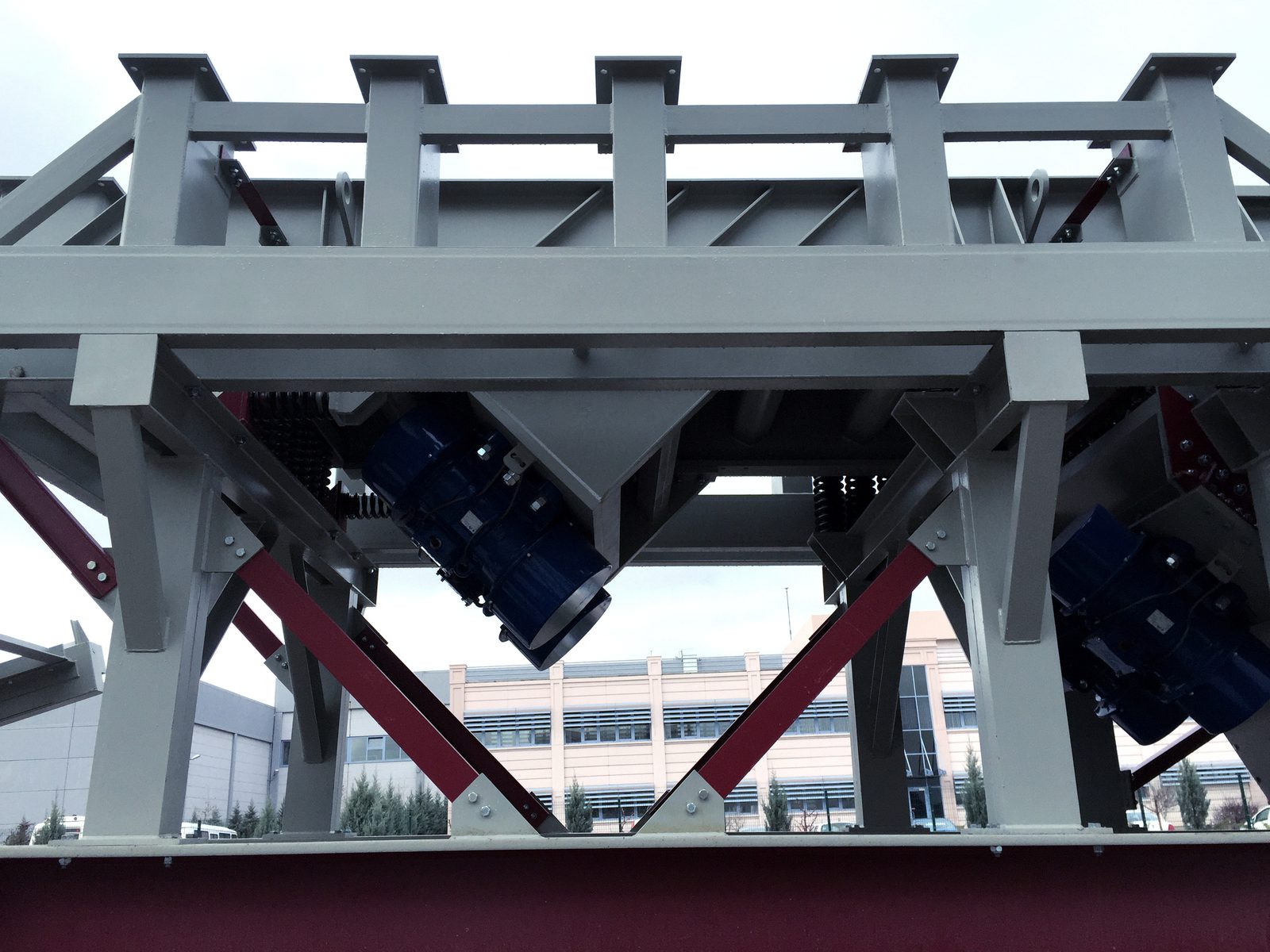
Two counter-rotating unbalanced motors. Their side forces cancel and their in-line forces add, which turns two circular motions into one straight-line throw along the trough.
The trough rides on springs, not on the frame. They carry the static weight and isolate the throw, so the structure underneath feels almost none of it.
The pan the material actually travels along. Liners bolt in rather than weld, so a change does not mean cutting gear inside a live plant.
Carries the springs and the static load. On site this is what bolts to the hopper steel; here it is still holding the machine for the road.
TB vibrating feeders are built in fifteen sizes from 600 × 1,500 mm to 1,400 × 5,500 mm with twin vibrator motors from 2 × 0.9 kW to 2 × 13 kW. BE grizzly feed screens are built in 1,400 × 2,300 mm and 1,500 × 2,500 mm with 2 × 5.3 kW and 2 × 8 kW motors. Tell us the material, the largest lump size, the tonnage and the crusher you are feeding, and GELEN engineering will size the feeder and hopper for your plant.
Every feeder is built to its duty. Send those numbers and an engineer comes back with a size, a drive and what it will do in your circuit.
Size one for meA vibrating feeder turns an uneven supply from trucks and loaders into a steady feed — and, with a grizzly section, scalps the fines on the way.
Trucks or loaders tip rock into the hopper above the feeder pan; a steady bed on the pan absorbs the impact.
Twin vibrator motors drive the pan in a linear motion, moving the bed forward at a rate set by speed and stroke.
On a grizzly feed screen the material passes over grizzly bars, and fines fall through to a bypass chute or conveyor.
Oversize leaves the end of the feeder into the crusher inlet at an even rate the crusher can handle.
GELEN vibrating feeders work at the start of aggregate, mining and recycling plants.
Feeding jaw and impact crushers from dump hoppers at a controlled rate that keeps the crusher choke-fed but never overloaded.

Removing fines and clay through the grizzly bars so they bypass the crusher, raising capacity and cutting wear.

Feeding hard and abrasive ore from hoppers to primary crushers and conveyors in continuous operation.

Feeding demolition concrete and asphalt to recycling crushers while screening out soil and fines.
What TB vibrating feeders and BE grizzly feed screens bring to a crushing plant.
The feed rate is set to the crusher and screens, so downstream equipment works at steady load instead of in surges.
BE grizzly feed screens scalp fines while they feed, saving a separate scalping screen at the primary station.
Grizzly bars change quickly, and the grizzly section can be configured to the application and crusher setting.
From 600 × 1,500 mm to 1,400 × 5,500 mm, so the feeder matches both the hopper and the crusher inlet.
Two unbalanced motors on every model give a linear motion that keeps material moving evenly across the full pan width.
GELEN designs the hopper, feeder, crusher and conveyors of the primary station together, so capacities match.
The vibrating feeder is the first machine after the dump hopper and sets the pace of the whole plant.
Every circuit is different. Send us yours and we will say where a feeder fits and what it changes downstream.
Check my circuitGELEN builds four feeder types. The material and the job at the plant inlet decide which one fits.
| Vibrating Feeder (TB / BE) | Apron Feeder (AF) | Reciprocating Feeder (RB) | Wobbler Feeder (WB) | |
|---|---|---|---|---|
| Best for | Hard, free-flowing rock; scalping fines | Large, heavy, sharp run-of-mine material | Controlled feeding from hoppers and bunkers | Wet, sticky material with clay and mud |
| Motion | Linear vibration | Overlapping pans on a chain | Plate moving back and forth | Rotating elliptical bars |
| Scalping | Yes, on BE grizzly feed screens | No | No | Yes, through the gaps between bars |
| Theoretical capacity | 90–820 t/h (TB) | 350–1,840 t/h | 330–710 t/h | 290–520 t/h |
See apron feeders, reciprocating feeders and wobbler feeders.
Not sure which one? Send us the duty and an engineer will say which, and what you would give up by choosing the other.
Which one fits?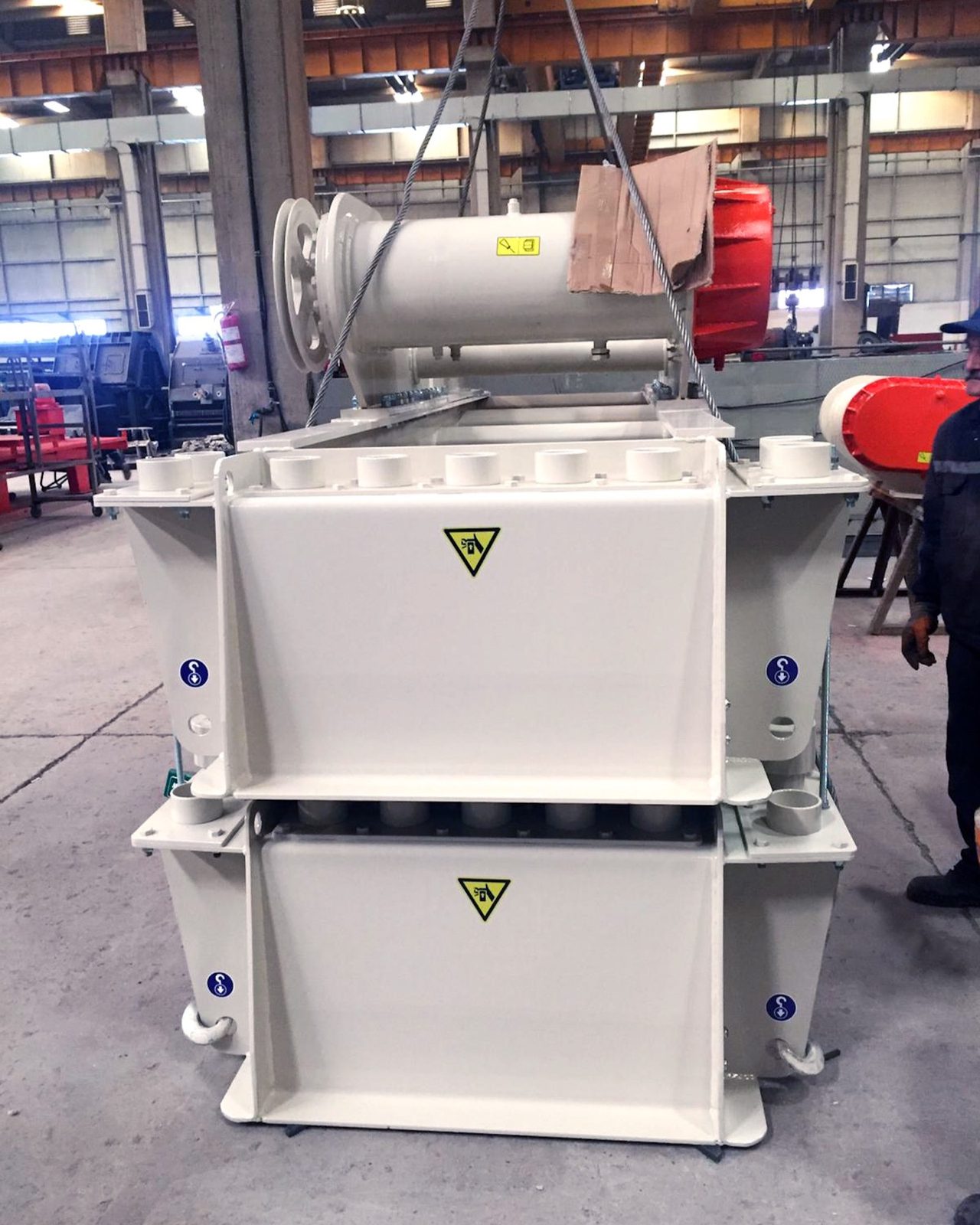
Technical guides and industry organisations for crushing plant operators.
A vibrating grizzly feeder is a vibrating feeder with a grizzly section: a set of parallel bars in the pan. It feeds material from the hopper to the primary crusher at a controlled rate and, as the material passes over the bars, lets fines fall through so they bypass the crusher. GELEN builds this machine as the BE series grizzly feed screen, alongside the TB series vibrating feeders without a grizzly.
A TB vibrating feeder conveys all material from the hopper to the next machine at a controlled rate. A BE grizzly feed screen does the same but also scalps: fines fall through its grizzly bars and bypass the crusher. Choose a TB feeder when the feed has few fines or a separate scalping screen follows; choose a BE grizzly feed screen to remove fines before the primary crusher.
The feed rate depends on the speed and stroke of the vibrating motion, the depth of material on the pan and the inclination. On GELEN feeders speed and stroke are adjustable, so the flow can be set to what the crusher and screens can take. Keeping the hopper choke-fed gives a steady bed on the pan and the most even feed.
Calculated for free-flowing material at a bulk density of 1.6 t/m³, TB vibrating feeders cover about 90–160 t/h (TB615) up to about 480–820 t/h (TB1445 and TB1455), and BE grizzly feed screens about 380–720 t/h (BE1423) and 440–770 t/h (BE1525). These are theoretical figures from the standard volumetric method; actual capacity depends on material, lump size, moisture and hopper design, so GELEN confirms the size for each application.
The volume a vibrating feeder can move is set mainly by its pan width, the bed depth and the travel speed. A longer pan does not move more material; it gives a larger hopper opening, room for bigger lumps, better energy absorption under the hopper and, on grizzly feed screens, more scalping length. That is why, for example, TB930 and TB940 share the same theoretical capacity but suit different duties.
Set the gap so that material which is already smaller than the crusher's product size bypasses the crusher. A gap close to the primary crusher's closed-side setting is a common starting point; a wider gap scalps more but lets larger pieces bypass, a narrower gap protects the product from clay but sends more fines through the crusher. GELEN's grizzly section can be configured for the application.
Vibrating grizzly feeders work best with free-flowing rock. With wet, sticky, clay-rich material the grizzly gaps can blind. A GELEN WB wobbler feeder, whose rotating elliptical bars keep the gaps open while separating mud and fines, is usually the better choice for that feed.
Inspect and replace worn pan liners and grizzly bars, check the springs, and keep the vibrator motor bolts tight and the motors lubricated as specified. Watch the feeder's motion: an uneven or twisting motion usually points to a broken spring or a loose motor. A consistent schedule prevents unplanned stops at the primary station.
Send your material, your capacity and the product sizes you need. An engineer answers, not a form.