GELEN screw classifiers and sand screws wash, classify and dewater sand in a single machine. Silt and clay leave with the overflow water while the spiral carries clean sand up the incline, draining as it goes, and discharges a product that can go straight to the stockpile. Two series cover compact plants and high-tonnage lines: HY screw classifiers and GFW fine material washers, each in single and twin spiral designs.
Wash, classify and dewater: the tank washes the sand, the overflow weir takes away silt and clay, and the rising spiral drains the product — no separate dewatering stage is needed for most concrete and asphalt sand.
Single or twin spiral: both series include single and twin spiral machines, so more sand can be handled without moving to a longer machine.
Two capacity classes: compact HY classifiers suit smaller sand lines and plants with limited water; GFW washers handle up to 725 t/h in long, large-diameter spirals.
Slow and simple: the spiral turns at low speed (5–21 rpm on the GFW series), which keeps wear, noise and energy use low and maintenance straightforward.
HY Series Screw Classifiers
The HY series is GELEN's compact screw classifier. Each machine is an inclined tank with a spiral shaft running its full length. Sand slurry is fed into the lower pool, where the water carries silt, clay and very fine particles over the overflow weir. The heavier sand settles onto the spiral, which conveys it up the incline and out of the water. On the dry part of the incline the sand drains before it drops from the discharge chute.
HY classifiers are built in single spiral (HY880, HY660) and twin spiral (HY1100-2, HY880-2, HY660-2, HY550-2) versions. The model name gives the spiral: HY880 has an Ø800 mm spiral 8,000 mm long. Outputs run from 30 t/h to 160 t/h, quoted for 0–3 mm and 0–7 mm sand products, with drive powers from 5.5 kW to 2 × 11 kW.
A typical HY installation sits under a wet screen or after a VSI crusher, taking the sand fraction and turning it into a washed, drained product ready for concrete and asphalt specifications.
HY Series Screw Classifiers
SPIRAL Ø x LENGTH mm
OUTPUT 0–3 mm t/h
OUTPUT 0–7 mm t/h
PowerkW
Weightkg
Single spiral
HY880
Ø800 x 8000
75
100
11
4,500
Single spiral
HY660
Ø600 x 6000
30
45
5.5
2,500
Twin spiral
HY1100-2
Ø1000 x 10000 - 2
110
160
2 x 11
6,500
Twin spiral
HY880-2
Ø800 x 8000 - 2
110
160
2 x 11
6,500
Twin spiral
HY660-2
Ø600 x 6000 - 2
55
85
2 x 5.5
3,500
Twin spiral
HY550-2
Ø500 x 5000 - 2
40
60
2 x 4
2,700
Outputs are given for 0–3 mm and 0–7 mm sand products. Actual capacity depends on the feed gradation, the fines content and the water volume.
HY Series Screw Classifiers
Performance Charts
Sand Output by Model
From the specification table. Values are nominal and vary with material and operating conditions.
GFW Series Fine Material Washers
The GFW series is the high-capacity sand screw. Long, large-diameter spirals give the sand more time in the pool and on the drainage incline, so GFW washers remove silt, clay and ultra-fine contaminants from specification sands at tonnages up to 725 t/h.
Four spiral sizes, from 915 × 7,620 mm to 1,676 × 10,670 mm, are each built as a single spiral (S) or twin spiral (T) machine. Heavy-duty gear reducers drive the spirals at 5–21 rpm depending on size, and water demand is published for every model so the water circuit can be sized with the washer.
GFW washers are the choice when a plant produces large volumes of concrete or asphalt sand, or when a sand product must be cleaned to a tighter fines limit than a compact classifier allows.
GFW Series Fine Material Washers
Spiral Sizemm
Feed Sizemm
Max Capacityt/h
Est. Water Requiredm³/h
Power RequiredkW
Speedrpm
GFW3625S
915 x 7620
10
22–90
163.5
11
10–21
GFW4432S
1120 x 9700
10
35–160
391
18.5
8–17
GFW5434S
1370 x 10010
10
60–250
475.1
30
7–14
GFW6636S
1676 x 10670
10
90–360
589
45
5–11
GFW3625T
915 x 7620
10
45–180
284.1
2 x 11
10–21
GFW4432T
1120 x 9700
10
70–315
635
2 x 18.5
8–17
GFW5434T
1370 x 10010
10
125–495
840.3
2 x 30
7–14
GFW6636T
1676 x 10670
10
180–725
993.1
2 x 45
5–11
S = single spiral, T = twin spiral. Maximum feed size 10 mm. Water requirement is the estimated volume for the maximum capacity.
GFW Series Fine Material Washers
Performance Charts
Maximum Capacity by Model
From the specification table. Values are nominal and vary with material and operating conditions.
Water Requirement by Model
From the specification table. Values are nominal and vary with material and operating conditions.
Anatomy
What You Are Looking At
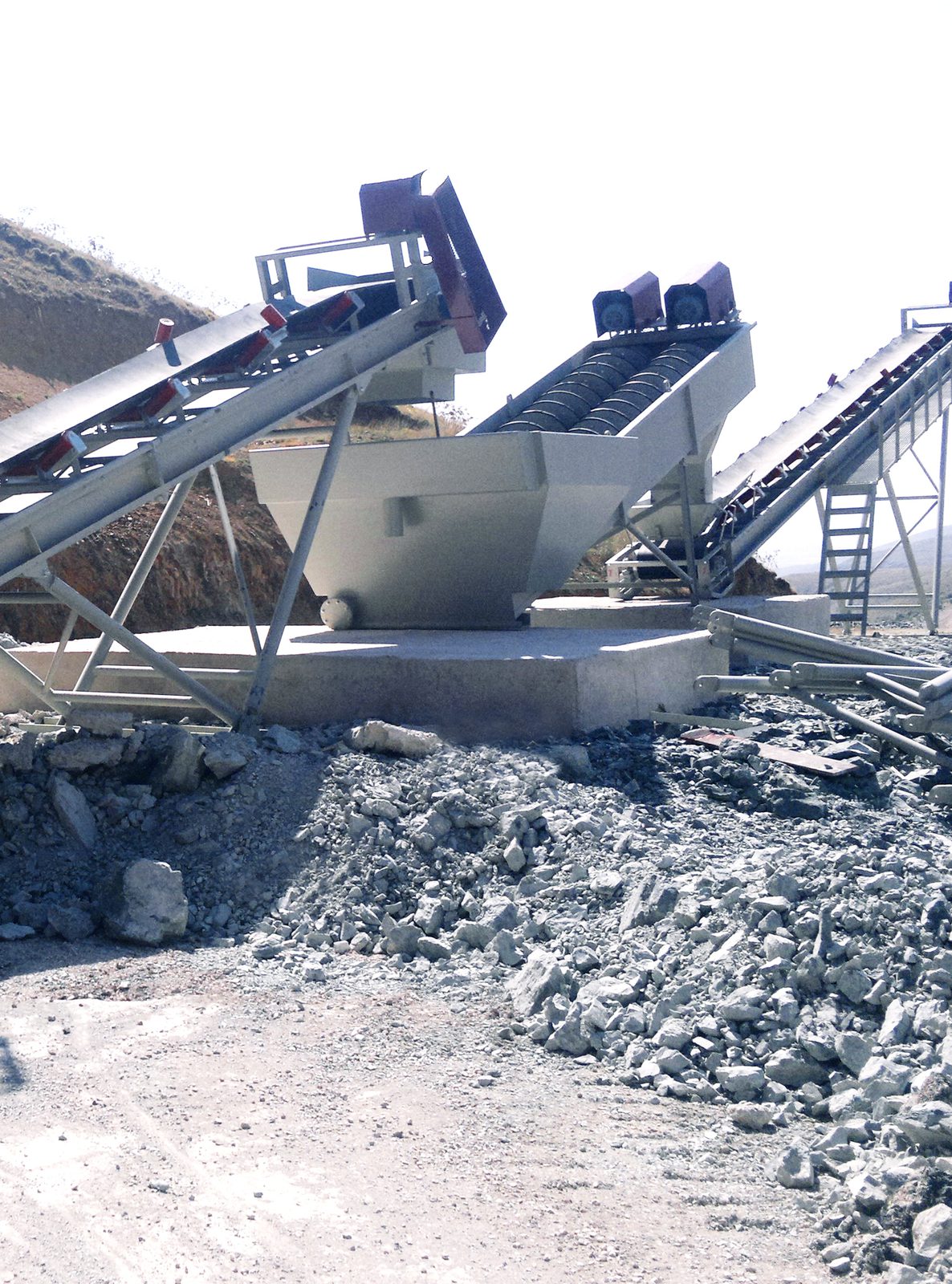
A twin HY installation at a quarry. Five things worth naming.
1 · Spiral Flight
The flight lifts settled sand up the incline while the water runs back down past it. Its leading edge is the wear surface: a worn edge costs capacity and dewatering at the same time, which is why the flights are on the inspection schedule.
2 · Drive and Gearbox
Geared drive at the top end, above the water line. Neither the motor nor the reducer ever sits in the slurry.
3 · Settling Tub
Sand settles here while the silt stays in suspension. The balance between water volume, feed rate and spiral speed is what decides where the fines are cut.
4 · Overflow Weir
Silt and wash water leave over this edge. What goes over it and what stays behind is decided right here, which is why the pool conditions at the weir matter as much as the water volume going in.
5 · Submerged Lower Bearing
Sealed and greased for life, running below the slurry line. This is the hard part of the machine, and the seal is where it is won or lost.
Technical Specifications
GELEN screw classifiers cover sand washing duties from 22 t/h to 725 t/h. The HY series offers spirals from Ø500 mm to Ø1,000 mm in 5 to 10 m lengths; the GFW series offers spirals from 915 mm to 1,676 mm in 7.6 to 10.7 m lengths. Both series include single and twin spiral machines. Tell us your feed gradation, fines content and target product, and GELEN engineering will size the classifier and its water circuit for your plant.
Every screw classifier is built to its duty. Send those numbers and an engineer comes back with a size, a drive and what it will do in your circuit.
One tank and spiral wash, classify and dewater; the extras follow the water circuit.
Item
Standard
Optional
Washing, classifying and dewatering in one tank
Yes
—No
Single or twin spiral, HY and GFW series
Yes
—No
Slow spiral speed, 5 to 21 rpm on the GFW series
Yes
—No
Published water demand for every model
Yes
—No
Wear-resistant spiral flights and tank liners
Yes
—No
Weir plates set to the required cut point
—No
Yes
Overflow launder and settling arrangement
—No
Yes
Walkways, handrails and access platform
—No
Yes
Variable-frequency drive on the spiral
—No
Yes
Rubber or ceramic lining for abrasive feed
—No
Yes
Feed box and spray bar designed with the machine
—No
Yes
Standard equipment is what this page describes. The optional column is equipment this class of machine is commonly ordered with; GELEN confirms the scope of supply for each project.
How It Works
How a Screw Classifier Works
A screw classifier combines three processes in one tank. The balance between water volume, feed rate and spiral speed decides where the fines are cut and how dry the product leaves.
Feed
Sand slurry from a wet screen, sump or crusher enters the pool at the lower end of the inclined tank.
Classify
Water flows toward the overflow weir, carrying silt, clay and ultra-fine particles out of the tank.
Convey
The heavier sand settles onto the rotating spiral, which lifts it up the incline and out of the pool.
Dewater and discharge
Above the waterline the sand drains as it travels, then drops from the chute onto a stockpile conveyor.
Applications & Industries
GELEN screw classifiers work in aggregate, mining and recycling plants wherever sand must leave clean, graded and drained.
Concrete & Asphalt Sand
Washing natural and crushed sand to remove the silt and clay that weaken concrete and asphalt mixes, producing 0–3 mm and 0–7 mm products.
Removes silt and clay over the weir
Drained product ready to stockpile
Fits under wet screens
Manufactured Sand
Cleaning the fines-rich sand a VSI crusher produces, so manufactured sand meets the fines limits of concrete specifications.
Takes VSI crusher sand directly
Controls excess crusher fines
Twin spiral for higher tonnage
Mining & Industrial Sand
Washing and dewatering sand fractions in mineral processing and industrial sand plants, where a consistent product is sold on specification.
Consistent product at steady feed
GFW washers up to 725 t/h
Water demand published per model
Recycled Aggregate
Washing the sand fraction from construction and demolition waste, removing soil and light contaminants so recycled sand can be reused.
Removes soil and light contaminants
Works after a wet screening stage
Supports circular aggregate supply
Key Features & Benefits
The engineering choices behind GELEN screw classifiers and sand screws.
Washing, Classifying and Dewatering in One
A single tank and spiral replace separate washing, classifying and dewatering machines for most sand products, keeping plant layouts short.
Single and Twin Spiral Versions
Both series include single and twin spiral machines, so capacity can be matched to the plant without moving to a longer machine.
Two Series for Two Scales
HY classifiers serve compact sand lines from 30 t/h; GFW washers carry high-tonnage specification sand to 725 t/h.
Low Speed, Low Wear
Spirals turn slowly — 5 to 21 rpm on the GFW series — so abrasion, power demand and maintenance stay low on hard, sharp sands.
Published Water Demand
The GFW table lists the water each model needs, so pumps, pipework and water recycling can be designed together with the washer.
Built by a Plant Manufacturer
GELEN designs the screens, crushers, conveyors and washing equipment around the classifier, so the whole sand line is sized as one system.
Plant Circuit
Screw Classifiers in Your Plant
In most plants the screw classifier takes the sand fraction after wet screening or a VSI crusher and delivers the finished sand product. Where very fine sand must be recovered from the overflow water, a sand washing plant with hydrocyclones follows it.
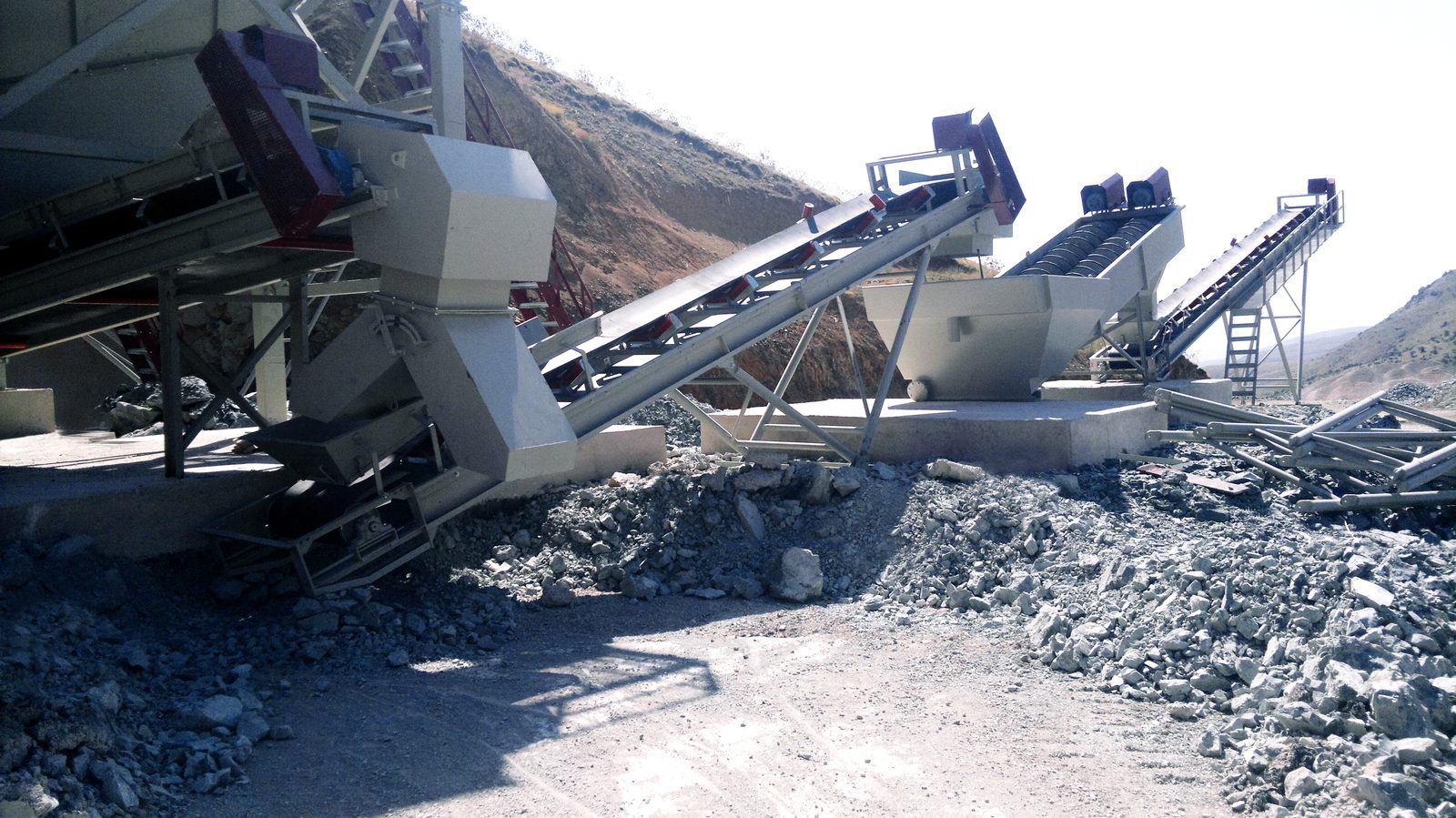
GELEN screw classifiers in a sand washing line at a quarry, fed by belt conveyors
2 / 4
Twin GELEN HY screw classifiers dewatering sand on a quarry site
3 / 4
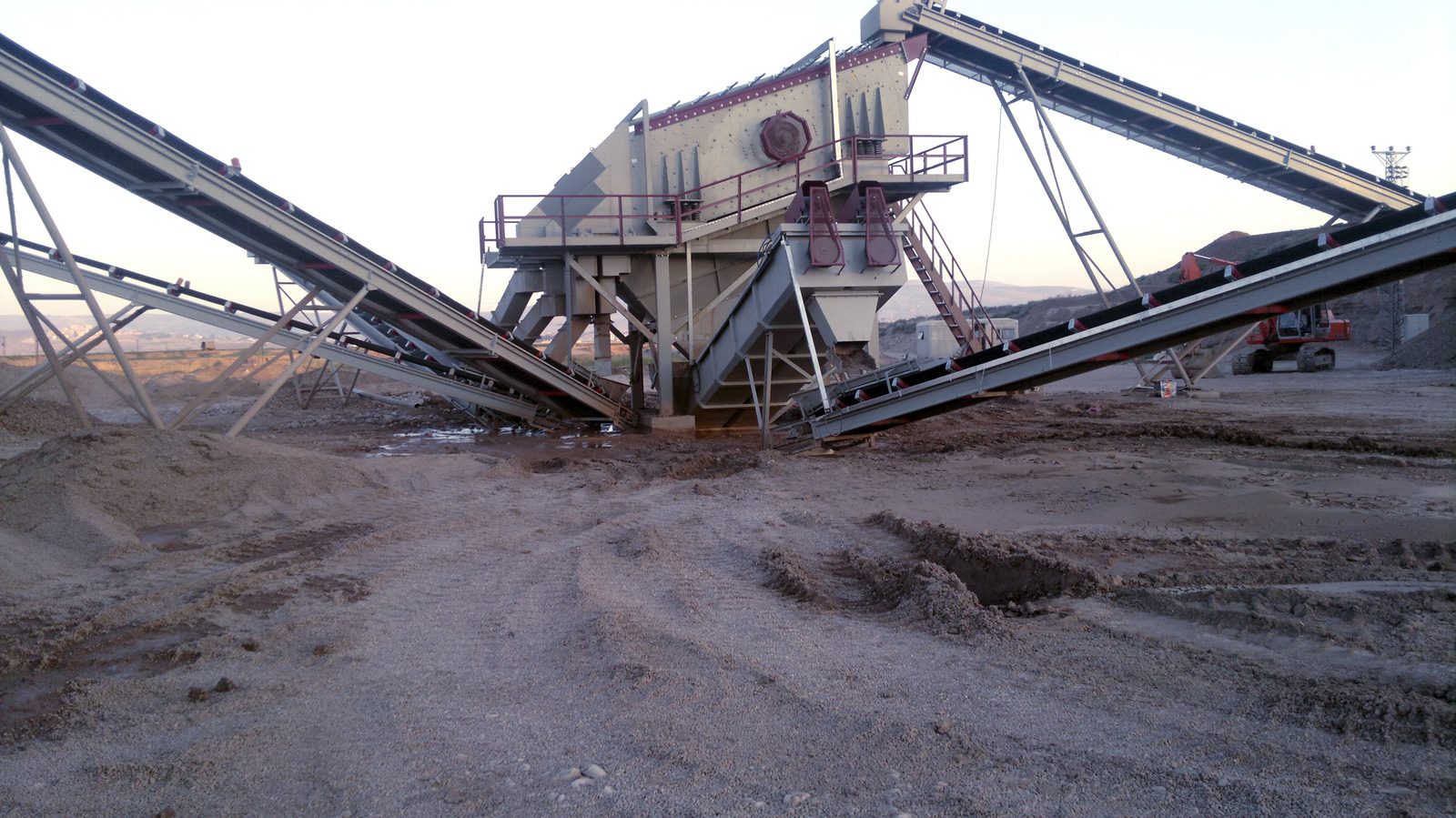
GELEN washing and screening line with a vibrating screen tower and stockpile conveyors
4 / 4
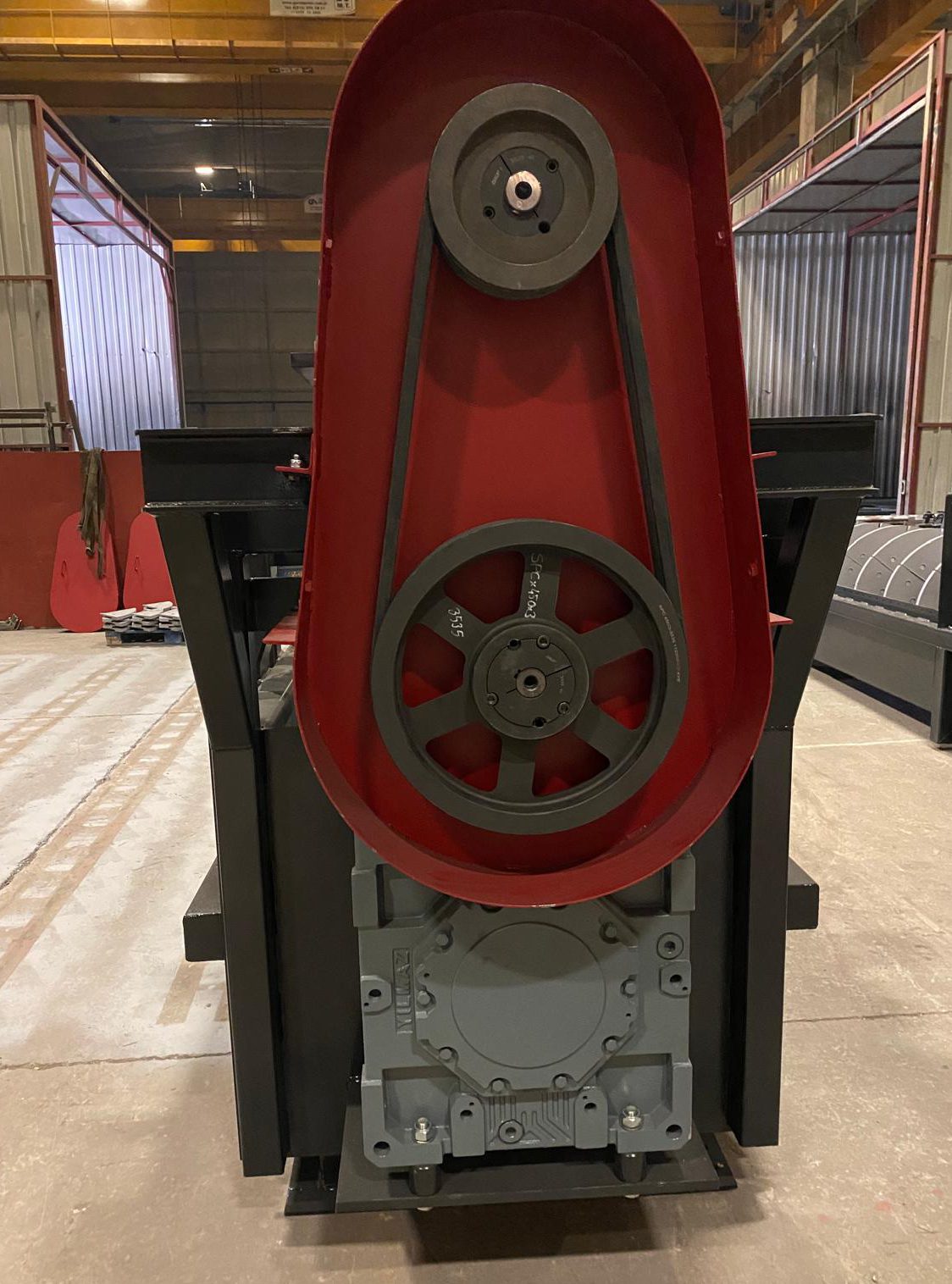
GELEN GFW fine material washer drive with belt guard and gear reducer
Documents
Downloads
PDFThe GELEN product catalogue includes the full HY and GFW specification tables together with the rest of the washing, crushing and screening range.Request the Catalogue
Industry Resources
Technical guides and industry organisations for sand and aggregate producers.
A screw classifier is an inclined tank with a rotating spiral (screw) running its length. Sand slurry is fed into the pool at the lower end. Water flows toward the overflow weir and carries silt, clay and very fine particles out of the tank, while the heavier sand settles onto the spiral.
The spiral conveys the settled sand up the incline and out of the water. On the part of the incline above the waterline the sand drains, so it leaves the discharge chute as a washed, classified and dewatered product. GELEN builds screw classifiers in the HY series (30–160 t/h) and the larger GFW fine material washer series (22–725 t/h).
The terms describe the same kind of machine. "Screw classifier" stresses the classification at the overflow weir; "sand screw" or "fine material washer" stresses the washing of the sand. Both use an inclined tank and a spiral to wash, classify and dewater sand.
At GELEN the HY series is the compact screw classifier, and the GFW series is the high-capacity fine material washer with longer, larger-diameter spirals for specification sand at high tonnages.
A twin spiral machine has two spirals in one tank and handles considerably more sand than a single spiral of the same size. In the HY series, for example, the single spiral HY880 is rated at 75 t/h of 0–3 mm sand, while the twin spiral HY880-2 is rated at 110 t/h; on the GFW series the twin spiral (T) models carry about twice the tonnage of the single spiral (S) models.
Choose a single spiral when the sand tonnage is modest or space across the plant is limited, and a twin spiral when the tonnage is high or future expansion is planned.
The cut between the sand that is kept and the fines that are washed out depends on the water volume, the feed rate and the pool conditions at the overflow weir. More water or a faster upward flow carries coarser particles out; less water keeps more fine sand in the product.
In practice operators balance the water volume against the feed so that silt and clay leave with the overflow but saleable fine sand stays on the spiral. If valuable fine sand is being lost, a sand washing plant with hydrocyclones can recover it from the overflow.
A screw classifier is simple, slow-moving and well suited to washing and dewatering concrete and asphalt sand where a small loss of the finest particles is acceptable.
A sand washing plant with hydrocyclones and a dewatering screen, such as the GELEN GSP series, recovers more of the fine sand and produces a drier product, at the cost of a pump, cyclones and a vibrating screen. Many plants use both: the screw classifier produces the main sand, and a sand washing plant recovers fine sand from its overflow.
Water demand depends on the machine size, the tonnage and how much silt and clay must be removed. For the GELEN GFW series the estimated water requirement at maximum capacity ranges from about 164 m³/h on the GFW3625S to about 993 m³/h on the GFW6636T; every model's figure is listed in the specification table.
The water circuit — pumps, pipework, settling ponds or water recycling — should be designed together with the classifier.
The HY series covers 30 to 160 t/h, quoted for 0–3 mm and 0–7 mm sand products, from the single spiral HY660 to the twin spiral HY1100-2 and HY880-2. The GFW series covers 22 to 725 t/h, from the single spiral GFW3625S to the twin spiral GFW6636T.
Actual capacity depends on feed gradation, fines content and water volume, so GELEN sizes the machine from your material data.
Yes. VSI crushers produce well-shaped sand but often with more fines than concrete specifications allow. A screw classifier after the VSI washes out the excess fines at the overflow and delivers a drained manufactured sand, which is one of the most common uses of the HY and GFW series.
1981
Manufacturing since
1,000+
Screens delivered
6
Continents served
1,000 t/h
Largest plant
Talk to a GELEN Engineer
Send your material, your capacity and the product sizes you need. An engineer answers, not a form.