
Who this is for: quarry and gravel pit operators, recyclers and plant engineers who need to turn dirty sand into a saleable, in-specification product and want to understand each step before choosing equipment.
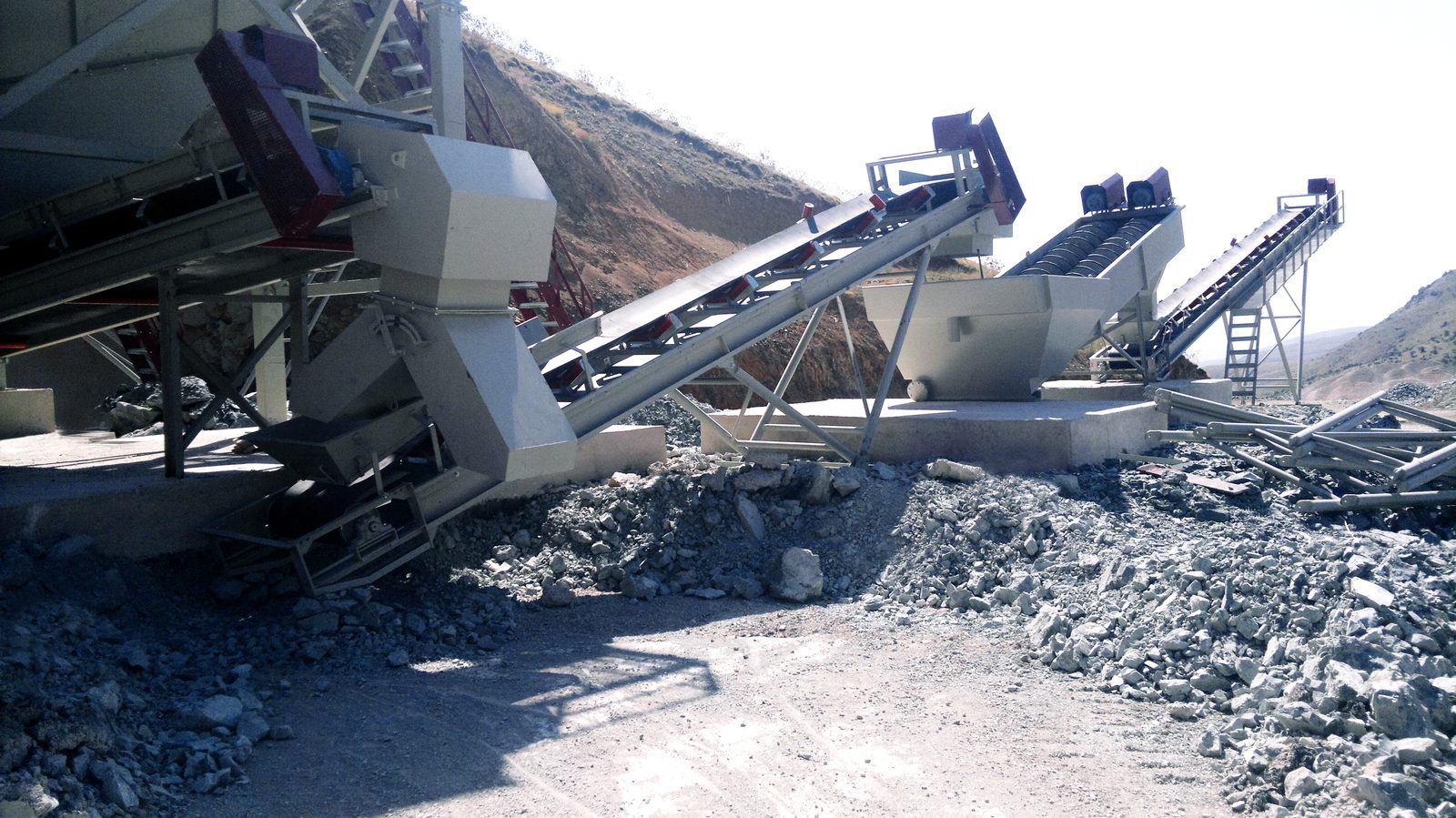
Why Sand Is Washed
Natural and crushed sand carries silt, clay and sometimes organic matter. These fines coat the sand grains, raise the water demand of concrete and mortar, weaken the bond with cement and bitumen, and push the product outside its specification.
Specifications therefore limit the material finer than about 0.063–0.075 mm. ASTM C33 allows at most 3% in sand for concrete subject to abrasion and 5% for other concrete; in Europe EN 12620 sets fines categories that each country applies. Washing removes that fraction and dewaters the sand so it can be stockpiled and sold.
- Concrete and mortar sand that meets the fines limit
- Asphalt sand with a clean surface for bitumen coating
- Manufactured sand from a VSI crusher with its excess microfines reduced
- Industrial and silica sand with tight grading and chemistry requirements
- Recycled sand from construction and demolition waste
The Sand Washing Process, Step by Step
1. Feed and wet screening
Material from the pit, the crusher or a feed hopper is screened wet. Spray bars on a vibrating screen rinse the gravel and separate the sand fraction, usually 0–4 or 0–5 mm, which falls through the bottom deck with the water as a slurry.
2. Scrubbing, when clay is bound to the stone
If the feed contains clay balls or sticky coatings, sprays alone will not release them. A log washer, blade mill or coarse material washer scrubs the material before the screen so the clay breaks down and can be washed away.
3. Washing and dewatering the sand
The sand slurry goes to a screw classifier or to a sand washing plant with hydrocyclones and a dewatering screen. Both separate the sand from the dirty water and discharge a drained product; they differ in how fine a sand they keep and how dry it leaves.
4. Classification, when the grading must be corrected
When the washed sand is outside its grading limits, or the plant must make two sands from one feed, a sand classifier or classifying tank splits it by size and blends the fractions back to order.
5. Stockpiling
The sand drains further on the stockpile. A lower moisture from the plant means the sand can be sold and transported sooner.
6. Water treatment and recycling
The dirty water carries the silt and clay. Settling ponds, or a thickener with a filter press for sites short of space or water, separate the solids so the clear water returns to the spray bars and the plant.
Which Machine Does What
| Machine | What it does | Use it when |
|---|---|---|
| Rinsing screen with spray bars | Washes and sizes the stone, separates the sand slurry | Every washing line |
| Log washer / blade mill / coarse material washer | Scrubs clay off gravel and breaks up clay balls | Clay is bound to the stone |
| Screw classifier | Washes, classifies and dewaters sand in an inclined trough | Coarse and medium sand, simple and robust operation |
| Sand washing plant (hydrocyclones + dewatering screen) | Recovers fine sand and dewaters it on a high-frequency screen | Fine sand is valuable or a drier product is needed |
| Sand classifier / classifying tank | Separates sand by size or density and blends fractions | Grading correction or several sand products |
| Thickener, filter press, ponds | Recovers water and removes silt | Water is scarce or ponds are not allowed |
Screw Classifier or Sand Washing Plant?
This is the most common decision in a sand washing line. A screw classifier keeps sand coarser than about 0.15 mm (100 mesh); finer sand leaves with the overflow water. A sand washing plant cuts with hydrocyclones at about 0.063–0.075 mm (200 mesh), so it keeps the fine sand, and its dewatering screen leaves the product drier.
| Screw classifier | Sand washing plant | |
|---|---|---|
| Fine sand recovery | Loses sand finer than about 0.15 mm | Keeps sand down to about 0.063–0.075 mm |
| Product moisture | Higher, drains on the stockpile | Lower, dewatered on a high-frequency screen |
| Operation | Very simple, few wear points | Pump, cyclones and screen to monitor |
| Best for | Coarse and medium sand, clean feeds | Fine sand, high value products, water-sensitive sites |
Many plants use both: the screw classifier for the main sand and a sand washing plant on its overflow to recover the fines it would lose. The hydrocyclone vs screw classifier guide explains the two working principles in detail.
How Much Water Does Sand Washing Need?
Water demand depends on the feed, the fines content and the equipment, so it is always taken from the machine data. As a guide from GELEN equipment:
- A GSP-1 sand washing plant handles a slurry feed of 300–350 m³/h for 100 t/h of sand, and a GSP-4 700–750 m³/h for 300 t/h.
- GFW fine material washers list an estimated 163–993 m³/h at their maximum capacities.
- Spray bars on the rinsing screen need additional water, sized with the screen.
Most of this water can be recycled. What is lost is the moisture that leaves with the sand and the silt, plus evaporation, so a closed water circuit mainly needs make-up water rather than a full fresh supply.
Silica Sand and Manufactured Sand
Silica and industrial sand has to meet tight limits on grading and on impurities such as iron and clay. Washing lines add attrition scrubbing and hydraulic classification, and the fines cut is chosen for the end use, glass, foundry or filtration.
Manufactured sand from a VSI crusher has good particle shape but can contain more microfines than a concrete specification allows. A washing step brings the fines down, and a sand washing plant keeps the useful fine sand that a screw classifier would lose.
How to Choose a Sand Washing Plant
Collect these before asking for a proposal. Every figure changes the equipment and the water circuit:
- Feed gradation, including the percentage finer than 0.075 mm
- Clay content and type: loose silt, sticky clay or clay balls
- Required products and their specifications
- Tonnage per hour and operating hours
- Water available and whether settling ponds are allowed
- Target moisture of the sand when it leaves the plant
- Space, power and whether the plant must be moved
Send a representative sample and its sieve analysis. The gradation below 0.5 mm decides between a screw classifier and a sand washing plant more than any other figure.