
Specification Concrete Sand
Correcting natural and manufactured sands that fall outside concrete and asphalt gradation limits.
- Removes excess fractions
- Controllable cut point
- Consistent specification product

When a sand must meet a tight gradation or be split into more than one product, washing alone is not enough. GELEN HYDROSAND fines classifying units separate sand and fine particles by size or density with a controllable cut point, and GELEN classifying tanks split and re-blend sand into specification products. HYDROSAND units cover 80 to over 500 t/h.
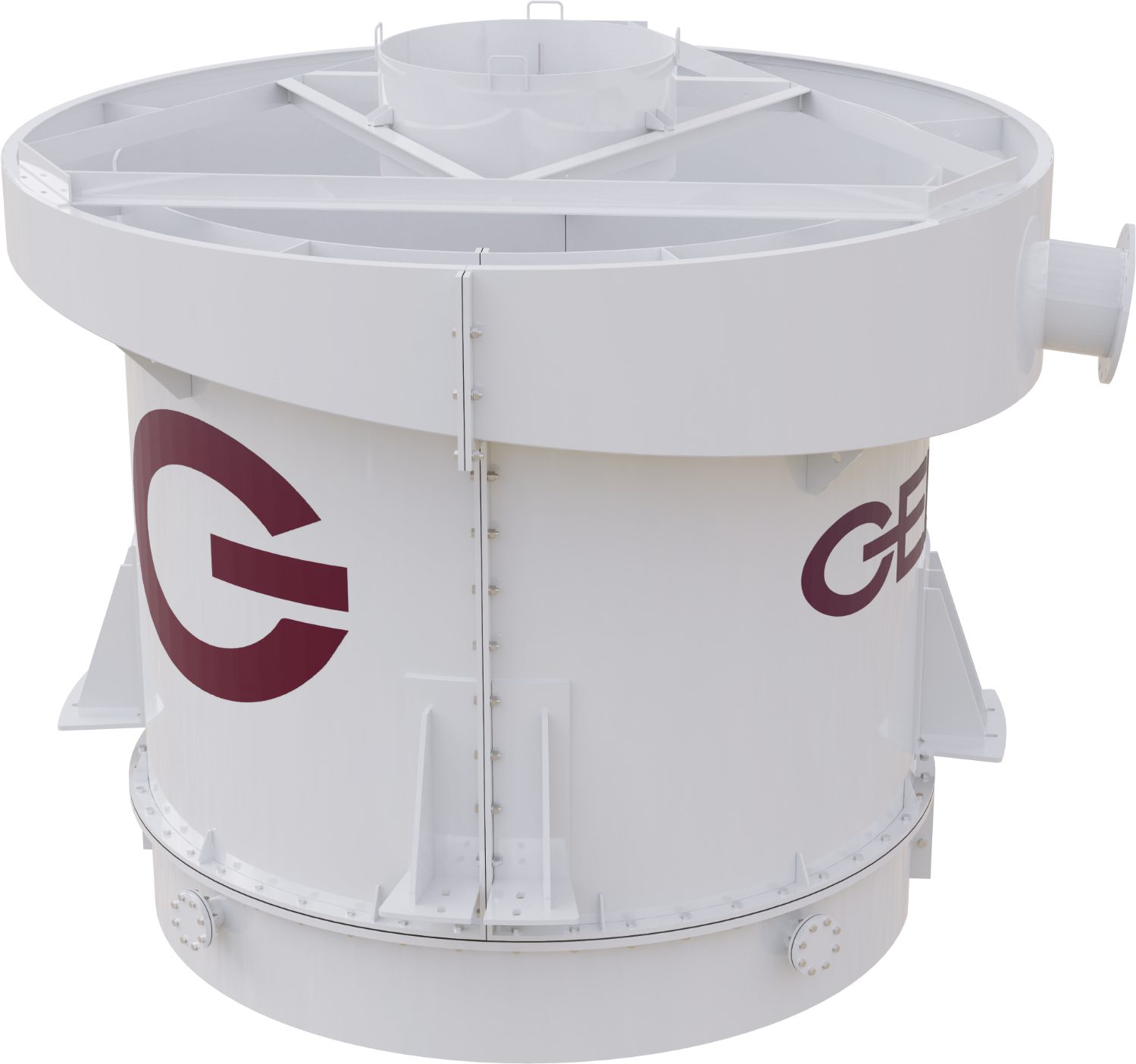
A controllable separation point: the HYDROSAND separates at a cut you can set, so an off-specification sand can be corrected rather than sold at a discount.
Built for abrasive slurry: underflow leaves through hot-vulcanised discharge cones, and a slurry-resistant coating avoids the fatigue of cold-bonded rubber linings.
Designed around your plant: multiple in-feed designs, specific lifting mounts and a layout arranged to your plant orientation.
Tanks from design to start-up: new classifying tanks, up-sized legacy tanks and updated systems, with structures to ASCE 7 or CSA standards and modern control options.
The GELEN HYDROSAND classifies sand, minerals, coal, grit and organic fine particles to a greater degree than hydrocyclones or screw classifiers. It is the unit to use when a process needs a controllable separation point, and it delivers an improved cut across a wide range of tonnages — from 80 t/h to over 500 t/h.
Feed can be delivered through a hydrocyclone, or even dry if required. Overflow solids leave through the top discharge, while the underflow discharges through hot-vulcanised discharge cones. The eco-friendly, slurry-resistant coating does not suffer the fatigue that cold-bonded rubbers show over time, and the unit can meet the NSF 61, WRAS, KTW and AS4020 standards.
Every HYDROSAND is adapted to its plant: multiple in-feed designs, specific lifting mounts and an arrangement that follows the plant orientation, with complete wet and dry system design by GELEN.
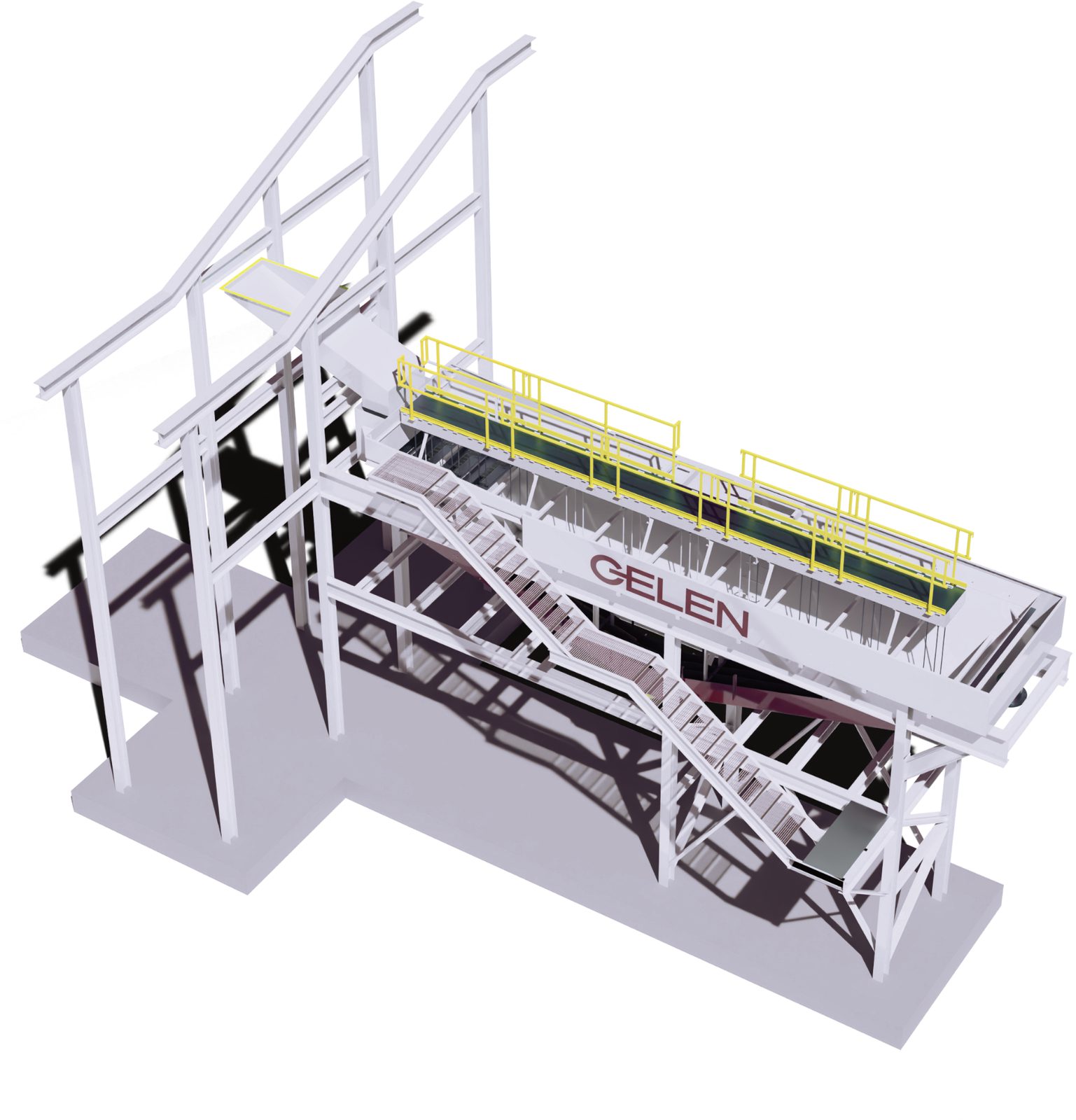
Classifying tanks split sand into fractions and blend them back into one or more specification products. GELEN has experience in a variety of blending applications and can up-size legacy tanks, update existing systems or provide complete new systems, including structures and assistance with the concrete works.
GELEN classifying tank systems bring expert system design, structures to ASCE 7 or CSA standards, modern control options and reliable components — with start-to-finish support from design to start-up and training, practical advice on options, avoidance of common installation mistakes, and parts and training support after the sale.
A classifying tank from above. The whole machine is a length of settling water and a row of valves.
Slurry runs the length of the tank and the sand settles as it goes: coarse grains drop first, fine grains travel furthest. Position along the tank is the size split.
Each station draws off one band of sizes through its own valve. Blending those draws is how a sand is built to a specification rather than sold as it falls.
The slurry enters here and spreads across the full width. Even distribution at the inlet is what makes the settling repeatable from hour to hour.
Full-length access down one side. The stations are set and re-set from here, with the tank running.
HYDROSAND fines classifying units are built for 80 t/h to over 500 t/h and configured to the feed, product and plant layout. Classifying tanks are designed per project, from new systems to the up-sizing of existing tanks. Send us your feed gradation, the product specifications you must meet and your water supply, and GELEN engineering will carry out the process analysis and recommend the classification system.
Every classifying tank is built to its duty. Send those numbers and an engineer comes back with a size, a drive and what it will do in your circuit.
Size one for meBoth systems separate particles in rising or flowing water, where coarse and dense particles settle faster than fine and light ones.
Sand slurry — from a hydrocyclone, a sump or a washing stage — enters the classifier.
In the rising water current, fine and light particles are carried upward while coarser and denser particles settle.
Overflow solids leave at the top; the settled fraction discharges below, through the HYDROSAND's discharge cones or the tank's valve stations.
Discharged fractions are combined into the required products and dewatered, typically on screw classifiers or dewatering screens.
Sand classifiers serve aggregate, mining and recycling plants where products are sold on tight specifications.
Correcting natural and manufactured sands that fall outside concrete and asphalt gradation limits.

Classifying sand, minerals, coal and grit by size or density where process specifications are tight.

Splitting one feed into two or more saleable sands and blending fractions to order with a classifying tank.

Working with hydrocyclones, screw classifiers and water recycling as part of a complete washing plant.
What GELEN classification systems bring to a sand plant.
HYDROSAND units classify to a greater degree than cyclones or screw classifiers, for products that must meet tight specifications.
The cut can be set to the product, so the same unit follows changes in feed or specification.
Hot-vulcanised discharge cones and a slurry-resistant coating that avoids the fatigue of cold-bonded rubber.
Multiple in-feed designs, specific lifting mounts and a layout arranged to your plant orientation.
Classifying tank structures designed to ASCE 7 or CSA standards, with modern control options.
Process analysis, system design, installation guidance, start-up, training and after-sales parts support.
Classifiers sit after the sand has been washed and before the final dewatering, so the products leave on specification.
Every circuit is different. Send us yours and we will say where a classifying tank fits and what it changes downstream.
Check my circuitHydrocyclones, screw classifiers and HYDROSAND units all separate by settling. The HYDROSAND gives the tightest control.
| HYDROSAND | Hydrocyclone | Screw Classifier | |
|---|---|---|---|
| Separation | Rising water current | Centrifugal force | Gravity settling in a pool |
| Cut control | Controllable separation point | Set by cyclone geometry and feed | Set by water volume and feed rate |
| Sharpness of cut | Highest | Medium | Lower |
| Typical role | Correct or split sand to specification | Recover fine sand and remove slimes | Wash and dewater sand |
Not sure which one? Send us the duty and an engineer will say which, and what you would give up by choosing the other.
Which one fits?Technical guides and industry organisations for sand and aggregate producers.
A sand classifier separates sand into fractions by particle size or density using water. It is used when washed sand still does not meet its specification, or when one feed must be split into several products.
GELEN offers two classification systems: HYDROSAND fines classifying units, which give a controllable cut from 80 t/h to over 500 t/h, and classifying tanks, which split sand into fractions and blend them back into specification products.
All three separate particles by settling in water, but the HYDROSAND classifies to a greater degree than cyclones or screw classifiers and has a controllable separation point. A hydrocyclone is mainly used to recover fine sand and remove slimes, and a screw classifier to wash and dewater sand; the HYDROSAND is chosen when the cut itself must be tight and adjustable.
HYDROSAND units classify sand, minerals, coal, grit and organic fine particles. Feed can be delivered through a hydrocyclone, or even dry if required.
HYDROSAND fines classifying units cover from 80 t/h to over 500 t/h. Each unit is configured to the feed gradation and product requirements, and GELEN carries out process analysis on difficult gradations before sizing.
A classifying tank splits a sand feed into fractions that settle along its length and blends those fractions into one or more specification products. It is used where a plant must produce several sands from one feed or correct a sand that falls outside its gradation limits. GELEN can supply new tanks, up-size legacy tanks and update existing systems.
Yes. GELEN can up-size legacy tanks and update existing systems, as well as supply complete new systems including structures and assistance with the concrete works. Structures are designed to ASCE 7 or CSA standards, and modern control options are available.
GELEN provides start-to-finish support: process analysis and system design, practical guidance on options, avoidance of common installation mistakes, start-up and training, and parts and training support after the sale.
A screw classifier washes out silt and clay and dewaters the sand, but it cannot split the sand itself by size. You need a sand classifier when the sand falls outside its gradation limits, when there is too much of one fraction, or when the plant must make two or more sand products from one feed. The classifier separates by size or density at a controllable point, and a classifying tank blends the fractions back to order.
Send your material, your capacity and the product sizes you need. An engineer answers, not a form.