Vibrating Feeders
TB vibrating feeders and BE grizzly feed screens that feed crushers evenly and scalp fines before crushing.
- 17 models
- 600–1,500 mm wide
- Grizzly scalping

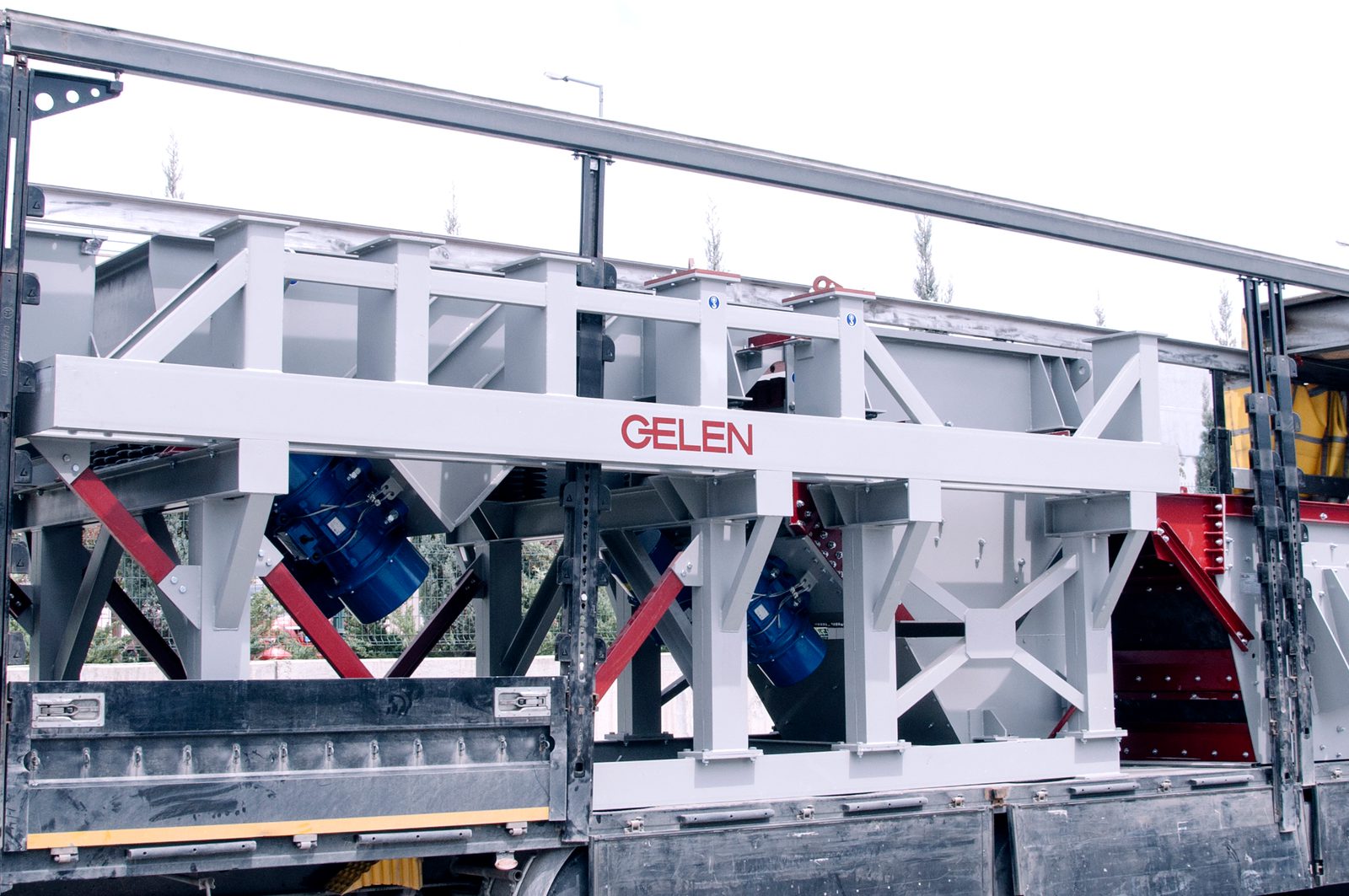
Every plant starts with its feeder. GELEN feeder and discharge systems take material from dump hoppers, bunkers and stockpiles and deliver it to crushers, screens and conveyors at a steady, controllable rate — scalping fines on the way where needed. Four feeder types cover free-flowing rock, heavy run-of-mine ore, wet and sticky material and controlled bunker discharge.
Choose the feeder by the material and the job at the plant inlet.
TB vibrating feeders and BE grizzly feed screens that feed crushers evenly and scalp fines before crushing.
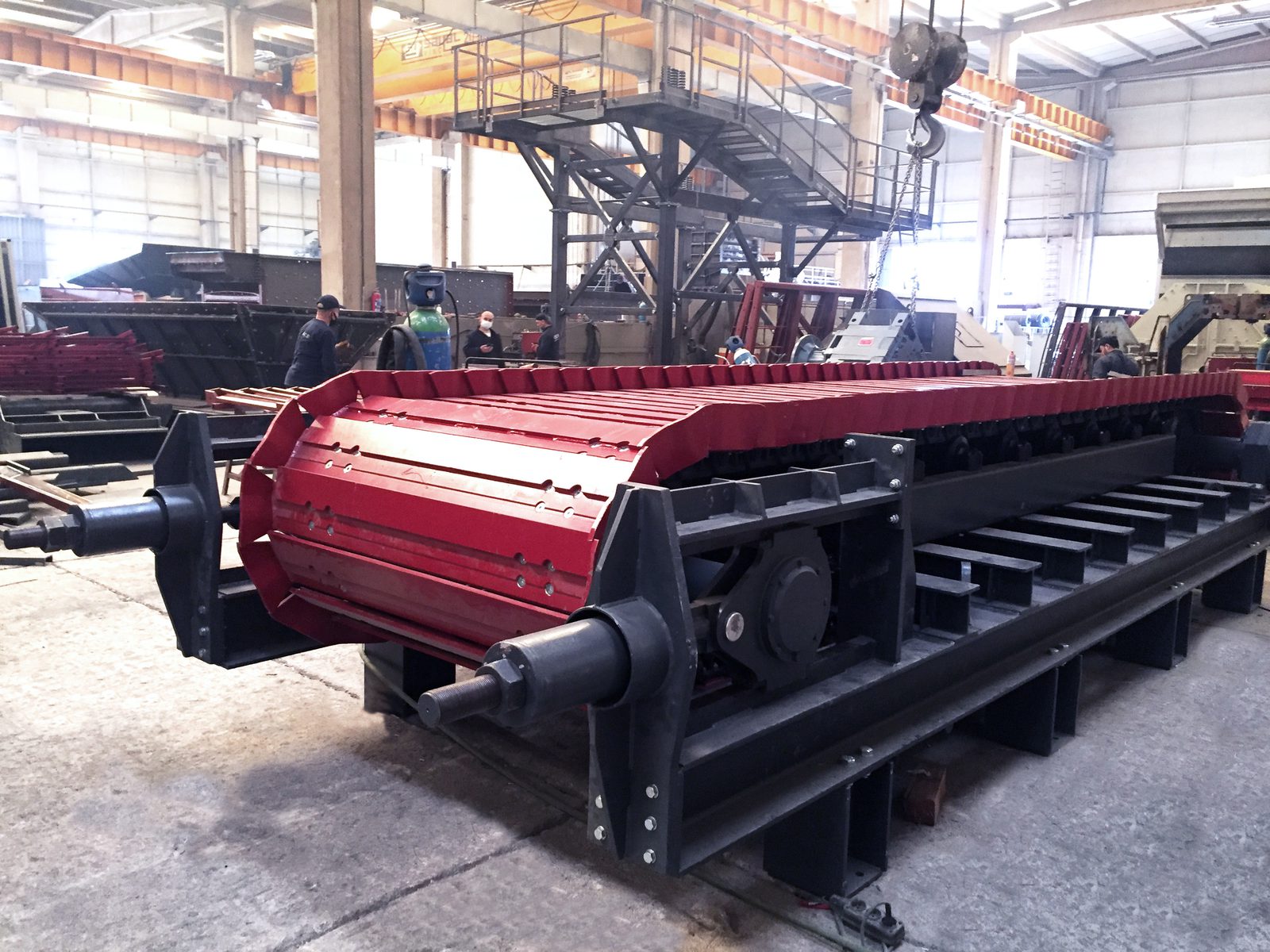
AF heavy-duty apron feeders with cast steel pans for large, heavy, sharp run-of-mine material.
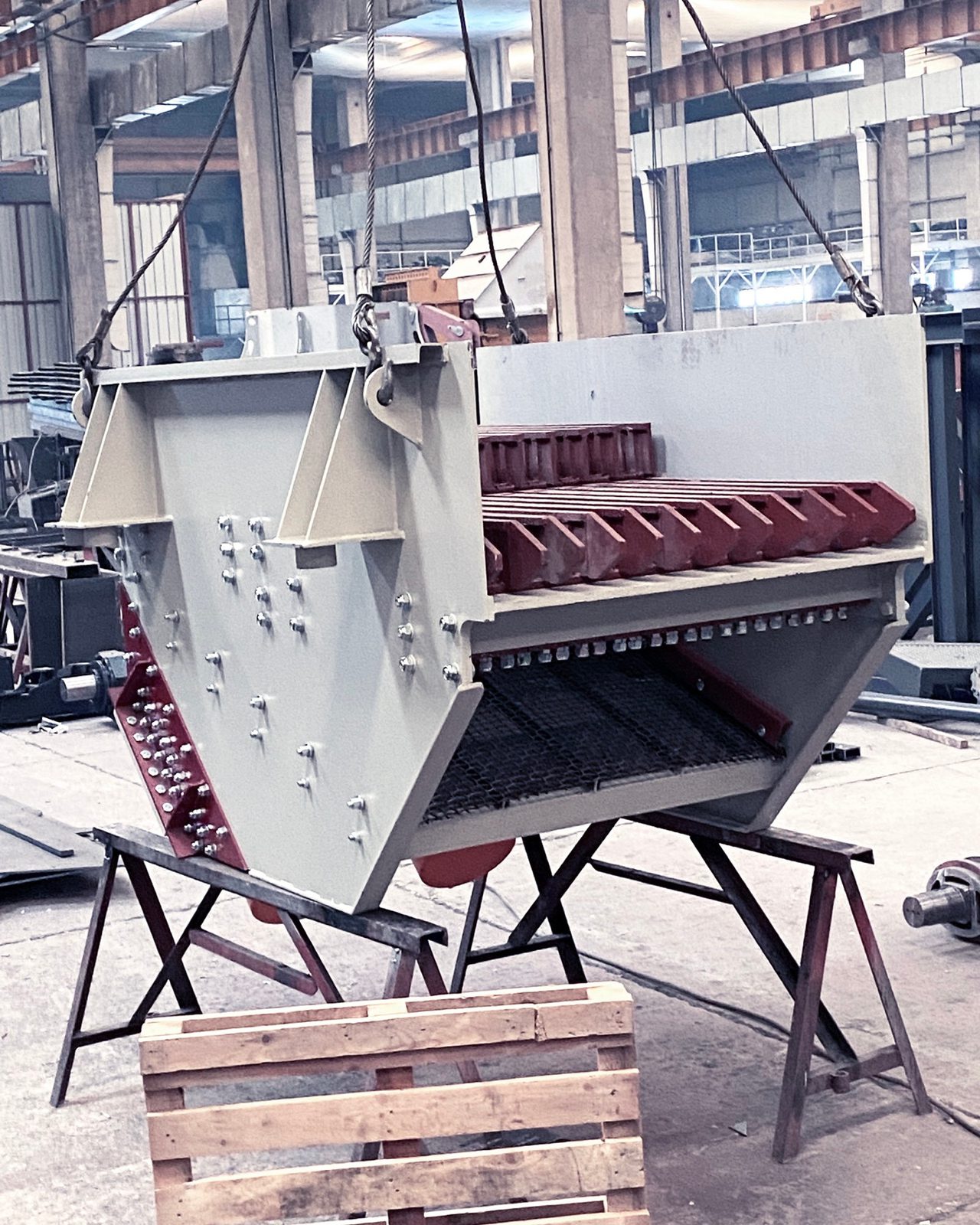
WB wobbler feeders whose rotating elliptical bars feed and scalp wet, sticky and clay-rich material.
RB reciprocating plate feeders that discharge hoppers and bunkers at an adjustable rate.
Start from the material and where the feeder sits in the plant. The theoretical capacities are calculated for a bulk density of 1.6 t/m³; GELEN confirms the size for each application.
| Feeder | Best material | Max lump size | Impact loading | Scalping | Typical position | Theoretical capacity |
|---|---|---|---|---|---|---|
| Vibrating feeder (TB) | Hard, free-flowing rock | Medium to large | High with a material bed | No | Primary or secondary feed, under hoppers | 90–820 t/h |
| Grizzly feed screen (BE) | Free-flowing rock with fines | Large | High with a material bed | Yes, through grizzly bars | Primary crusher feed | 380–770 t/h |
| Apron feeder (AF) | Heavy, sharp run-of-mine ore and rock | Very large | Very high, direct truck dumping | No | Heavy-duty primary stations | 350–1,840 t/h |
| Wobbler feeder (WB) | Wet, sticky, clay-rich material | Large | Medium | Yes, through rotating bars | Primary feed of difficult material | 290–520 t/h |
| Reciprocating feeder (RB) | Bulky or uneven material from storage | Medium to large | Medium | No | Bunkers, surge bins, reclaim tunnels | 330–710 t/h |
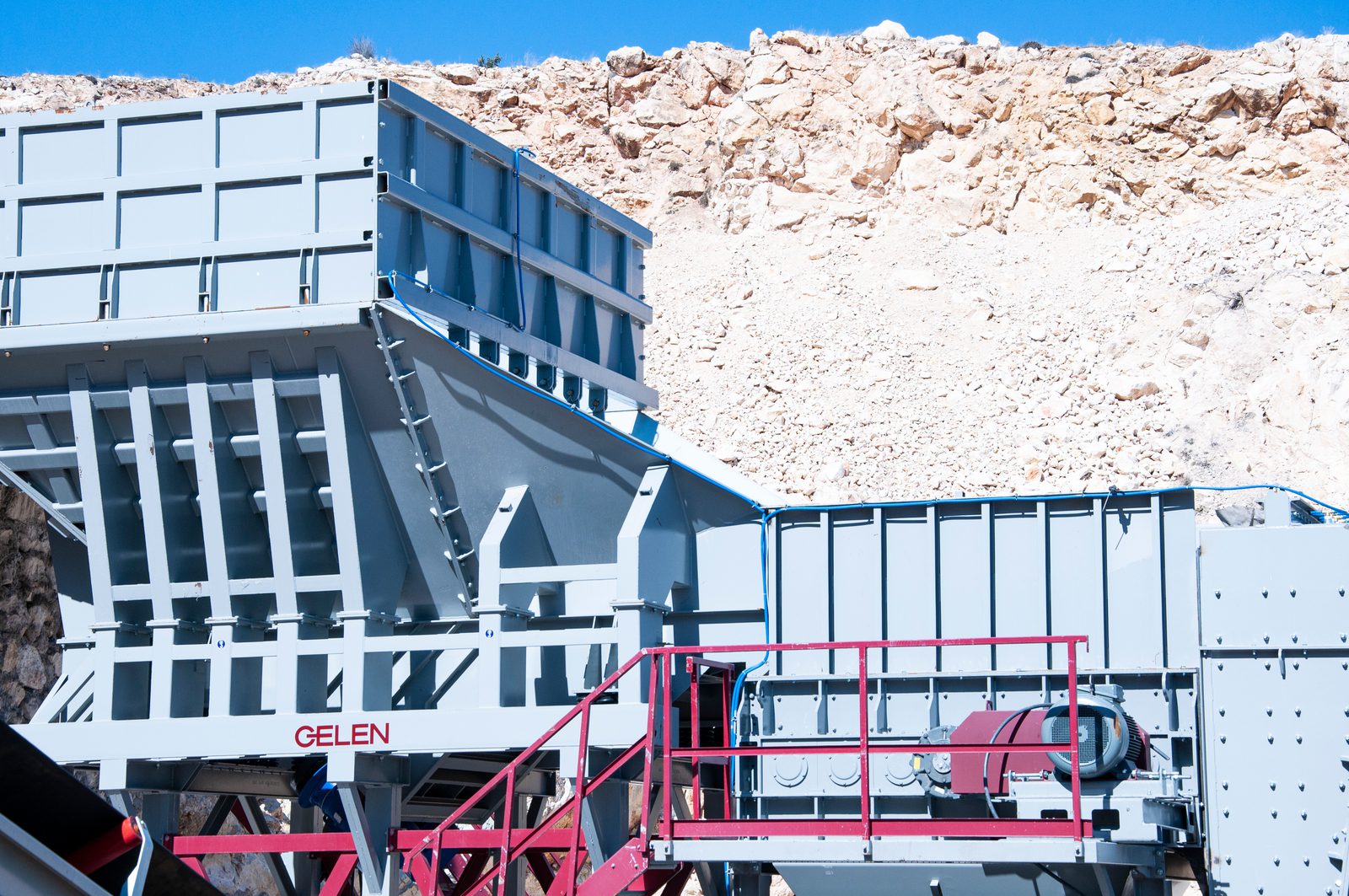
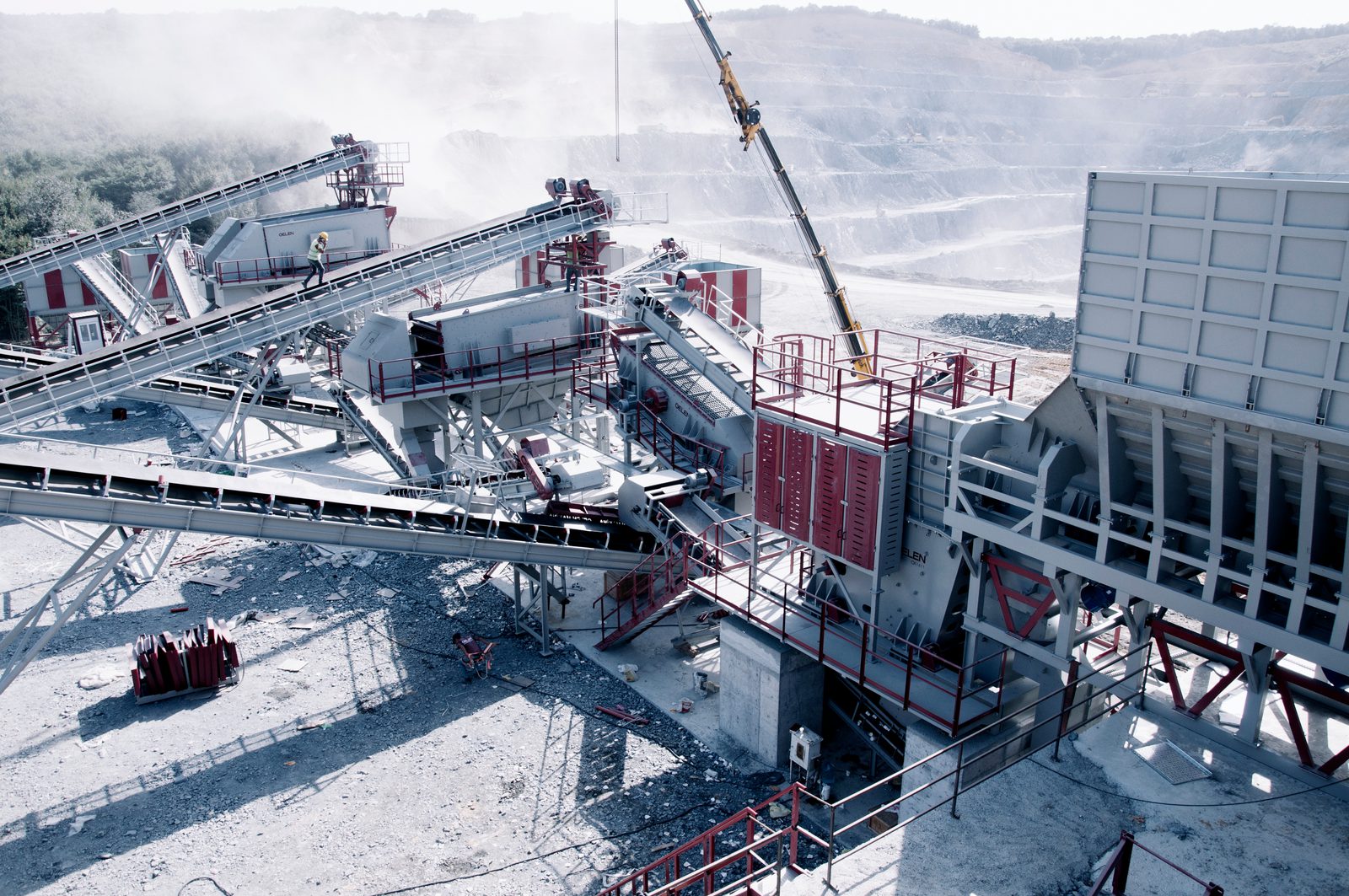
GELEN feeders work at the inlet of aggregate, mining and recycling plants.

Feeding jaw and impact crushers from dump hoppers at a rate that keeps them choke-fed but never overloaded.

Removing fines, clay and soil before the crusher to raise capacity and keep the product clean.

Drawing material from bunkers, surge bins and reclaim tunnels to conveyors, screens and secondary crushers.

Handling heavy, abrasive run-of-mine ore under direct truck dumping in continuous operation.
What GELEN brings to the first — and hardest-working — machine in the plant.
Vibrating, apron, wobbler and reciprocating feeders cover free-flowing rock, heavy ore, sticky clay and stored material.
Heavy grizzly primary feeders, pan feeders for secondary and tertiary stages, and base-mounted or suspended installations.
Grizzly feed screens, and pan feeder and double-deck screen combinations, remove fines before the crusher.
Wear liners, replaceable grizzly bars and optional high-manganese pans extend service life on abrasive feed.
Speed, stroke and chain speed adjustments let the feed follow the crusher's capacity.
GELEN builds the hoppers, feeders, crushers, screens and conveyors of the plant, so the primary station is sized as one system.
Feeders set the pace of the plant: at the primary station, under surge bins and at stockpile reclaim.
Every circuit is different. Send us yours and we will say where a feeder fits and what it changes downstream.
Check my circuit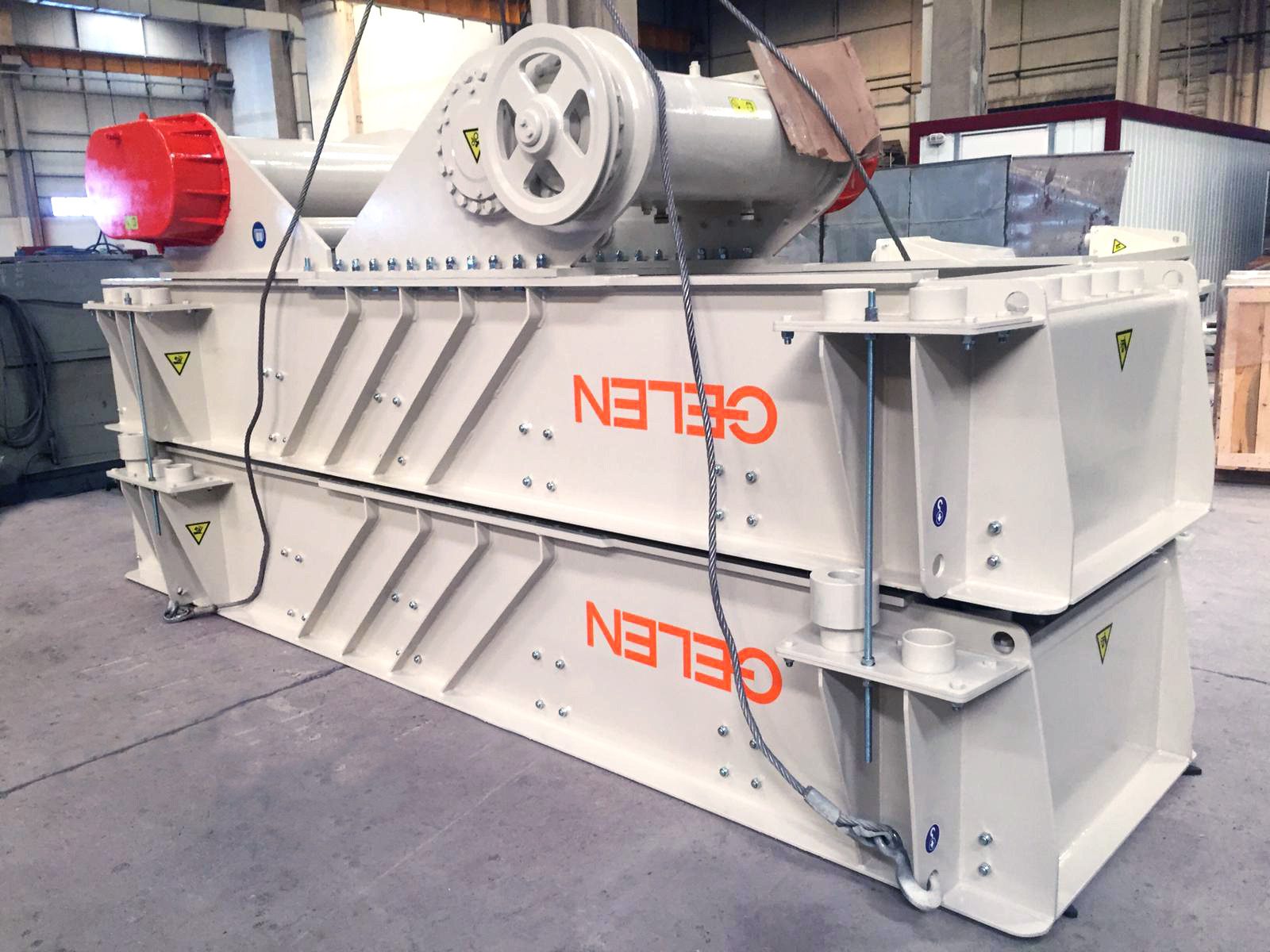
Guides and industry organisations for crushing plant operators.
Four main types: vibrating feeders (with or without a grizzly section), apron feeders, wobbler feeders and reciprocating feeders. GELEN builds all four — TB vibrating feeders and BE grizzly feed screens, AF apron feeders, WB wobbler feeders and RB reciprocating feeders — so the feeder can be matched to the material and the position in the plant.
Start from the material. Hard, free-flowing rock suits a vibrating feeder, or a grizzly feed screen if fines should bypass the crusher. Very large, heavy run-of-mine material dumped straight from trucks needs an apron feeder. Wet, sticky, clay-rich feed that blinds a grizzly suits a wobbler feeder. For controlled discharge from bunkers and tunnels, a reciprocating feeder is a simple choice. Then size the width to the largest lump and the crusher inlet.
A vibrating feeder conveys all the material to the crusher. A vibrating grizzly feeder — the GELEN BE grizzly feed screen — adds a section of grizzly bars, so fines fall through and bypass the crusher. This raises crusher capacity and reduces wear when the feed contains a lot of undersize material.
An apron feeder is needed when very large, heavy or sharp material is dumped directly from trucks and the impact loads would damage lighter feeders — typically at mining and large quarry primary stations. GELEN AF apron feeders use reinforced cast steel pans, impact rails and hydraulic chain tensioning for this duty.
Wobbler feeders scalp with rotating elliptical bars instead of static bars. Because the bars keep turning, wet and sticky material is rolled and broken up and the gaps stay open, so fines, mud and dirt are removed where a vibrating grizzly would blind.
A reciprocating feeder discharges material with a plate that moves back and forth under a hopper or bunker. On the forward stroke material flows toward the transfer point; on the return stroke it rests against the rear wall of the bunker. The stroke frequency sets the feed rate. They are used under bunkers, surge bins and in reclaim tunnels.
Calculated for free-flowing material at 1.6 t/m³, TB vibrating feeders cover about 90–820 t/h, BE grizzly feed screens about 380–770 t/h, AF apron feeders about 350–1,840 t/h, WB wobbler feeders about 290–520 t/h and the RB1460 reciprocating feeder about 330–710 t/h. GELEN confirms the size for each material and plant.
Inspect and replace wear parts — pan liners, grizzly bars, apron pans, wobbler bars and feeder plates — on a schedule, keep drives and bearings lubricated, and check springs, chain tension and motor mountings. Keeping hoppers choke-fed also protects feeders from direct impact and extends their life.
Send your material, your capacity and the product sizes you need. An engineer answers, not a form.
