
Who this is for: Quarry managers, mine engineers, plant operators, and process engineers selecting or troubleshooting a grizzly screen — and looking for practical guidance on sizing, bar spacing, materials, installation, and the economics of crusher protection. This guide covers static and vibrating grizzlies, all common bar materials, and the design choices that separate a grizzly that lasts 15 years from one that cracks at year three.

What Is a Grizzly Screen and How Does It Work?
A grizzly screen is the simplest, oldest, and arguably most valuable piece of screening equipment in a crushing plant. Its job is straightforward: take the run-of-mine (ROM) feed coming from a feeder or hopper, separate the fines and dirt that don't need crushing from the oversize that does, and present only the oversize to the primary crusher.
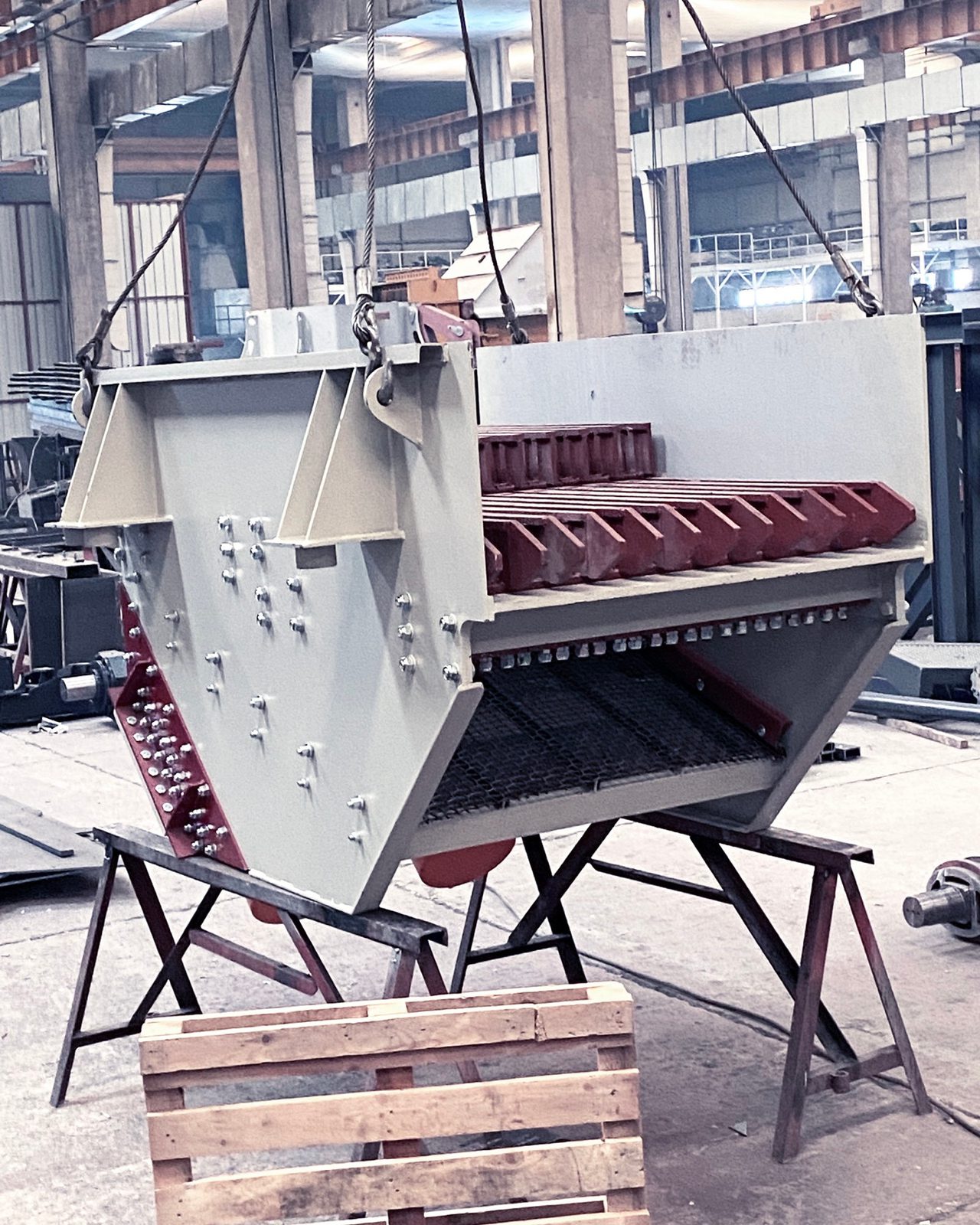
The construction is equally straightforward: a sloped deck made from a row of thick parallel steel bars (or perforated wear plates), mounted on a vibrating frame — the configuration used across the GELEN ITE Series grizzly screens. Material that's smaller than the gap between bars falls through. Material that's larger slides across the top toward the discharge end and into the crusher mouth.
Definition and core function
Formally, a grizzly screen is a primary scalping machine — a screen specifically designed for the front of the crushing circuit, where the feed is at its largest, dirtiest, and most variable. The term "scalping" describes its core function: removing the lower-value or unwanted fraction (in this case, fines and clay) before the valuable processing stages.
This is fundamentally different from a sizing screen like the inclined STE Series or the horizontal ETE Series, which sit downstream of the primary crusher and split the crushed product into multiple finished fractions. A grizzly does one cut. A sizing screen does two, three, or four.
How material flows through a grizzly screen
Material flow on a grizzly is the same on a static unit, a vibrating unit, or a cascading finger-screen — the difference is just how aggressively the deck moves the material. The four-step flow:
- 1. Feed presentation: A vibrating feeder or apron feeder delivers ROM material from a hopper at a controlled rate. The grizzly deck sits at a slope (15° to 25° on vibrating units, 35° to 60° on static units) so material starts moving forward as soon as it lands.
- 2. Stratification: As material vibrates and slides, the smaller particles work their way down through the bed toward the bar-level surface. Larger stones rise to the top.
- 3. Undersize bypass: Particles smaller than the gap between bars fall through into a bypass chute. This chute carries fines and dirt around the primary crusher to either the secondary stage or directly to the product belt.
- 4. Oversize discharge: The remaining oversize slides off the discharge end of the deck directly into the primary crusher mouth.
The result: the crusher only sees material that actually needs crushing. On a typical quarry feed with 15–25% fines below the crusher CSS, that means the crusher processes 15–25% less material per ton of plant output — and wears at the same reduced rate.
Key components of a grizzly screen
- Side plates / frame: The structural walls that hold everything together and absorb the impact loads from the feeder. On the GELEN ITE Series, these are bolted high-tensile steel plates rather than welded, which resists fatigue cracking that plagues welded designs after 5,000–10,000 hours of impact loading.
- Grizzly bars or perforated plates: The screening surface itself. Bars are the most common choice and come in stepped or straight geometry. Perforated AR steel plates are an alternative for high-fines or wet/sticky feeds where bars would clog.
- Vibrator / exciter: An eccentric shaft with counterweights, driven by a motor through V-belts, generates the linear or circular motion that walks material across the deck.
- Spring suspension: Heavy coil springs isolate the vibrating screen body from the support structure. These springs see heavy fatigue loading and are a common service item.
- Drive assembly: Electric motor, V-belts, motor base, and guards. Typical installed power on a primary grizzly runs from 5.5 kW (smallest models) up to 22+ kW (largest).
- Bypass chute: Catches the undersize that falls between the bars and routes it to wherever it's needed downstream — often the main product belt.
Grizzly screen vs. grizzly feeder — what's the difference?
This is the most common point of confusion in the screening world. The two terms describe related but distinct machines:
- Grizzly feeder (or vibrating grizzly feeder): A combined feeder + scalping screen. The front section is solid pan and meters material from the hopper at a controlled rate; the rear section has a grizzly bar deck that scalps fines before the material falls into the crusher. One machine, two jobs. Common on mobile crushing plants and small modular plants where space and budget are tight.
- Grizzly screen (standalone): A dedicated screening machine that sits downstream of a separate feeder. Higher capacity, larger bar deck, more aggressive vibration, and more flexibility in bar selection. Standard choice on stationary primary stations and any plant above ~150 t/h.
Rule of thumb: Below ~150 t/h on a mobile plant, use a grizzly feeder. Above ~150 t/h or on stationary plants, use a separate vibrating feeder + grizzly screen (like the ITE Series) — the larger dedicated grizzly handles bigger feed and gives you more control over bar spacing and replacement.
Types of Grizzly Screens
Four mechanical configurations cover the entire grizzly screen market. Each has a specific sweet spot — and getting this choice right is the single biggest factor in whether your grizzly will perform for 15 years or be a constant headache.
Static (fixed) grizzly screens
The simplest grizzly: parallel steel bars set into a sloped frame, with no vibration at all. Material moves by gravity alone, which means the deck must be steep — typically 35° to 60° from horizontal. Static grizzlies have no moving parts, no power requirement, and essentially zero maintenance, which makes them attractive for remote sites and very small operations.
The trade-offs are real, though: capacity is limited (rarely above 100 t/h on hard rock), stones can wedge between the bars and require manual clearing, and any sticky or cohesive material will block the deck within hours. Best for: small hard-rock quarries, dry feed only, sites where electric power is unavailable, and any application where simplicity matters more than throughput.
Vibrating grizzly screens
The standard choice for almost every modern crushing plant. A vibrator — usually a single-shaft circular motion or a twin-shaft linear motion exciter — drives the screen body at 800 to 1,200 RPM with a stroke of 8 to 14 mm. The vibration walks material forward and constantly shears the bed, which prevents the wedging and bridging that plague static designs.
Vibrating grizzlies handle 100 t/h up to 800+ t/h depending on size, deal with wet and sticky feed much better than static units, and let you tune throughput by adjusting the stroke or RPM. The GELEN ITE Series vibrating grizzly screen is built with bolted heavy-duty frame construction, designed specifically for the impact loading of run-of-mine feed dropping directly from a feeder.
Finger-screen / cascading grizzly
A specialty design that uses overlapping cantilevered bar groups instead of a continuous flat deck. Each bar group is independently mounted and vibrates slightly differently from its neighbours, which creates a "fingers" effect that aggressively shears sticky and cohesive material apart. The cascading geometry is also nearly impossible to blind because stuck material gets shaken loose by the differential motion of adjacent bar groups.
Finger-screens are the right choice for very wet, very sticky, or clay-heavy feed where a standard vibrating grizzly would still struggle. The trade-off is mechanical complexity and higher capital cost.
Hydraulic / adjustable grizzly
A vibrating grizzly with hydraulic actuators that let the operator change the bar spacing in real time without stopping the machine. This is rare and expensive, but valuable in operations where the feed PSD changes constantly (some mining operations) or where the same plant must produce multiple primary product specifications.
Comparison table — which type to choose
| Type | Motion | Capacity | Best for | Maintenance |
|---|---|---|---|---|
| Static | None (gravity) | Up to 100 t/h | Small dry-rock sites | Lowest |
| Vibrating | Circular or linear | 100–800+ t/h | Most plants | Standard |
| Finger-screen | Differential cascading | 200–600 t/h | Wet, sticky, clay-bound | High |
| Hydraulic | Vibrating + adjustable | 200–600 t/h | Variable feed PSD | Highest |
Bottom line: 90% of operations should specify a vibrating grizzly. Static is for tiny dry sites; finger-screen for the worst sticky-feed cases; hydraulic for the rare case where feed conditions change daily.
Grizzly Screen vs. Other Screening Equipment
The grizzly screen is just one of several screening machine types you'll encounter in a crushing plant. Each has a clear role — getting them confused is the most common reason we see plants under-performing on screening efficiency.
Grizzly screen vs. vibrating screen
The most common confusion. Both are vibrating machines, both separate material by size, but they sit at completely different points in the plant and they're built differently. The key differences:
- Position: Grizzly = upstream of the primary crusher. Vibrating screen (sizing) = downstream of the primary or secondary crusher.
- Surface: Grizzly uses thick bars or plates. Sizing screen uses wire mesh, polyurethane, or rubber panels.
- Feed size: Grizzly handles 0–1,000+ mm ROM. Sizing screen handles 0–150 mm pre-crushed material.
- Frame strength: Grizzly is built much heavier to absorb impact loads. Sizing screen is built for stratification and capacity, not impact.
- Number of decks: Grizzly has 1 (occasionally 2). Sizing screens have 2–4 decks for multiple product fractions.
For a deeper comparison see the dedicated grizzly screen vs vibrating screen guide.
Grizzly screen vs. scalping screen
"Scalping screen" is sometimes used as a synonym for grizzly screen, and sometimes used to describe a heavy-duty vibrating sizing screen used as a scalper (top deck of a multi-deck screen). The distinction is fuzzy in the industry. In strict use: scalping is the function (removing oversize or undersize from a feed stream), while grizzly is one specific machine type that performs that function.
Grizzly screen vs. trommel screen
A trommel is a rotating cylindrical drum with apertures cut into the wall. Material tumbles inside the drum and undersize passes through the apertures. Trommels are gentle (no impact loading), handle very sticky and irregular material well (like topsoil and compost), and are common in waste handling and biomass. They're the wrong choice for hard rock primary scalping — too low capacity, too slow to clear oversize, and the drum geometry can't handle the boulder sizes a primary station produces.
Decision flowchart — which screen for primary scalping?
- Hard rock primary feed, >150 t/h, dry to moderately wet → Vibrating grizzly (ITE Series grizzly screens).
- Small site, <100 t/h, dry, no power → Static grizzly.
- Mobile crushing plant, <200 t/h → Grizzly feeder (combined feeder + grizzly).
- Very wet, very sticky, clay-heavy feed → Finger-screen / cascading grizzly.
- Soft, irregular, high-organics feed (compost, MSW) → Trommel.
- Anything else → Talk to GELEN engineering.
How to Select the Right Grizzly Screen
Sizing a grizzly is simpler than sizing a multi-deck sizing screen because there's only one cut and the bar spacing is the only screening variable to set. Five steps cover almost every selection.
Step 1 — Define your feed material
You need four numbers to start:
- Maximum feed size (mm) — the largest stone the grizzly will ever see. Affects required deck width and bar strength.
- Bulk density (t/m³) — affects throughput and impact loading on the bars.
- Moisture content (%) — affects whether you need a finger-screen or spray bars.
- Fines fraction below cut size (%) — determines how much material bypasses the crusher and how much value you get from installing the grizzly.
Step 2 — Determine required capacity (TPH)
The grizzly throughput equals your plant feed rate, not your plant product rate. All of the ROM material has to go over the grizzly, not just the fraction the crusher actually crushes. So if your plant runs 500 t/h of feed and your crusher CSS is set to produce 400 t/h of saleable product, your grizzly must size for 500 t/h.
Common sizing pitfall: Operators size the grizzly for the plant's "rated" output and then wonder why the deck overloads on busy days. The grizzly must handle peak ROM, not nameplate.
Step 3 — Choose bar spacing based on cut size
Bar spacing is the single most important specification you'll set. The rule of thumb:
- Set bar spacing equal to or slightly smaller than your downstream jaw crusher's closed-side setting (CSS). This ensures any material small enough to drop through the jaws drops through the grizzly first, freeing crusher capacity for material that actually needs crushing.
- For a typical 100 mm CSS jaw, set the grizzly to 80–100 mm.
- For dirty quarry feed with high fines, drop to 50–80 mm to bypass more dirt.
- For very clean primary feed, raise to 100–150 mm so only the truly fine material bypasses.
For the full bar spacing selection methodology including worked examples by feed type, see the dedicated grizzly bar spacing selection guide.
Step 4 — Select screen width and length
Width is set by the feeder discharge pattern — the grizzly must be at least as wide as the material stream coming off the feeder. Length sets the residence time and therefore the screening efficiency. A short grizzly underflows; a long grizzly costs more for marginal extra efficiency. Most vibrating grizzlies fall in the range of 1.2 m × 2.5 m at the small end up to 2.0 m × 5.0 m at the large end.
The GELEN ITE Series covers seven model sizes from ITE1225 (1200 × 2500 mm, 5.5 kW) to ITE2050 (2000 × 5000 mm, 22 kW), spanning the typical 100 t/h to 800+ t/h capacity range.
Step 5 — Choose between static and vibrating
If your plant is above ~100 t/h, runs more than ~12 hours per day, has any moisture in the feed, or is automated, you want a vibrating grizzly. Static grizzlies are only appropriate for very small, dry, manual operations.
Worked example — 300 t/h granite quarry
Given: 300 t/h granite, ROM size 0–600 mm, 22% fines below 80 mm, 2.7 t/m³ bulk density, 2% moisture. Downstream: jaw crusher with 80 mm CSS.
- Step 1: Hard rock, dry, low moisture → standard vibrating grizzly is appropriate. No finger-screen needed.
- Step 2: Required throughput = 300 t/h (full ROM, not just oversize).
- Step 3: Bar spacing = 80 mm to match the jaw CSS. With 22% fines below 80 mm, the grizzly will bypass roughly 66 t/h of material around the crusher. Crusher load drops from 300 t/h to ~234 t/h (a 22% reduction).
- Step 4: 300 t/h at 80 mm bar spacing on hard rock → ITE1850 (1800 × 5000 mm, 22 kW) gives ample capacity with margin for ROM peaks.
- Step 5: Vibrating, not static. Confirmed.
Result: ITE1850 with 80 mm stepped bars. Expected wear-part savings on the jaw crusher: roughly 22% (the same percentage of feed bypassed). Payback on the grizzly: 4–5 months at typical wear-part replacement costs.
Grizzly Bar Materials — Which Is Best?
Bar material is the single biggest factor in grizzly bar service life. Choose right and bars last 12+ months on the same feed; choose wrong and you're replacing them every 6 weeks. Four materials cover the market.
Manganese cast steel (Hadfield steel)
Composition: Steel with 11–14% manganese, austenitic structure. Hardness: Soft when delivered (~200 HB), but work-hardens dramatically in service to 500+ HB at the impact surface. Best for: high-impact, medium- to-low-abrasion applications. Manganese is the traditional choice for grizzly bars on hard rock primary feed and remains the dominant material globally.
The key insight with manganese is that it needs impact to work-harden. On a low-impact duty (gentle feed, soft material) the surface never hardens and wear is much faster than you'd expect. Manganese is at its best when it gets hit hard.
Hardox / AR (abrasion-resistant) steel plates
Composition: Quenched and tempered low-alloy steel, available in hardness grades from 400 HB to 600 HB. Best for: mixed impact and abrasion duty, particularly when bar profiles are simple (rectangular cross-section) and replacement parts need to be field-fabricated. Hardox has become the standard alternative to manganese on aggregate plants where the feed is moderately abrasive.
Hardox bars are typically rectangular plates rather than the trapezoidal profile of traditional manganese bars. The flat sides make them easier to replace, easier to rotate for even wear, and easier to source from a local fabricator.
Chrome carbide overlay (CCO)
Composition: Mild steel base plate with a chromium carbide hardfacing overlay welded onto the wear surface. The overlay reaches 60+ HRC (700+ HB). Best for: very abrasive feed (silica-rich quartzite, glass cullet, abrasive iron ore) where standard Hardox or manganese wears unacceptably fast.
CCO is significantly more expensive per bar than manganese or Hardox but the wear life on the right application can be 3–5× longer, which makes the cost per ton screened competitive or better.
Polyurethane bars
Composition: Cast polyurethane elastomer, sometimes with internal steel reinforcement. Best for: niche applications — typically wet duty where the noise reduction matters, or very fine cuts (below 30 mm) where steel bars would blind. PU bars are excellent at preventing pegging and blinding but they can't handle heavy impact loads from large boulders.
Material comparison — when to use which
| Material | Hardness | Impact resistance | Abrasion resistance | Cost | Best for |
|---|---|---|---|---|---|
| Manganese (Hadfield) | 200 HB → 500+ HB after work-hardening | Excellent | Good (after hardening) | Medium | High-impact hard rock |
| Hardox / AR steel | 400–600 HB | Very good | Very good | Medium | Aggregate, mixed feed |
| Chrome carbide overlay | 700+ HB | Moderate | Excellent | High | Very abrasive feed |
| Polyurethane | N/A (elastomer) | Low | Good | Medium-high | Wet, fine cuts |
Installation Best Practices
Optimal incline angle
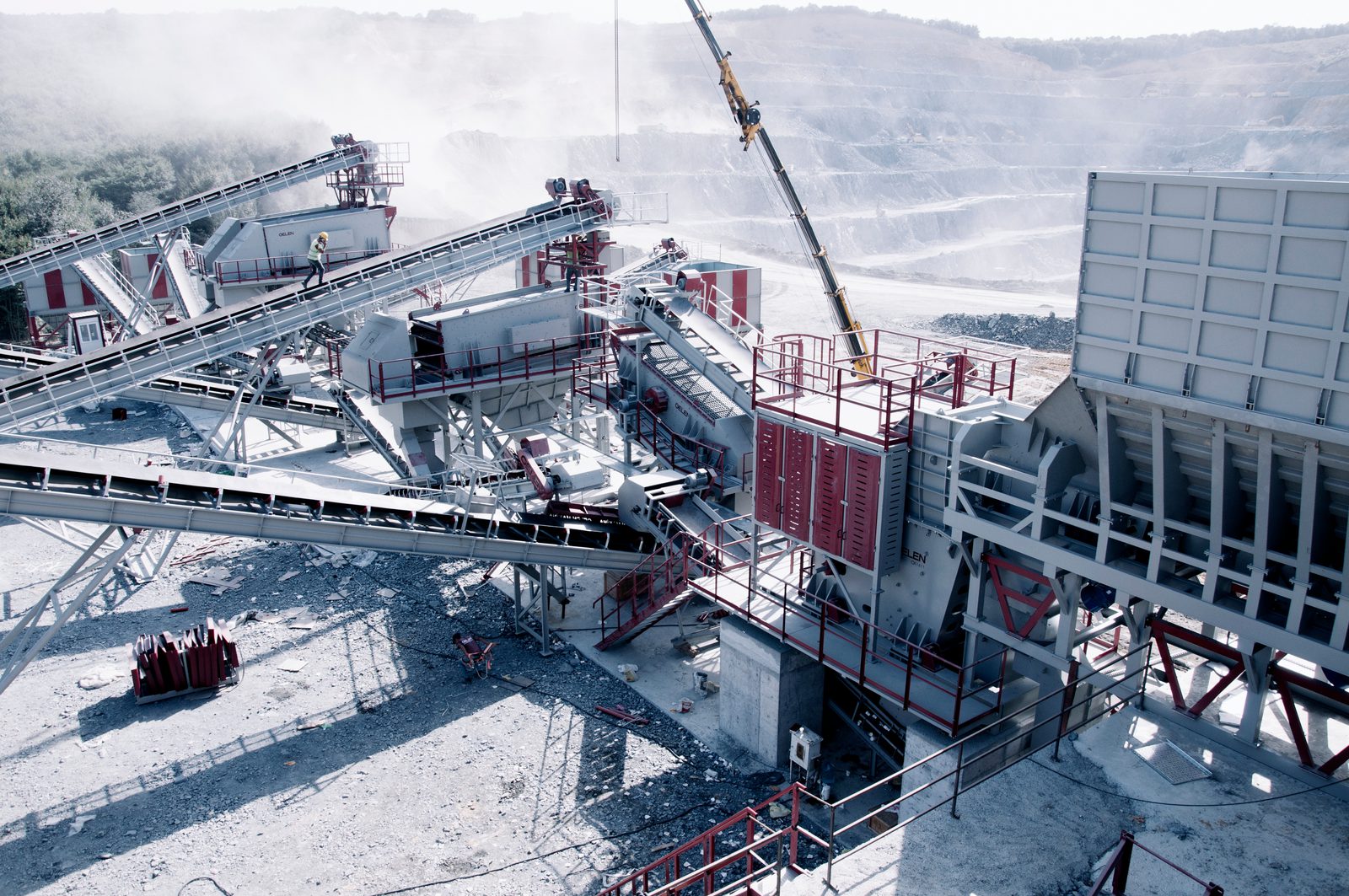
For vibrating grizzlies, the standard incline is 15° to 20° from horizontal. Steeper than 20° starts to lose screening efficiency because material slides past the bars too fast; shallower than 15° slows the throughput and increases the risk of bridging. The ITE Series vibrating grizzly screen ships at 18° and the angle is adjustable in the field.
For static grizzlies the angle has to be 35° to 60° (because there's no vibration to push material forward). The exact angle depends on the angle of repose of your material — harder, more cohesive material needs a steeper deck.
Foundation and support structure
Grizzly screens generate significant dynamic loads — typically 3–5 times the static weight of the machine — and the support structure has to be designed for those loads.
- Concrete foundation thickness should be at least 1.5× the screen weight in tons, expressed in cubic meters. (A 5-ton screen needs a foundation block of at least 7.5 m³.)
- Steel support frames must be tied into the building structure, not free-standing.
- Allow 600 mm clearance on all sides for media changes and bearing maintenance.
- Spring isolation must be sized for the dynamic load, not the static weight — get the spring spec from the screen OEM.
Integration with feeders and crushers
The grizzly is a node in your plant flowsheet, not a standalone machine. It needs:
- Upstream: A vibrating feeder or apron feeder from a hopper. The feeder controls the rate at which material reaches the grizzly. Without metered feed, the grizzly will be overloaded one moment and starved the next.
- Downstream (oversize): A discharge chute that delivers oversize directly into the primary crusher mouth without any free-fall that could damage the crusher.
- Downstream (undersize): A bypass chute and conveyor that routes the fines either directly to the product belt (if they're saleable as-is) or to the secondary stage (if they need further processing).
Common installation mistakes
- Inadequate feeder control: Variable-speed feeder is essential — a fixed-speed feeder dumps material in waves and overloads the grizzly cyclically.
- Wrong bar spacing: Either too tight (low throughput) or too wide (no benefit to the crusher). Match it to the jaw CSS.
- Bypass chute too small: The bypass must be sized for the maximum fines fraction × 1.3. Undersized chutes plug and back up onto the deck.
- Skimping on the foundation: Vibration cracks foundations that aren't sized for the dynamic load. Pay for a proper foundation up front.
- Welded vs bolted frame: Welded frames crack at 5,000–10,000 hours. Specify bolted construction for primary scalping duty.
How a Grizzly Screen Cuts Crusher Wear and Operating Cost
This is the core economic argument for installing a grizzly. The savings come from four specific mechanisms, each measurable and each significant on its own.
1. Bypassing fines reduces crusher tonnage
The most direct effect: a grizzly that bypasses 20% of the feed reduces crusher operating hours by 20%. Every wear part on the jaw — the jaw plates, the toggle plate, the cheek plates, the eccentric bearings — wears proportionally to the tonnage processed. Cut the tonnage by 20%, cut the wear cost by 20%.
2. Removing fines reduces abrasive wear
Fine particles are disproportionately destructive to jaw plates. They don't break — they grind. A jaw plate processing 100 t/h of clean coarse material wears much slower than the same plate processing 100 t/h with 20% sand-sized fines mixed in, even though the tonnage is the same. By removing the fines upstream, the grizzly improves jaw plate life by more than just the tonnage reduction would suggest.
3. Smaller crusher selection
This effect is often overlooked. If your grizzly bypasses 20% of the feed, your crusher only needs to handle 80% of the plant's nameplate throughput. That means you can specify a primary crusher one size smaller — which costs 15–25% less in CAPEX, draws 15–25% less power, and weighs 15–25% less. On a new plant, the grizzly often pays for itself entirely in CAPEX savings on the primary crusher.
4. Fewer forced shutdowns
Clay, dirt, and small contaminants that reach a jaw crusher can cause forced shutdowns — either by packing the chamber (clay binding the jaws) or by bridging across the jaw opening. Each forced shutdown costs hours of plant downtime and the labor to clear the blockage. A grizzly with the right bar spacing keeps most of that material out of the chamber and dramatically reduces shutdown frequency.
Cost savings example — 300 t/h limestone quarry
A real-world calculation for a typical mid-size aggregate plant:
| Metric | No grizzly | With grizzly (20% bypass) | Annual savings |
|---|---|---|---|
| Crusher tonnage | 300 t/h × 4,000 h = 1.2 Mt/yr | 240 t/h × 4,000 h = 0.96 Mt/yr | 240,000 t/yr less |
| Jaw plate wear cost (€/t) | €0.18/t × 1.2 Mt = €216,000 | €0.16/t × 0.96 Mt = €154,000 | ~€62,000/yr |
| Energy at jaw (kWh/t) | 0.7 kWh/t × 1.2 Mt = 840 MWh | 0.7 kWh/t × 0.96 Mt = 672 MWh | 168 MWh/yr |
| Energy cost (€0.12/kWh) | €100,800 | €80,640 | ~€20,000/yr |
| Forced shutdowns | ~12/yr × 3 h × €500/h = €18,000 | ~3/yr × 3 h × €500/h = €4,500 | ~€13,500/yr |
| Total annual savings | ~€95,500/yr |
An ITE1850 grizzly screen at typical pricing pays back in roughly 4–6 months on this example — and that's before counting any CAPEX savings on the crusher itself.
Maintenance Guide and Troubleshooting
Proper maintenance is the difference between a grizzly that runs 15 years and one that cracks at year three. Six items cover everything important.
Daily, weekly, monthly inspection schedule
| Interval | Tasks |
|---|---|
| Daily | Visual bar inspection for cracks and wear; check that no oversize is stuck between bars; listen for unusual vibrator noise. |
| Weekly | Grease vibrator bearings (typically every 40–80 operating hours); check bolt torque on side plates and bar mounts; inspect spring suspension for cracks or fatigue. |
| Monthly | Measure deck stroke and confirm within spec; check motor current vs baseline; inspect drive belts for wear and tension; full visual frame inspection. |
| Quarterly | Pull and rotate bars 180° to even out wear; inspect bearings for play or noise; structural inspection at high-stress corners. |
| Annually | Replace V-belts as a complete set; full bearing replacement check; structural NDT on the frame if approaching 10,000 hours. |
For the full schedule with checklists by component, see the dedicated grizzly screen maintenance checklist.
Grizzly bar replacement — when and how
Bars need replacement when wear exceeds 50% of original cross-section, when cracks become visible, or when the bar profile starts losing the geometry that drives self-clearing. Most grizzly bars are symmetric and can be rotated 180° at roughly 50% wear to double the service life. The full bar replacement on an ITE Series grizzly takes two operators roughly 60 minutes with standard impact wrench tools.
Troubleshooting: blinding and clogging
Blinding (material wedged between bars) is the most common operational problem. Causes and fixes:
- Cause: bar spacing too tight for the feed PSD. Fix: widen the bar spacing or switch to perforated wear plates.
- Cause: insufficient G-force. Fix: increase stroke or RPM within the machine spec.
- Cause: wet, clay-bound feed packing the bars. Fix: add spray bar set at the feed end, or switch to a finger-screen design.
- Cause: feed rate too high, bed depth above 3× the bar gap. Fix: reduce feeder rate or use a wider grizzly.
Troubleshooting: uneven wear patterns
Uneven bar wear (more wear on one side or one end of the deck) usually means the feed is not distributed evenly across the deck width. Check the feeder discharge geometry — the material stream should be the full width of the grizzly deck, centered, and dropping from a consistent height. Uneven wear can also come from a worn or misaligned exciter shaft producing an asymmetric throw.
Troubleshooting: excessive vibration or noise
Either bearing failure (most common cause) or a loose structural element. Bearing failure usually announces itself with rising temperature and a metallic grinding noise. Loose elements are easier to spot — visible deflection or a "thunking" sound at the corners. Either way, shut down and investigate before damage compounds.
Grizzly Screen Applications by Industry
Mining and mineral processing
Run-of-mine scalping for iron ore, copper, gold, coal, and bauxite operations. The grizzly removes fines and dirt before the primary crusher, reduces wear on heavy crushing equipment, and pays back through wear part savings within a few months. Large mining operations often use multiple grizzlies in parallel to handle very high ROM tonnages.
Aggregate and quarry operations
The largest market for grizzly screens by unit volume. Primary scalping ahead of the CK Series jaw crusher in limestone, granite, basalt, dolomite, and sandstone quarries. The bypassed fines either join the product stream directly or feed into the secondary crusher depending on the plant flowsheet.
Construction and demolition recycling
C&D recycling plants use grizzlies to separate rebar, dirt, and broken brick from sound aggregate before crushing. The heavy-duty bars handle the impact of demolition feed without bending or cracking. The grizzly also catches the largest oversize that would otherwise jam the crusher.
Coal handling
Coal preparation plants use grizzlies for two purposes: scalping run-of-mine coal before primary crushing, and removing oversized rock and tramp material from the coal stream. Coal is soft and easily crushed, so the grizzly bar wear duty is light, but the impact loading from heavy rock fragments still requires a robust design.
Real-world example — 500 t/h limestone quarry
A typical mid-size limestone aggregate operation: ROM 0–800 mm at 500 t/h. ITE1850 grizzly with 90 mm stepped manganese bars sits between the vibrating feeder and the primary jaw crusher. The grizzly bypasses approximately 18% of the feed (90 t/h of fines and dirt), which routes around the jaw and joins the secondary stage feed. Result: jaw plate life extended from 8 weeks to 11 weeks on the same operating schedule, two forced clay-binding shutdowns per year eliminated, and an estimated annual savings of ~€80,000 on wear parts and downtime.