

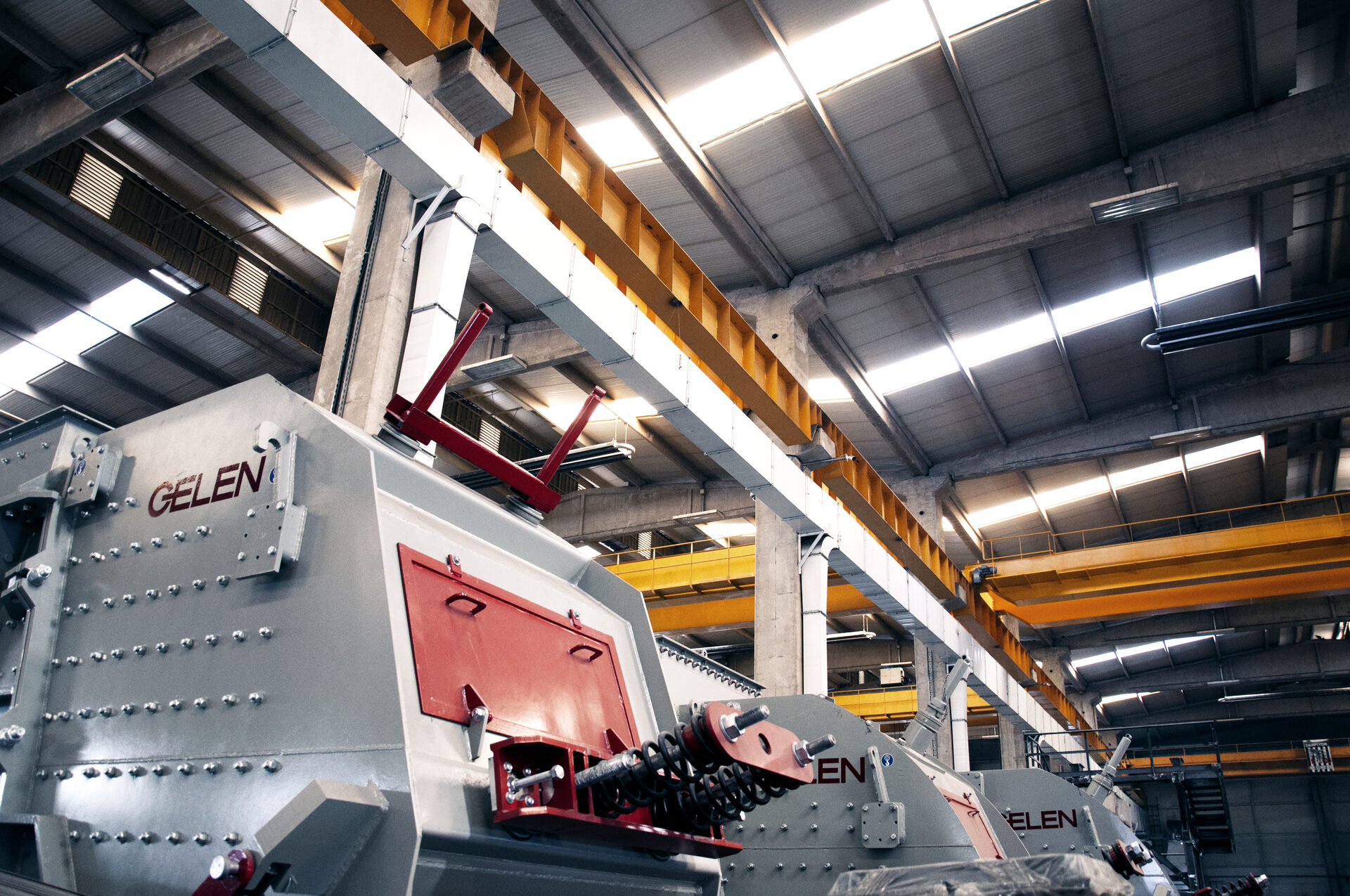
The Complete Guide to Horizontal Shaft Impact Crushers (HSI)
Introduction: The horizontal shaft impact (HSI) crusher is one of the most versatile machines in the aggregate and recycling industry. Unlike jaw crushers that compress material, HSI crushers use high-speed impact to shatter rock into highly cubical product — often in a single pass. This guide covers everything from working principle and sizing to blow bar selection, maintenance, and cost-per-ton benchmarks.
What Is a Horizontal Shaft Impact Crusher and How Does It Work?
The Core Working Principle
An HSI crusher uses a high-speed rotating rotor fitted with replaceable blow bars (hammers). Material is fed from above and strikes the blow bars traveling at rotor tip speeds of typically 25–45 m/s. The sudden impact shatters the rock along natural fracture planes, which tends to produce blocky, cubical particles rather than the flat or elongated particles common with compression crushers.
After the first impact, broken fragments are launched toward two or three adjustable impact aprons (curtains) mounted inside the crusher box. Secondary and tertiary impacts against these aprons further reduce particle size. The apron gap controls the maximum output size — closing the gap produces finer product; opening it increases throughput. A typical reduction ratio of 6:1 to 10:1 in a single pass makes the HSI one of the most efficient single-stage reducers available for soft to medium-hard materials.
Key Components
- Rotor: Heavy-duty balanced steel disc assembly carrying the blow bars. Rotor diameter and width determine capacity and maximum feed size.
- Blow bars (hammers): The primary wear components — four alloy types available depending on material (see Section 6).
- Impact aprons/curtains: Primary apron (first impact zone) and secondary apron (second impact zone); gap to rotor is adjustable, typically via hydraulic cylinders.
- Hydraulic adjustment system: Allows safe and rapid apron gap setting from outside the machine; also provides overload protection — aprons swing open if tramp metal enters.
3-Bar vs 4-Bar Rotor Configuration
Modern HSI crushers offer selectable rotor configurations that change the machine's characteristics for different applications:
| Configuration | Description | Best Application |
|---|---|---|
| 4-bar high mode (all 4 bars active) | All four blow bars at full radius — maximum impact frequency | Secondary crushing, asphalt recycling, river gravel shaping |
| 2-high / 2-low mode (alternate bars) | Two bars at full radius, two recessed — acts like a 2-bar rotor | Primary crushing, concrete recycling, large feed with rebar |
HSI vs VSI vs Jaw Crusher — Which Do You Need?
Understanding where the HSI sits in the crusher family helps you determine whether it is the right machine for your circuit.
| Crusher Type | Best For | Reduction Ratio | Product Shape | Wear Cost |
|---|---|---|---|---|
| Jaw crusher | Hard rock >150 MPa (granite, basalt, quartzite) | 4:1–6:1 | Good | Low |
| HSI crusher | Soft to medium-hard rock <200 MPa (limestone, dolomite, concrete, asphalt) | 6:1–10:1 | Excellent cubic | Medium |
| VSI crusher | Fine shaping and manufactured sand production | 2:1–5:1 | Very high cubic/spherical | Medium-high |
Rule of thumb: If your material compressive strength is below 200 MPa and you need excellent cubic aggregate shape, the HSI crusher is usually the most cost-effective choice. For harder or highly abrasive materials, a jaw or cone crusher will have significantly lower wear cost.
How to Choose the Right HSI Crusher for Your Operation
Step 1 — Define Your Material
Before selecting a crusher model, characterize your feed material:
- Compressive strength (MPa): The single most important factor. Limestone = 60–120 MPa (ideal for HSI); granite = 160–240 MPa (consider jaw or cone instead).
- Silica content (SiO₂ %): High silica is highly abrasive. Above 10–15% SiO₂, blow bar consumption rises significantly.
- Maximum feed size: Rule — maximum feed should not exceed 80% of the inlet opening width. A 1,000 mm inlet accepts up to 800 mm feed.
- Feed contamination: Rebar, tramp metal, or clay/moisture in the feed all affect crusher selection and blow bar alloy choice.
Step 2 — Calculate Required Throughput
Size your crusher based on actual operating requirements, not peak feed rates:
Formula: Required TPH = Daily tonnes ÷ Operating hours per day
Example: 500 tonnes/day ÷ 8 hours = 62.5 TPH minimum. Add 20–25% safety margin = 75–80 TPH minimum rated capacity. Select a crusher rated at the next size up.
Step 3 — Choose Your Output Size
The CSS (closed side setting — apron gap) is the primary control over output gradation. Typical values for limestone:
| Apron Gap (CSS) | Typical Output (80% passing) |
|---|---|
| 30 mm | 0–25 mm aggregate |
| 50 mm | 0–40 mm aggregate |
| 80 mm | 0–70 mm aggregate |
| 100 mm | 0–100 mm aggregate |
Step 4 — Mobile or Stationary?
| Factor | Mobile HSI | Stationary HSI |
|---|---|---|
| Site duration | Short-term, multiple sites | Long-term, fixed quarry |
| Setup time | Hours | Days to weeks |
| Cost per ton | Higher (diesel, mobility premium) | Lower (electric drive, optimized plant) |
| Maximum capacity | Up to ~400 TPH | Up to 900 TPH |
GELEN HSI Crusher Series Overview
GELEN manufactures five HSI crusher series covering primary through tertiary stages. Selecting the right series for your position in the crushing circuit is critical for performance and wear cost.
| Series | Stage | Max Feed Size | Output Range | Best Application |
|---|---|---|---|---|
| PDK | Primary | Up to 1,300 mm | 150–900 TPH | Limestone quarry primary, demolition waste |
| SDK | Secondary | Up to 700 mm | 100–600 TPH | Quarry aggregate, road base production |
| DST | Secondary | Up to 700 mm | 100–500 TPH | River gravel processing, sand and aggregate production |
| TDK | Tertiary | Up to 200 mm | 40–250 TPH | Fine aggregate production, mechanical sand |
| HTK | Tertiary | Up to 40 mm | 80–100 TPH | Manufactured sand 0–5 mm, final shaping |
View full specifications and technical data on the GELEN HSI crusher product page.
Impact Crusher Maintenance — Practical Schedule
HSI crushers have higher wear rates than jaw crushers and require more frequent inspections. The key principle: small problems found daily cost minutes; the same problems found weekly cost hours; found monthly they can cost days.
Daily Checks (5–10 Minutes)
- Visual blow bar inspection — look for cracks, chips, or uneven wear depth across the bar face
- Belt tension — check all V-belts for correct tension; slack belts slip and cause heat
- Lubrication — grease all marked lubrication points per the OEM chart
- Chain curtain — inspect wear and hanging integrity; damaged curtains allow material bypass
- Hydraulic fluid level — verify reservoir level in the sight glass before startup
- Listen on startup — any abnormal noise (grinding, clanking, high-frequency vibration) indicates a bearing or rotor issue; stop and investigate before continuing
Weekly Checks
- Bearing temperature — use IR thermometer; normal range 60–75°C, alarm above 80°C, shutdown above 90°C
- Rotor balance — monitor vibration sensor readings; any increase greater than 10% of baseline warrants investigation
- Apron wear measurement — measure liner thickness with a depth gauge and record; trending matters more than any single reading
- Wedge tightness — re-torque blow bar wedges to OEM specification
Monthly Checks
- Foundation bolts — re-torque to OEM spec; vibrating machines loosen fasteners faster than static equipment
- Hydraulic system — test apron open/close cycle; check fluid condition and level
- Apron wear limits — replace liners when worn to minimum thickness (typically 50% of original)
- Full rotor inspection — inspect bar pockets for cracks, surface wear, and balance weight condition
For the full printable checklist with bearing temperature reference chart and maintenance log template, see the Impact Crusher Maintenance Schedule article.
Blow Bar Selection — Matching Material to Metal
Blow bar alloy selection is the single largest lever on operating cost after feed material characteristics. The right alloy can double wear life compared to a poor match.
| Material | Best For | Wear Life | Breakage Risk |
|---|---|---|---|
| Manganese Steel (Mn14) | Recycled concrete with rebar, tramp metal, contaminated mixed feed | Medium (300–600 h) | Very Low — work-hardens under impact |
| Martensitic Steel | Limestone, asphalt, medium-hard quarry rock — the all-round choice | High (600–1,200 h) | Medium |
| High Chrome Cast Iron | Clean dry limestone, asphalt millings, gypsum — soft and clean feed only | Very High (1,000–2,000 h) | High — brittle; never use with rebar |
| Ceramic MMC | High-silica rock, granite, quartzite — extreme abrasion applications | 2–4× martensitic standard | Very High — premium cost, clean feed only |
For the full selection matrix by rock type and step-by-step replacement procedure, see the Impact Crusher Blow Bar Selection Guide.
Cost-Per-Ton Analysis
Understanding your true operating cost per tonne allows you to compare the HSI against alternatives and justify equipment investment.
Formula: Cost/ton = (Wear Parts Cost + Downtime Cost + Labor Cost + Energy Cost) ÷ Total Tonnes Produced
Sample Calculation — Medium HSI on Limestone
- Throughput: 150 TPH, 8 hours/day, 250 operating days/year = 300,000 tonnes/year
- Blow bars: Martensitic, $3,000 per set × 5 changes/year = $15,000/year
- Impact plates (apron liners): $2,000/year (less frequent change)
- Energy: 110 kW motor × 8 h/day × 250 days × $0.10/kWh = $22,000/year
- Labor (maintenance): approximately $8,000/year
- Total direct operating cost: ~$47,000/year ÷ 300,000 tonnes = $0.16/tonne
This $0.12–0.18/tonne range is typical for HSI crushers on clean limestone at medium throughput. The HSI beats compression crushers on cost when:
- Material is soft to medium-hard (compressive strength below 150–200 MPa)
- High-value cubic aggregate is required and commands a price premium
- Single-stage crushing is feasible (reducing number of machines in the circuit)
Frequently Asked Questions
What is the maximum feed size for an HSI crusher?
The maximum feed size should not exceed 80% of the inlet opening width. For a crusher with a 1,000 mm inlet opening, the maximum recommended feed size is 800 mm. Exceeding this creates bridging risk and uneven rotor loading.
Can an impact crusher crush granite?
Technically yes, but it is rarely economical. Granite's high compressive strength (160–240 MPa) and silica content (25–35% SiO₂) cause extremely rapid blow bar wear. A cone crusher is almost always more cost-effective for granite. If granite must be processed in an HSI, ceramic MMC blow bars are the only viable alloy option.
How often should blow bars be replaced?
Replacement interval depends heavily on material and alloy choice. Typical ranges for martensitic steel bars: limestone quarry = 800–1,500 operating hours; concrete recycling = 400–700 hours; river gravel (mixed hardness) = 500–900 hours. Always replace in matched pairs to maintain rotor balance — weight tolerance between a pair should not exceed ±2–3%.
Related Articles
- Blow Bar Selection Guide — match blow bar alloy to your rock type, silica content, and application.
- Impact Crusher Maintenance Schedule — printable daily, weekly, and monthly checklist.
- HSI vs VSI Impact Crusher — understand the difference and choose the right type.
- Impact Crusher Troubleshooting Guide — diagnose common faults before they cause unplanned downtime.
- Jaw Crusher vs Impact Crusher — complete comparison guide for choosing between compression and impact.
Conclusion
The horizontal shaft impact crusher is the right machine for a wide range of soft to medium-hard materials where cubic product shape, high reduction ratio, and single-stage efficiency are valued. Selecting the correct series for your crushing stage, matching the blow bar alloy to your feed material, and following a disciplined maintenance schedule are the three levers that separate high-performing operations from those struggling with unexpected downtime and high wear costs.
GELEN engineers are available to help you select the right HSI series, optimize your blow bar alloy for your specific feed, and design a maintenance schedule for your site conditions. View the full GELEN HSI crusher range or contact our engineering team for a customized recommendation.