
Introduction: Impact crusher output gradation is controlled differently from a jaw or cone crusher. Unlike compression crushers that have a defined closed side setting (CSS) producing a predictable single cut, an HSI impact crusher produces a range of particle sizes — and the operator has two main levers to control that range: apron gap (the primary setting) and rotor speed (the secondary setting). Understanding how these interact with your feed material is the key to consistently hitting your target product specification.
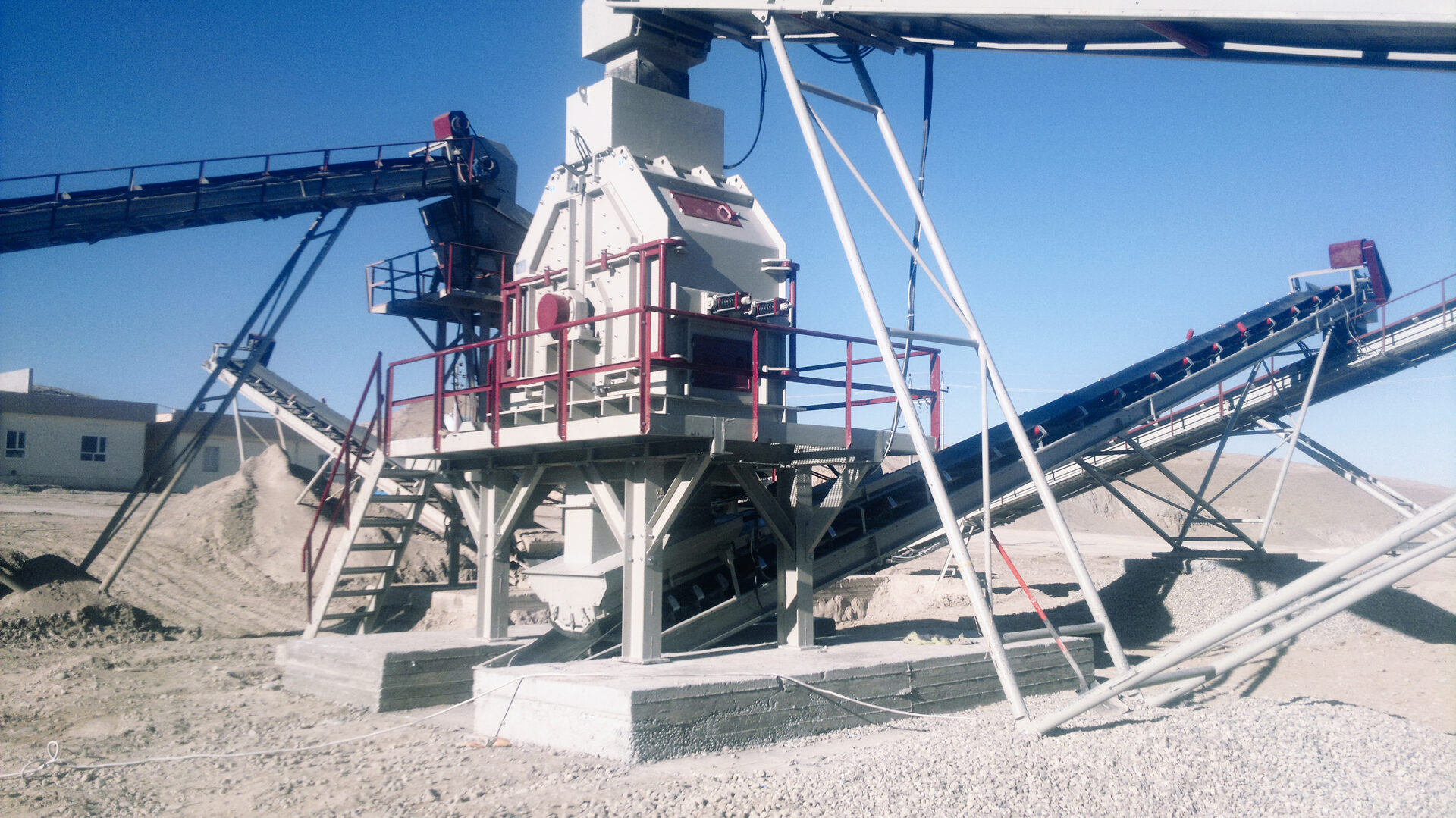
How Output Size Is Controlled in an Impact Crusher
There are two main controls for impact crusher output size:
- Apron gap (impact plate distance from the rotor tip) — this is the primary control for output particle size. The gap sets the maximum dimension of particles that can exit the crushing chamber without further impact. Adjusting the apron gap is the first action to take when output gradation needs to change.
- Rotor speed — this is the secondary control. Higher rotor speed increases the kinetic energy of each impact, which breaks material more finely and increases the proportion of fines in the product. Rotor speed is adjusted less frequently and usually only when changing material type or target product specification significantly.
An important distinction from jaw crushers: an impact crusher does not have a fixed CSS that defines a single cut point. It produces a distribution of particle sizes from fine to a maximum governed by the apron gap. The P80 (the size at which 80% of the product passes) is the most useful specification to work with for gradation control.
Understanding the Apron Gap
Most HSI crushers have two or three impact aprons (curtains) positioned behind the rotor at different angles. Each plays a different role in the crushing process:
- Primary apron (first curtain, closest to the rotor): Controls the coarse reduction — this is the main setting for output size. Setting this gap determines the maximum particle that can pass through on the first impact.
- Secondary apron (second curtain): Controls the final product fineness by providing a second impact zone for particles that passed through the primary without being reduced sufficiently.
- Tertiary apron (on some models, for fine aggregate production): Provides an additional reduction stage for fine aggregate and manufactured sand applications.
The general rules are straightforward:
- Opening the apron gap → coarser output, higher throughput capacity, less fines generation, less wear, less power draw
- Closing the apron gap → finer output, more fines generation, more wear on blow bars and liners, higher power draw
The table below shows typical relationships between primary apron gap setting and product P80 for standard limestone:
| Primary Apron Gap | Typical Product P80 | Application |
|---|---|---|
| 20–30 mm | 0–20 mm | Fine aggregate, manufactured sand feed |
| 30–50 mm | 0–40 mm | Road base, concrete aggregate |
| 50–80 mm | 0–70 mm | Sub-base, ballast, fill |
| 80–120 mm | 0–100 mm | Rough fill, general sub-base |
| 120–200 mm | 0–150 mm | Primary reduction, coarse pre-screening feed |
Note: These values are indicative for standard limestone at typical operating speed. Harder or softer materials will shift the curve — see the material correction section below.
Effect of Rotor Speed on Output
Rotor speed determines the tip speed of the blow bars — the velocity at which the bars strike the feed material. Higher tip speed = higher kinetic energy per impact = finer product with more fines generation.
Tip speed formula:
Tip speed (m/s) = π × rotor diameter (m) × RPM ÷ 60
Example: A crusher with a 1,400 mm rotor diameter running at 750 RPM:
Tip speed = π × 1.4 × 750 ÷ 60 = 54.9 m/s
The table below shows the relationship between tip speed, application, and fines generation:
| Tip Speed | Application | Fines Generation |
|---|---|---|
| <30 m/s | Primary reduction — coarse material | Very low |
| 30–40 m/s | Secondary crushing — aggregate production | Low to medium |
| 40–55 m/s | Fine aggregate shaping — road stone, concrete aggregate | Medium to high |
| >55 m/s | Manufactured sand production (HTK configuration) | High |
When adjusting for output size, change the apron gap first. Only adjust rotor speed if you need to change the fines proportion in the output without changing the maximum particle size — or when changing to a significantly different material type.
Step-by-Step: How to Adjust Apron Gap on a GELEN HSI Crusher
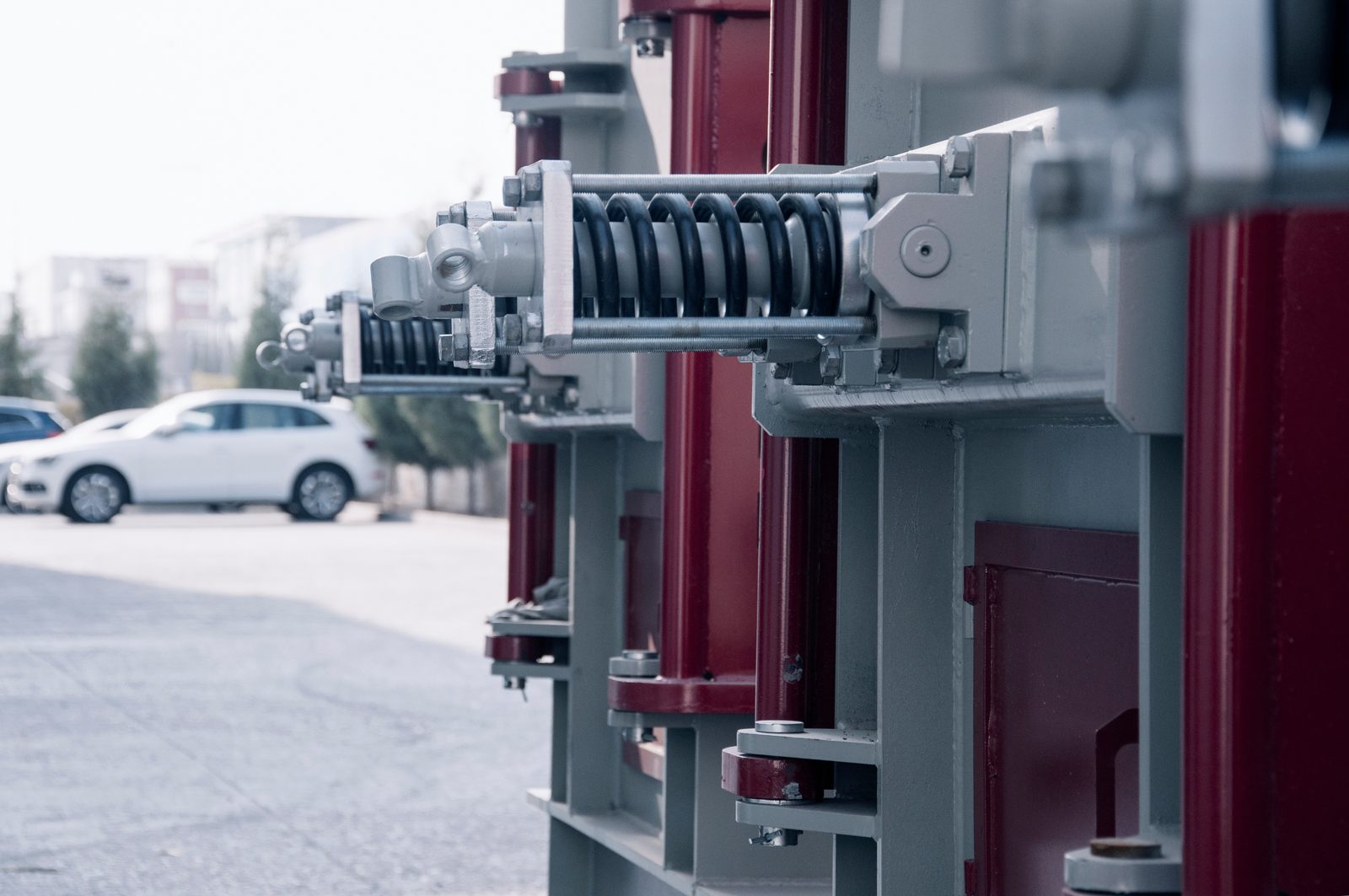
- Ensure the machine is fully stopped and lockout/tagout (LOTO) is applied on all energy sources
- Access the hydraulic apron adjustment controls — on GELEN models, these are located on the external control panel adjacent to the crusher housing
- Open the hydraulic valve to release the apron locking mechanism
- Use the adjustment screw or hydraulic cylinder to move the apron to the target position — move in small increments (10 mm at a time for coarse adjustments)
- Measure the gap with a calibrated feeler gauge or gap measurement tool — measure at both the left-hand and right-hand sides of the apron independently
- Ensure both sides are equal within ±2 mm — asymmetric gaps cause uneven product gradation and uneven blow bar wear
- Lock the apron in position using the locking mechanism
- Remove LOTO and restart the crusher according to your normal start-up sequence
- Allow the crusher to reach steady-state operation (approximately 15 minutes at normal feed rate)
- Take a representative product sample from the discharge conveyor — sieve the sample and compare the gradation to your target specification. Readjust if needed and repeat.
- Record the final confirmed setting in the maintenance log along with the material type and date — this becomes your baseline for that material
How Material Properties Affect Output
The apron gap tables above are calibrated for standard limestone. Different materials produce different gradations at the same setting because their compressive strength, brittleness, and density vary. Use the corrections below as a starting point when commissioning a crusher on a new material:
| Material | Compressive Strength (MPa) | Starting Correction vs Standard Limestone Setting |
|---|---|---|
| Limestone (soft to medium) | 50–100 MPa | Standard reference — no correction |
| Dolomite | 100–150 MPa | Close gap by 5–10 mm vs limestone (harder material breaks less efficiently) |
| Concrete rubble | 30–80 MPa | Open gap by 5–10 mm (variable hardness; risk of over-crushing) |
| Asphalt / RAP | 10–40 MPa | Open gap by 10–20 mm (very soft and temperature-sensitive; tends to over-crush) |
| River gravel (mixed hardness) | 100–200 MPa | Close gap by 10–15 mm (harder mixed material; higher variation in output) |
Additional material-specific considerations:
- Wet or sticky material: tends to pass through coarser because material sticks together in the crushing chamber rather than separating cleanly. Tighten the setting slightly and consider pre-drying or pre-screening if moisture is consistently high.
- High-fines feed: if the feed already contains a large proportion of fines (e.g., from a jaw crusher with a tight CSS), consider screening out the fines before the impact crusher to avoid unnecessary re-crushing and excessive fines in the product.
Calculating Required CSS for Your Target Gradation
There is no single formula that gives a precise CSS for a specific target gradation because the output curve depends on material properties, rotor speed, wear condition, and feed rate simultaneously. The reliable method is the following empirical commissioning procedure:
- Define your target output specification clearly — for example, 0–40 mm for road base with a maximum of 10% retained on 40 mm
- Start with the manufacturer's recommended apron gap setting for your material type (use the tables above as the starting point)
- Run the crusher at design feed rate for at least 15 minutes to reach steady-state thermal and operational conditions
- Take a product sample every 30 minutes for two hours — avoid taking a single sample that may not be representative
- Perform a full sieve analysis on each sample and average the results — compare the averaged curve to your target specification
- Adjust the apron gap in 5–10 mm increments (close to produce finer; open to produce coarser) and repeat the sampling process after each adjustment
- Once the averaged gradation consistently meets the specification across multiple samples, document the final apron gap, rotor speed, and feed rate as the confirmed baseline for that material
This procedure typically requires one to two hours of commissioning time on a new material but provides a reliable, reproducible baseline that can be restored immediately if settings drift.
Common Output Size Problems and Their Causes
| Problem | Most Likely Cause | Fix |
|---|---|---|
| Output consistently coarser than target | Gap too wide / blow bars worn beyond limit / rotor speed too low | Close apron gap; replace worn bars; increase RPM within design range |
| Output consistently finer than target | Gap too tight / rotor speed too high | Open apron gap; reduce RPM |
| Inconsistent gradation between samples | Unequal apron gaps on left and right sides / variable feed rate | Equalize both apron sides; stabilize feed rate with variable speed feeder |
| Output finer at night (cold temperatures) | Cold material is more brittle — fractures more readily under impact | Open apron gap by 5–10 mm in cold conditions; optionally reduce RPM slightly |
For a complete diagnosis of output size and other crusher problems, see the Impact Crusher Troubleshooting Guide.
Conclusion
Impact crusher output size control is not a matter of turning a single dial — it requires understanding the interaction between apron gap, rotor speed, material properties, and wear condition of the blow bars and liners. By using the apron gap as the primary adjustment, verifying with product samples and sieve analysis, and documenting confirmed settings as baselines, operators can consistently hit their target gradation specifications and reduce product quality variation.
GELEN horizontal shaft impact crushers are equipped with hydraulic apron adjustment for fast, precise CSS changes without extended downtime. Contact our engineering team for application-specific apron gap recommendations or to discuss your target gradation requirements.