
Who this is for: Plant managers, process engineers, and equipment buyers looking for proven application examples and starting-point configurations for an inclined vibrating screen in their specific industry.
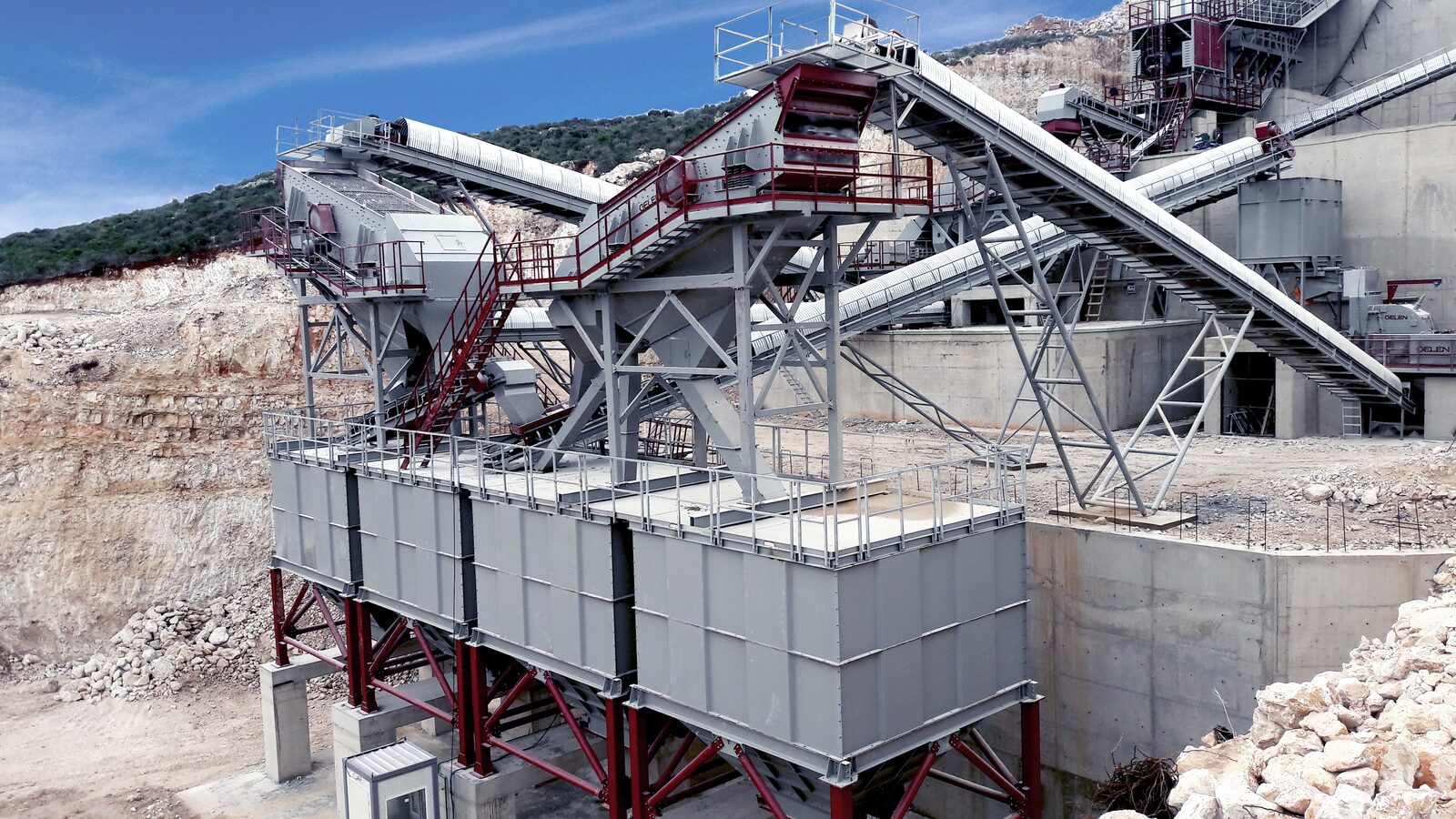
Aggregate Production
Aggregate production is the largest application for inclined vibrating screens worldwide. Roughly 70% of installed inclined screens serve aggregate quarries producing crushed stone, gravel, and manufactured sand for road base, asphalt, and concrete.
Standard EN-grading plant — limestone
Plant: 250 t/h crushed limestone, producing 0/4, 4/8, 8/16, 16/32 mm fractions for asphalt mix and concrete aggregate. Common configuration in EU markets.
- Screen: STE 2060 3-deck (2.0 × 6.0 m, 12 m² per deck)
- Cuts: 32 mm (top), 16 mm (middle), 4 mm (bottom)
- Media: Wire mesh on all decks (limestone is soft, wire wins on cost)
- Inclination: 18°
- Stroke: 7 mm at 900 RPM (~3.4 G)
- Result: Four products in a single pass, <5% oversize contamination on each fraction
Granite quarry — high-performance plant
Plant: 400 t/h crushed granite for cubical aggregate, producing 0/4, 4/8, 8/16, 16/22 mm and 22+ mm recirculation. Granite is hard (Mohs 6–7) and abrasive — wire mesh would last 3 weeks.
- Screen: STE 2470 3-deck (2.4 × 7.0 m, 16.8 m² per deck)
- Cuts: 22 mm, 16 mm, 4 mm
- Media: Polyurethane top + middle decks (12-month life), high-tension wire bottom deck (sharp 4 mm cuts)
- Inclination: 20°
- Stroke: 8 mm at 950 RPM (~4 G)
- Result: 12-month media life on top decks, 4-week wire change on bottom. PU saves ~$30k/year vs all-wire setup.
For more sizing details and worked examples see how to size an inclined screen.
Mining & Ore Classification
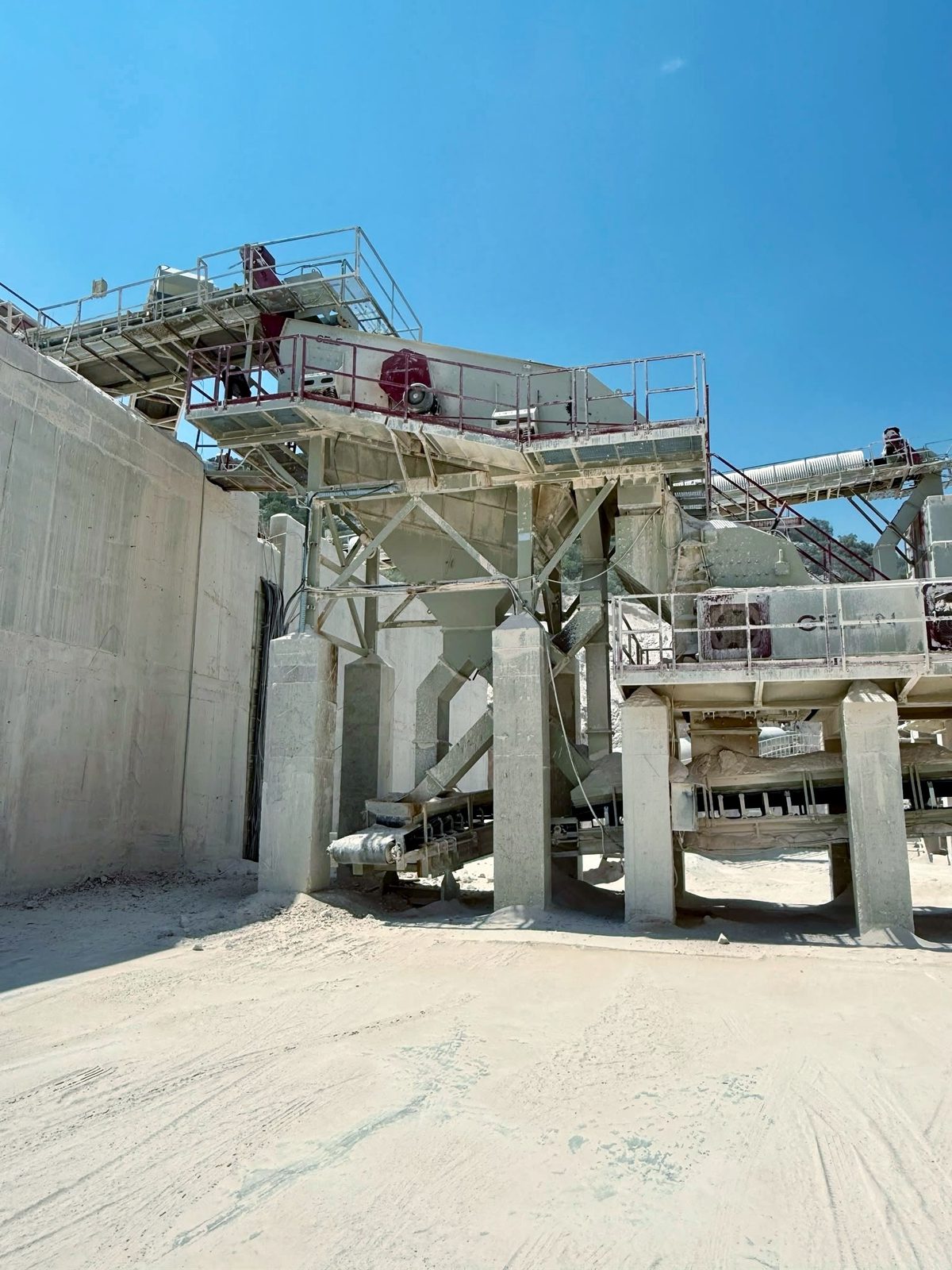
Inclined screens serve secondary and tertiary classification in mining operations — separating ore size fractions for downstream concentration, leaching, or smelting. The 24/7 duty cycle and abrasive feed make polyurethane panels mandatory in nearly every case.
Iron ore classification
Plant: 800 t/h iron ore (Fe2O₃), producing −10 mm fines for sintering, 10–25 mm DRI feed, and 25+ mm to crushing.
- Screen: Two STE 2470 3-deck units in parallel
- Cuts: 25 mm, 10 mm, 3 mm (dust)
- Media: Polyurethane on all decks (15–20 month life)
- Inclination: 22° (high tonnage favours throughput)
- Stroke: 9 mm at 950 RPM (~4.1 G)
- Result: Two-stream operation handles 800 t/h with media changes scheduled into planned maintenance windows. Wire mesh option was rejected — would need replacement weekly.
Copper ore secondary screening
Plant: 350 t/h copper ore from a primary jaw crusher, screening into −20 mm to flotation feed and +20 mm to secondary cone crushing.
- Screen: STE 2460 2-deck (single cut at 20 mm; second deck used for fines protection)
- Media: PU panels (high-durometer for abrasive ore)
- Inclination: 20°
- Result: Cleaner feed to flotation cells, 18-month media life, payback on PU vs wire in 4 months.
Gold ore — heap leach prep
Plant: 200 t/h gold ore, sized to ≤25 mm for heap leach. Inclined screen sits between jaw crusher and cone crusher to scalp out fines that don't need further crushing.
- Screen: STE 1860 2-deck
- Cut: 25 mm
- Media: Wire mesh (gold ore varies in abrasiveness; wire is the safe starting point)
- Inclination: 20°
Construction & Demolition Recycling
Recycled aggregate production is one of the fastest-growing markets for inclined screens. The challenge is the contamination: rebar, mesh, plastic, wood, and other foreign material in the feed will tear up wire mesh in days.
Recycled concrete plant
Plant: 150 t/h crushed C&D waste from a horizontal shaft impact crusher, producing 0/40 mm recycled aggregate and 40+ mm oversize for re-crushing.
- Screen: STE 1650 2-deck
- Cuts: 40 mm (top), 4 mm (bottom — separates fines for sub-base)
- Media: Rubber panels on top deck (handles rebar and contamination), PU on bottom deck
- Inclination: 18°
- Result: 8-month rubber panel life vs estimated 5 days for wire mesh on the same duty. Effectively makes the operation viable.
Asphalt millings recycling
Plant: 100 t/h reclaimed asphalt pavement (RAP) from cold milling, screening into +12 mm to crushing and −12 mm directly to plant feed.
- Screen: STE 1240 2-deck
- Media: Rubber panels (RAP is sticky, especially in summer)
- Inclination: 22° (steep angle helps move sticky material)
- Stroke: 8 mm at 950 RPM
- Note: If pegging becomes a chronic problem, switch to a horizontal screen — see inclined vs horizontal comparison.
Sand & Gravel Washing
Wet processing of river gravel, dredged material, and washed sand. The inclined screen typically follows a wash drum or scrubber, with spray bars adding water for clay removal and final dewatering.
River gravel washing plant
Plant: 200 t/h river gravel, 8–12% moisture, 30% clay content. Producing washed 0/2, 2/8, 8/16, 16+ mm products for concrete and pre-cast.
- Screen: STE 1860 3-deck with spray bar kit
- Cuts: 16 mm, 8 mm, 2 mm
- Media: Polyurethane panels with anti-peg geometry on all decks
- Spray water: 2 spray bars on top deck at 3 bar; 1 spray bar on second deck
- Inclination: 18° (steeper for wet material)
- Result: Spec-clean concrete sand production at 200 t/h. Clay washes through to settling pond; 2 mm undersize goes to a sand classifier.
Manufactured sand from crusher dust
Plant: 80 t/h crusher dust (0–8 mm) from a granite VSI, producing washed manufactured sand to EN 12620 spec. Inclined screen separates +5 mm coarse fraction for return to VSI and −5 mm clean sand to the spiral classifier.
- Screen: STE 1240 single-deck (or 2-deck with second deck unused)
- Cut: 5 mm
- Media: PU panels with washed apertures
- Spray: 2 bar across full deck width
Coal Preparation
Coal preparation plants use inclined screens for sizing washed coal into commercial products. Coal is soft but often wet and clay-contaminated, so media selection is the key decision.
Steam coal sizing plant
Plant: 300 t/h washed steam coal, producing −6 mm fines, 6–25 mm stoker coal, and 25–50 mm hand-picked coal.
- Screen: STE 2060 3-deck
- Cuts: 50 mm, 25 mm, 6 mm
- Media: Rubber panels on top deck (impact protection), PU on middle and bottom (wear life under wet ash)
- Inclination: 20°
- Special note: Coal moisture varies seasonally — summer plant runs with spray bars off, winter plant adds heated spray to prevent freezing.
Industrial Minerals
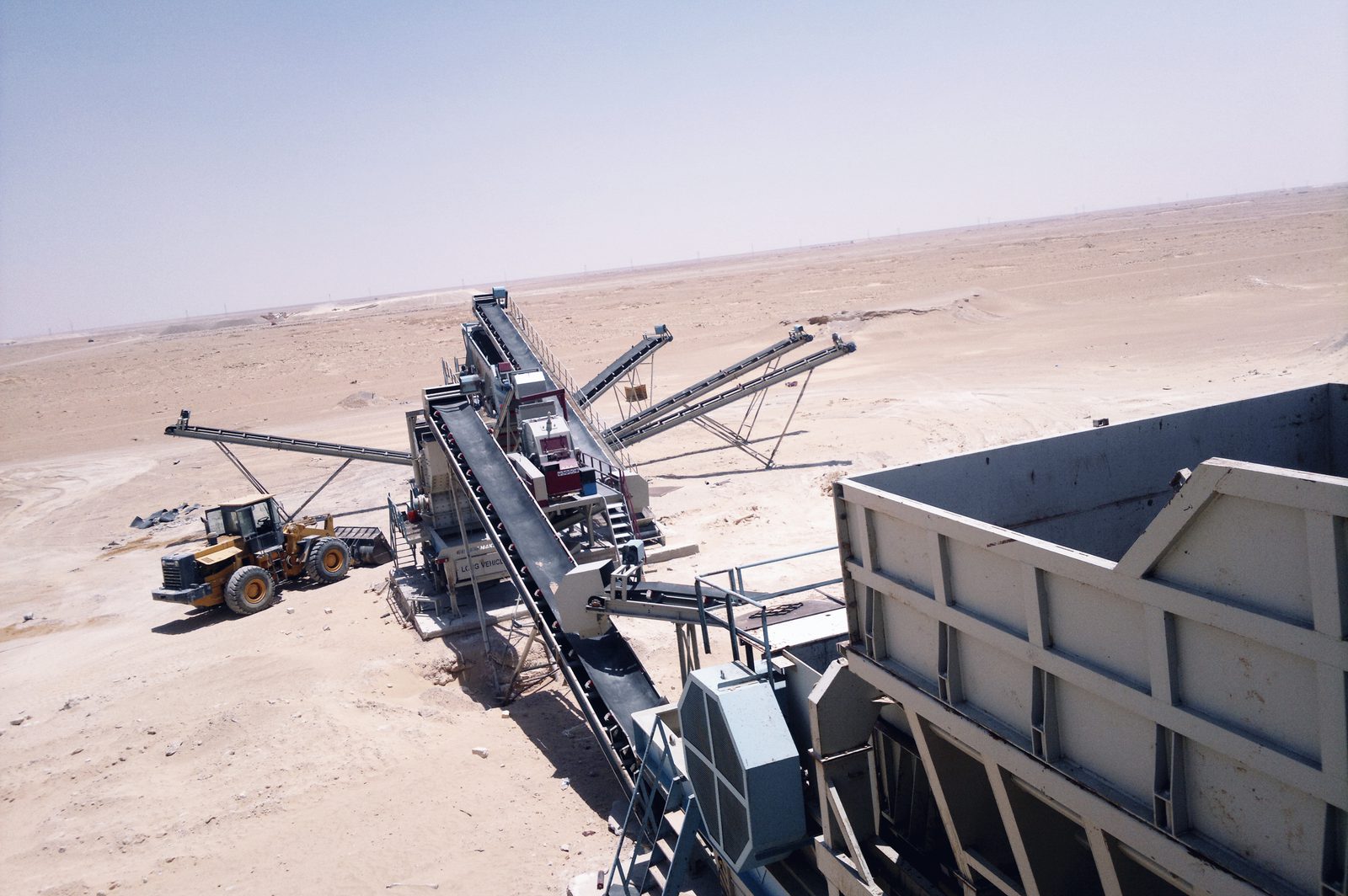
Limestone for cement raw meal
Plant: 600 t/h crushed limestone for a cement plant, scalping out +25 mm for return to secondary crushing.
- Screen: STE 2470 single-deck
- Cut: 25 mm
- Media: Wire mesh (limestone is soft, wire is cheap and easy)
- Inclination: 22° (high tonnage)
Industrial sand for glass manufacture
Plant: 100 t/h silica sand for glass, screening at 0.5 mm and 1 mm. Very fine cuts demand careful media choice and high screening efficiency.
- Screen: STE 1860 2-deck (note: at this fine cut, a horizontal screen is often a better fit — see the ETE Series)
- Media: High-tension stainless steel wire (for purity)
- Inclination: 15° (slow travel for accuracy)
- Stroke: 5 mm at 950 RPM
Mobile and Portable Plant Applications
Inclined screens are the dominant choice for mobile and portable plants because they are mechanically simple, lightweight, and cheap to mount on a tracked or wheeled chassis. Most small mobile crushers and screening plants use a 2-deck inclined screen.
Tracked screen on a contract crushing job
Plant: 80 t/h mobile tracked crusher with integrated 2-deck inclined screen, producing 0/22, 22/63 mm and oversize.
- Screen: STE 1240 2-deck
- Cuts: 63 mm, 22 mm
- Media: Wire mesh (contract jobs change material frequently — wire is most flexible)
- Note: Mobile plants often pair the inclined screen with a vibrating feeder ahead and a side-discharge conveyor downstream.
Where to Place the Inclined Screen in Your Circuit
The inclined screen integrates at multiple points in a typical crushing and screening plant:
- Primary scalping: After the hopper and vibrating feeder, before the jaw crusher. Removes fines that don't need crushing. Often a grizzly inclined screen — see the ITE Series.
- Secondary sizing: After the cone crusher. The classic 2- or 3-deck inclined sizing screen.
- Tertiary product sizing: After the tertiary cone or impact crusher, before stockpiling. Final spec products.
- Closed-circuit recirculation: Oversize from the inclined screen returns to the cone crusher. The standard configuration for spec-compliant aggregate.
- Wash plant: After a wash drum or scrubber, with spray bars added to the inclined screen for final clay removal.