
Introduction: A well-maintained jaw crusher delivers consistent throughput, lower energy consumption, and fewer emergency shutdowns. This guide provides a field-ready preventive maintenance (PM) schedule you can print, laminate, and post at your control room or crusher station. Every interval is based on typical quarry and mining duty cycles — adjust to your site conditions as needed.
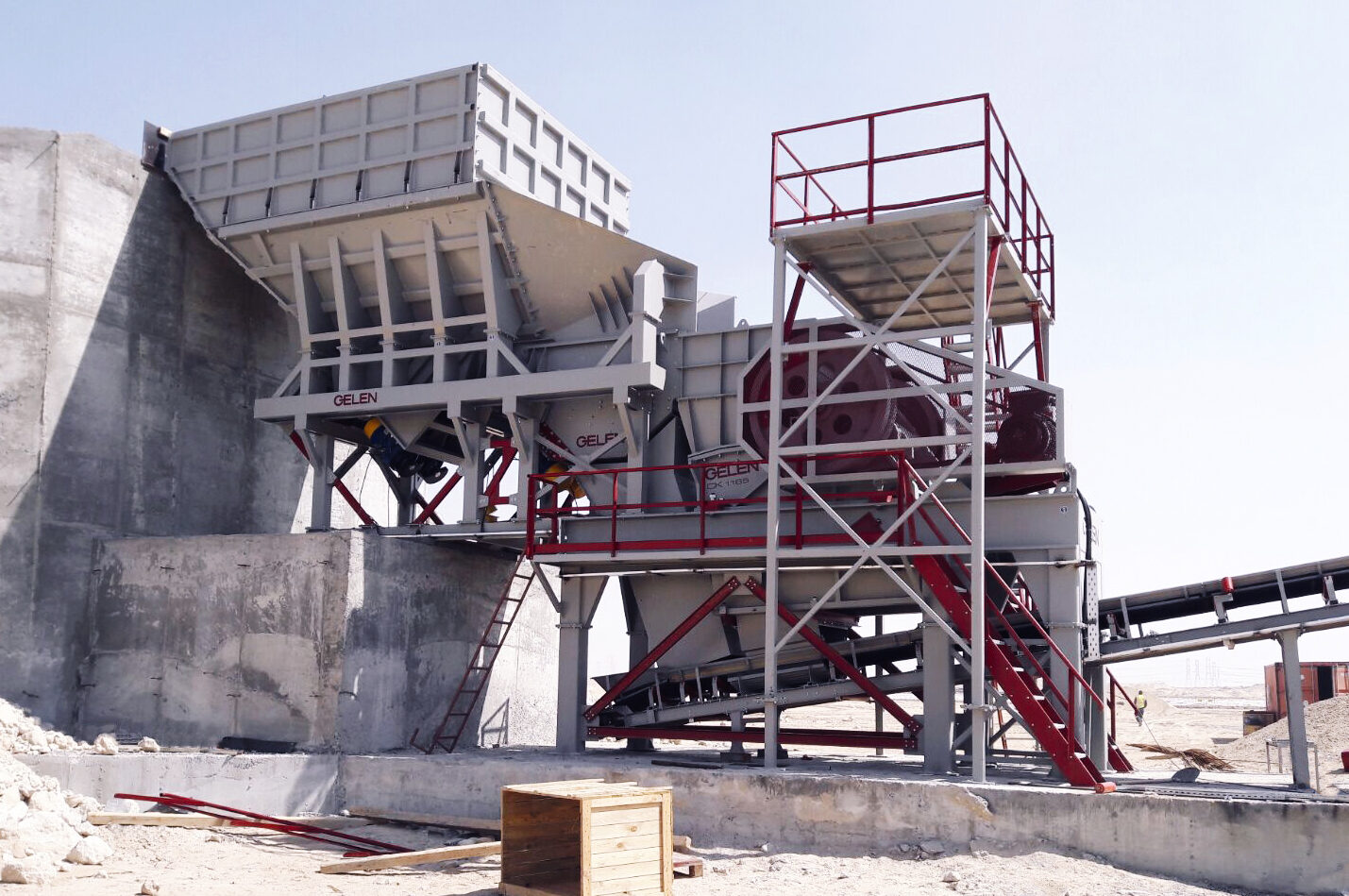
Why Preventive Maintenance Matters
Unplanned jaw crusher downtime costs far more than routine inspections. A single bearing failure can halt production for 2–5 days and cost 10–50× the price of the bearing itself when lost production is factored in. A structured PM program:
- Extends machine life — well-maintained crushers routinely exceed 20 years of service.
- Reduces wear part costs — catching jaw plate wear early allows you to flip or replace before cascading damage occurs.
- Improves safety — systematic LOTO checks and bolt inspections prevent catastrophic failures.
- Protects resale value — documented maintenance history significantly increases equipment value.
Daily Checks (Every Shift Start / End)
These checks take 10–15 minutes and should be logged by the operator on every shift.
- Walk-around visual inspection: look for oil leaks, loose bolts, cracked welds, and material buildup.
- Check oil level in the lubrication tank; top up if below the minimum mark.
- Verify grease pressure on auto-lube system (if equipped); confirm grease is reaching all nipples.
- Inspect jaw plate bolt tightness — hand-check or use a torque wrench on accessible fasteners.
- Check V-belt condition: look for fraying, glazing, or excessive slack.
- Record bearing temperature trend (IR thermometer or sensor readout). Normal: 50–80 °C; alarm at >90 °C.
- Listen for unusual noise: knocking = loose toggle or jaw plate; grinding = bearing issue; rattling = loose cheek plate.
- Clear any trapped material from the crushing chamber before restart.
Weekly Maintenance
- Grease all manual lubrication points per the manufacturer schedule: toggle plate seat, pitman bearings, tension rod springs.
- Check and adjust V-belt tension — deflection at mid-span should be 10–15 mm under thumb pressure.
- Inspect flywheel and pulley key/keyway for looseness or wear marks.
- Measure side liner (cheek plate) thickness at 3 points; log results.
- Inspect discharge chute and hopper for material buildup or wear-through.
- Check foundation anchor bolts for tightness (stationary installations).
Monthly Maintenance
- Measure jaw plate thickness at top, middle, and bottom — replace or flip when teeth are worn to ~30% of original height or weight loss reaches ~30%.
- Inspect toggle plate for cracks, bending, or wear at the seat contact area.
- Check eccentric shaft bearing clearance with a dial indicator; compare to OEM tolerances.
- Inspect flywheel balance — add or remove counterweights if vibration has increased.
- Verify CSS setting with a lead wire or calibrated tool; re-adjust if product size has drifted.
- Test overcurrent relay and vibration sensor trip functions.
- Clean or replace the lubrication system filter element.
Annual / Major Shutdown Maintenance
- Full eccentric shaft inspection: remove, measure journal diameters, check for scoring or spalling.
- Replace main bearings if clearance exceeds OEM limit (typically >0.15 mm radial play for spherical roller bearings).
- NDT (non-destructive testing) on the mainframe: look for stress cracks at knuckle points and side walls.
- Replace all toggle plate seats and tension rod springs regardless of visible condition.
- Rebuild or replace the hydraulic CSS adjustment cylinder seals.
- Motor insulation resistance test (Megger) — minimum 1 MΩ per kV of rated voltage.
- Complete electrical cabinet inspection: contactors, overloads, wiring integrity.
- Repaint exposed frame surfaces to prevent corrosion.
Lubrication Specifications
Correct lubrication is the single most important maintenance task. Over-greasing is as damaging as under-greasing — excess grease traps heat and contaminants.
| Component | Lubricant Type | Grade | Interval | Quantity (approx.) |
|---|---|---|---|---|
| Eccentric shaft bearings | Lithium complex grease | NLGI 2 | Every 8 operating hours | 50–100 g per point |
| Toggle plate seats | EP grease | NLGI 2 | Weekly | 30–50 g per seat |
| Pitman bearings | Lithium complex grease | NLGI 2 | Every 8 operating hours | 50–100 g per point |
| Tension rod spring | EP grease | NLGI 2 | Monthly | Light coat |
| Flywheel shaft seal | Lithium complex grease | NLGI 2 | Weekly | 20–30 g |
Caution: Never mix grease types. If switching brands, flush the old grease completely. Incompatible thickeners can cause bearing failure within hours.
Jaw Plate Wear Measurement Guide
Jaw plates are the highest-cost consumable on a jaw crusher. Measuring wear correctly extends plate life and prevents unplanned changeovers.
How to Measure
- Lock out the crusher and ensure the chamber is empty.
- Measure tooth height at three points: top third, middle, and bottom third of both fixed and moving jaw plates.
- Record measurements in a log; plot the trend over time.
- Calculate percentage remaining: (current height ÷ original height) × 100.
When to Act
| Wear Level | Action |
|---|---|
| 70–100% remaining | Normal operation; continue monitoring. |
| 40–70% remaining | Order replacement plates; schedule a jaw plate change. |
| 30–40% remaining | Flip reversible plates (if available on GELEN CK Series). If already flipped, replace immediately. |
| <30% remaining | Replace urgently — risk of plate breakage and frame damage. |
Maintenance Log Template
Use a simple log to track each maintenance event. Here is a recommended format:
| Date | Hours | Task Performed | Findings / Measurements | Action Taken | Technician |
|---|---|---|---|---|---|
| dd/mm/yyyy | e.g. 4,320 | Weekly lube | Toggle seat worn 2 mm | Greased; ordered seat | Initials |
Conclusion
A disciplined maintenance schedule is the cheapest insurance against lost production. Print this guide, train your crew, and log every task. GELEN CK Series jaw crushers are designed for easy maintenance with hydraulic CSS adjustment, centralized lubrication, and reversible jaw plates — but even the best-built machine needs consistent care.
For spare parts pricing, technical support, or a customized maintenance plan for your site, contact a GELEN engineer.