
Introduction: Even well-maintained jaw crushers develop faults. The difference between a 30-minute fix and a 3-day shutdown is speed of diagnosis. This guide gives your operators and maintenance team a systematic approach to the most common jaw crusher problems — organized as symptom → likely cause → corrective action.
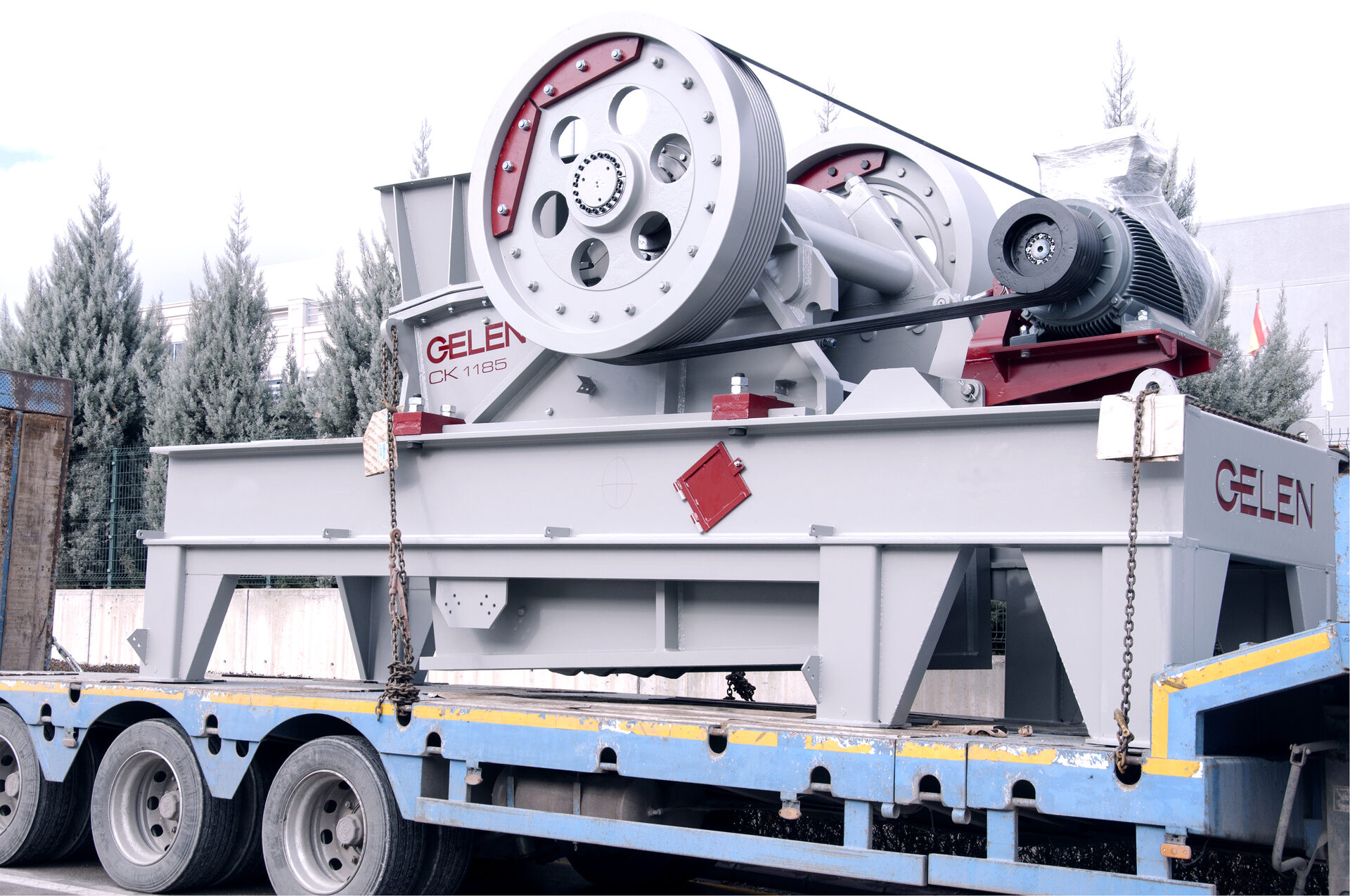
Quick Diagnostic Reference Table
Start here. Find your symptom in the left column, check the most likely causes, and follow the recommended fix.
| Symptom | Likely Cause(s) | Corrective Action |
|---|---|---|
| Excessive vibration | Uneven feed distribution; loose flywheel; worn bearings; loose foundation bolts | Centre feed; check flywheel key and bolts; measure bearing clearance; retorque foundation |
| Unusual knocking noise | Loose jaw plate bolts; worn toggle plate seat; tramp metal in chamber | Retorque jaw bolts; inspect toggle seat; remove tramp metal and install a metal detector |
| Grinding or squealing noise | Bearing failure; dry lubrication point; belt misalignment | Replace bearing; grease immediately; realign belts |
| Bearing overheating (>90 °C) | Over-greasing; wrong grease type; contamination; misalignment | Reduce grease volume; switch to OEM-spec NLGI 2; flush and regrease; check alignment |
| Product getting coarser | CSS has widened (wear); jaw plates worn smooth | Reset CSS; flip or replace jaw plates |
| Reduced throughput | Bridging in chamber; worn plates; blocked discharge | Clear bridge; replace plates; clear discharge chute |
| Motor tripping on overload | Overfeeding; tramp metal; CSS too tight; belt slippage | Reduce feed rate; remove obstruction; open CSS; tension belts |
| Toggle plate breaking repeatedly | Uncrushable material (tramp metal); incorrect toggle rating | Install metal separator upstream; verify toggle spec matches crusher model |
| Oil leaking from bearing housing | Worn shaft seal; housing gasket failure; overfilling | Replace seal; replace gasket; drain to correct level |
| Excessive fines in product | CSS too tight; re-crushing of fines (no scalping screen) | Open CSS; install scalping screen before crusher |
Emergency Jam Procedure
A jammed jaw crusher is a safety hazard. Follow this procedure — never attempt to clear a jam with the crusher running.
- Emergency stop: Hit the E-stop. Stop the feeder first, then the crusher motor.
- Isolate energy: Full Lock-Out / Tag-Out (LOTO) on all electrical, hydraulic, and pneumatic sources.
- Assess the blockage: Look into the chamber from a safe vantage point. Identify the blocking piece(s).
- Clear with equipment: Use a crane, excavator, or loader to remove the oversize piece. Never enter the chamber without a confined-space permit and gas test.
- Inspect for damage: Check jaw plates, toggle plate, cheek plates, and the frame for cracks or deformation.
- Root-cause analysis: Was the jam caused by overfeeding, oversized material, wet/sticky feed, or tramp metal? Address the root cause before restarting.
- Prevention measures: Install a grizzly feeder to pre-screen oversized material; add a metal separator; maintain steady bunker levels to centre the feed.
Safety warning: Never use explosives, gas torches, or manual prying bars inside the crushing chamber. The risk of sudden jaw movement, even under LOTO, makes these methods extremely dangerous.
Vibration Troubleshooting — In Depth
Vibration is the most common jaw crusher complaint. Not all vibration is abnormal — jaw crushers inherently produce cyclic forces. Here is how to distinguish normal from problematic vibration:
Normal vs. Abnormal Vibration
| Vibration Type | Normal Range | Alarm Threshold |
|---|---|---|
| Cyclic (at eccentric speed) | 2–5 mm/s RMS | >8 mm/s RMS |
| Random (bearing defect) | Background noise only | Any detectable spike |
| Structural (foundation) | Barely perceptible | Visible frame movement |
Systematic Vibration Checks
- Run the crusher empty for 2 minutes — if vibration is present empty, the problem is mechanical (bearing, flywheel, foundation), not feed-related.
- Check flywheel for cracks, missing balance weights, or loose key.
- Measure bearing clearance at both ends of the eccentric shaft.
- Inspect foundation bolts for looseness or concrete cracking.
- If vibration only occurs under load, check for uneven feed distribution — the material should enter the centre of the chamber.
Bearing Overheating — In Depth
Eccentric shaft bearings are the most critical rotating components. Temperature monitoring prevents catastrophic failures.
| Temperature | Status | Action |
|---|---|---|
| <60 °C | Normal | Continue operation |
| 60–80 °C | Elevated — monitor | Check grease quantity and type; verify alignment |
| 80–90 °C | Warning | Reduce load; recheck within 30 min; prepare for shutdown |
| >90 °C | Alarm — shut down | Stop crusher; investigate cause before restart |
Most common causes of overheating:
- Over-greasing: Excess grease churns inside the bearing, generating heat. Follow the lubrication schedule quantities precisely.
- Wrong grease type: Use only NLGI 2 lithium complex grease as specified. Mixing incompatible greases destroys thickener structure.
- Contamination: Dust and water ingress through worn seals degrades lubricant film. Replace seals at first sign of leakage.
- Misalignment: Check motor-to-crusher alignment and belt tracking at least quarterly.
When to Call for Service vs. Field-Fix
| Issue | Field-Fixable? | Notes |
|---|---|---|
| Loose bolts / belt adjustment | Yes | Standard tools; operator-level task |
| Jaw plate flip or replacement | Yes | Requires crane; follow replacement guide |
| Toggle plate replacement | Yes | Keep spares on-site |
| CSS adjustment | Yes | Hydraulic system on GELEN CK Series |
| Bearing replacement | Call service | Requires specialized tooling and alignment expertise |
| Eccentric shaft repair | Call service | Factory inspection recommended |
| Frame crack or weld repair | Call service | Structural integrity at stake; NDT required |
Conclusion
Most jaw crusher faults are preventable with regular maintenance and proper operation. When problems do occur, a systematic diagnosis saves time and money. Print the diagnostic table above, keep it at your crusher station, and train your team to follow it.
GELEN CK Series jaw crushers are designed to simplify troubleshooting with accessible components, hydraulic CSS adjustment, and robust overload protection. For technical support or spare parts, contact a GELEN engineer.