
Introduction: Jaw plates are the primary wear part on any jaw crusher. Choosing the wrong alloy or tooth profile can double your cost per tonne and reduce crushing efficiency. This guide compares the three main manganese steel grades (Mn14, Mn18, Mn22), maps each to specific materials, explains tooth profile options, and highlights how reversible jaw plates — standard on the GELEN CK Series — can double your plate life.
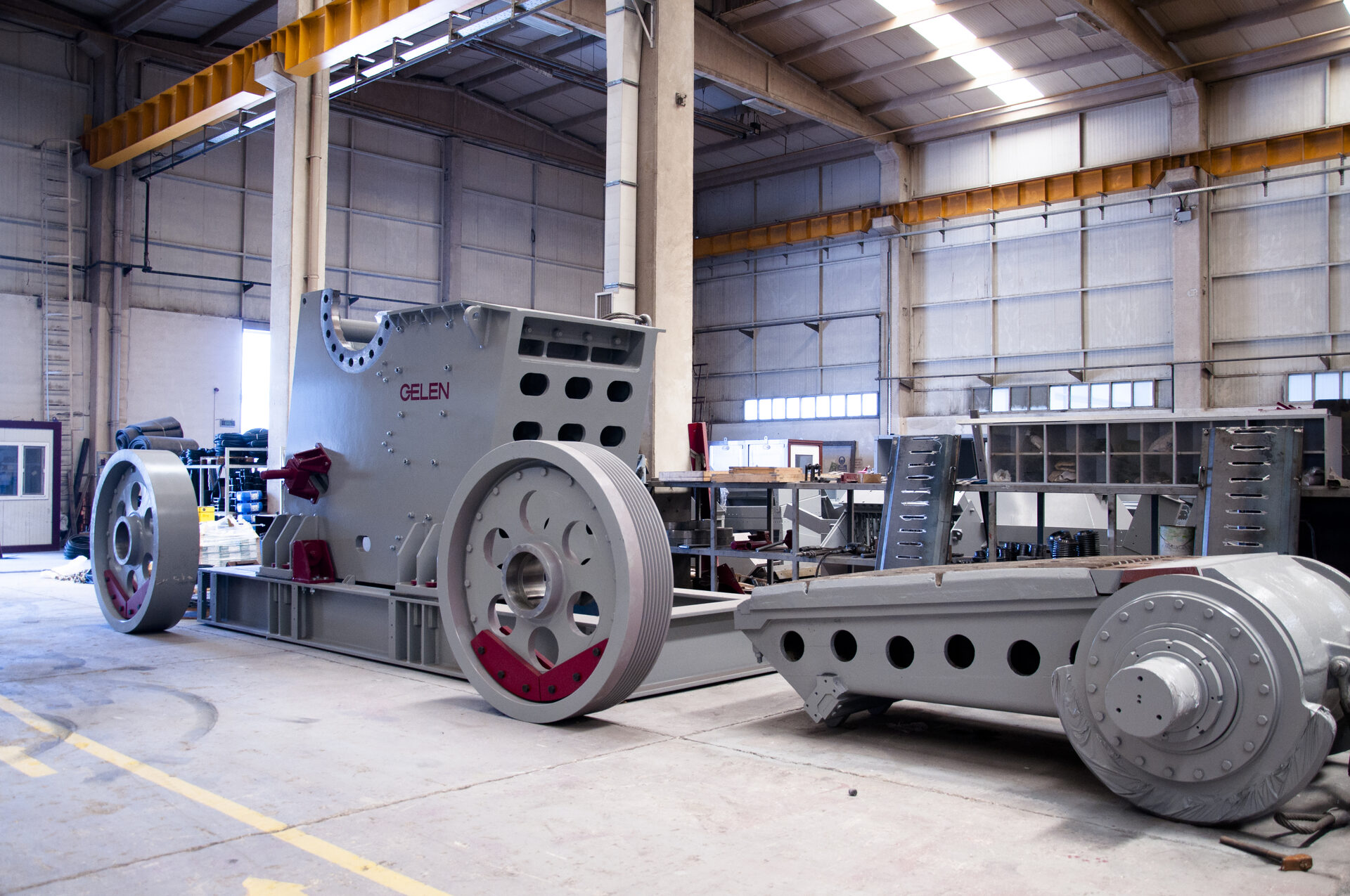
Manganese Steel Alloys Compared
All jaw plates are made from austenitic manganese steel (Hadfield steel). The key differences are manganese content, impact toughness, and work-hardening behaviour.
| Property | Mn14 (14% Mn) | Mn18 (18% Mn) | Mn22 / Mn18Cr2 |
|---|---|---|---|
| Manganese content | 12–14% | 17–19% | 20–22% Mn or 18% Mn + 2% Cr |
| Initial hardness (BHN) | 180–220 | 190–230 | 200–240 |
| Work-hardened surface (BHN) | 400–450 | 450–500 | 500–550 |
| Impact toughness | Good | Very good | Excellent |
| Abrasion resistance | Standard | Good; better for hard feeds | Best; ideal for highly abrasive rock |
| Best for | Limestone, sandstone, soft ores | Granite, river gravel, recycled concrete | Basalt, quartzite, iron ore, highly abrasive feeds |
| Relative cost | 1.0× (baseline) | 1.15–1.25× | 1.3–1.5× |
| Typical plate life | 300–600 hrs on granite | 500–900 hrs on granite | 700–1,200 hrs on granite |
Key insight: More expensive alloys are not always better. In soft limestone applications, Mn14 and Mn22 will wear at similar rates because the material is not hard enough to trigger work-hardening. Pay the premium only when crushing materials above 150 MPa.
Material → Alloy Selection Matrix
| Material | Compressive Strength | Abrasiveness | Recommended Alloy |
|---|---|---|---|
| Limestone | 60–120 MPa | Low | Mn14 |
| Dolomite | 80–140 MPa | Low–Medium | Mn14 or Mn18 |
| Sandstone | 40–100 MPa | Medium (SiO2-rich) | Mn18 |
| River gravel (mixed) | 100–200 MPa | Medium | Mn18 |
| Granite | 160–240 MPa | High | Mn18 or Mn22 |
| Basalt | 150–300 MPa | Very high | Mn22 / Mn18Cr2 |
| Quartzite | 200–350 MPa | Extreme | Mn22 / Mn18Cr2 |
| Iron ore | 100–250 MPa | High | Mn22 / Mn18Cr2 |
| Recycled concrete | 30–80 MPa | Low (but rebar impact) | Mn18 (rebar tough) |
Tooth Profiles: Standard, Coarse & Fine
Jaw plates come in different tooth patterns. The profile affects product shape, throughput, and wear rate.
| Profile | Tooth Pitch / Depth | Best For | Trade-off |
|---|---|---|---|
| Standard (medium) | 40–60 mm pitch | General-purpose quarry work; most applications | Balanced throughput and product shape |
| Coarse (deep teeth) | 60–80 mm pitch | Hard, large-feed primary crushing; mining | Higher throughput; slightly more elongated product |
| Fine (shallow teeth) | 25–40 mm pitch | Secondary crushing; recycled concrete; achieving cubic shape | Better shape; slightly lower throughput; more fines |
| Corrugated / wavy | Sinusoidal pattern | Soft, friable materials; reducing fines | Minimal fines; limited to softer materials |
Reversible Jaw Plates — Double Your Service Life
Reversible jaw plates allow you to flip the plate 180° when one end wears, effectively doubling the service life from a single set of plates.
- How it works: Jaw plates wear fastest at the bottom third (closest to the CSS). When the bottom teeth are worn, unbolt the plate, flip it top-to-bottom, and retorque. The unworn end is now at the CSS.
- Cost impact: A set of reversible plates delivers approximately 1.6–1.9× the life of non-reversible plates (not quite 2× due to slight wear on the upper section during the first campaign).
- GELEN CK Series: All GELEN CK jaw crushers ship with reversible jaw plates as standard. The bolt pattern is symmetrical, allowing field-flip in under 2 hours with a crane and hand tools.
Jaw Plate Replacement — 10-Step Procedure
- Schedule the swap for a planned shutdown. Allow 4–6 hours. Have the crane, rigging, and torque wrench ready.
- LOTO the crusher: Full isolation of electrical, hydraulic, and pneumatic energy. Verify zero energy state.
- Clear the chamber: Run the crusher until the chamber is empty. Remove any trapped material.
- Support the old plate: Sling the jaw plate before loosening bolts to prevent it from falling.
- Remove bolts: Use an impact wrench or hydraulic torque gun. Remove bolts in a cross pattern to prevent plate from cocking.
- Extract the plate: Lift out with the crane. Inspect the backing surface and frame for wear or damage.
- Clean the frame seat: Wire-brush the jaw die seat on the frame. Remove stuck material, rust, and old adhesive.
- Install new plate: Lower the new (or flipped) plate into position. Ensure it sits flat and centred against the frame.
- Torque bolts: Tighten in a cross pattern to the OEM specification (typically 350–800 N·m depending on bolt size and model). Use a calibrated torque wrench.
- Verify and re-torque: Run the crusher at no load for 5 minutes, then re-torque all jaw plate bolts. Check again after 1 hour of production. Log the swap in the maintenance log.
When to Replace vs. When to Flip
| Plate Condition | Action |
|---|---|
| Bottom teeth worn, top teeth intact | Flip the plate (reversible design) |
| Both ends worn to ~30% tooth height | Replace with new plates |
| Cracked plate (any location) | Replace immediately — risk of plate fragment entering chamber |
| Wear not uniform across width | Check feed distribution; consider rotating fixed ↔ moving positions; replace if severely cupped |
Conclusion
Jaw plate selection is not a one-size-fits-all decision. Match the alloy to your material's hardness and abrasiveness, choose the tooth profile that delivers the right balance of throughput and shape, and take advantage of reversible designs to cut your cost per tonne.
GELEN CK Series jaw crushers are designed for fast, safe jaw plate changes with reversible plates, accessible bolting, and a symmetrical frame seat. Contact our team for alloy recommendations tailored to your specific feed material.