
Introduction: Concrete recycling is one of the fastest-growing segments in the crushing industry. A concrete crusher is not a separate machine: it is a jaw or impact crusher set up for demolition concrete, with the wear parts, the closed-side setting and the steel removal to match. Demolition waste that once went to landfill is now processed into recycled concrete aggregate (RCA) for road base, drainage fill, pipe bedding, and even new concrete. A jaw crusher is the ideal machine for this job — robust enough to handle reinforced concrete with embedded rebar, and flexible enough to adjust output to various product specifications.
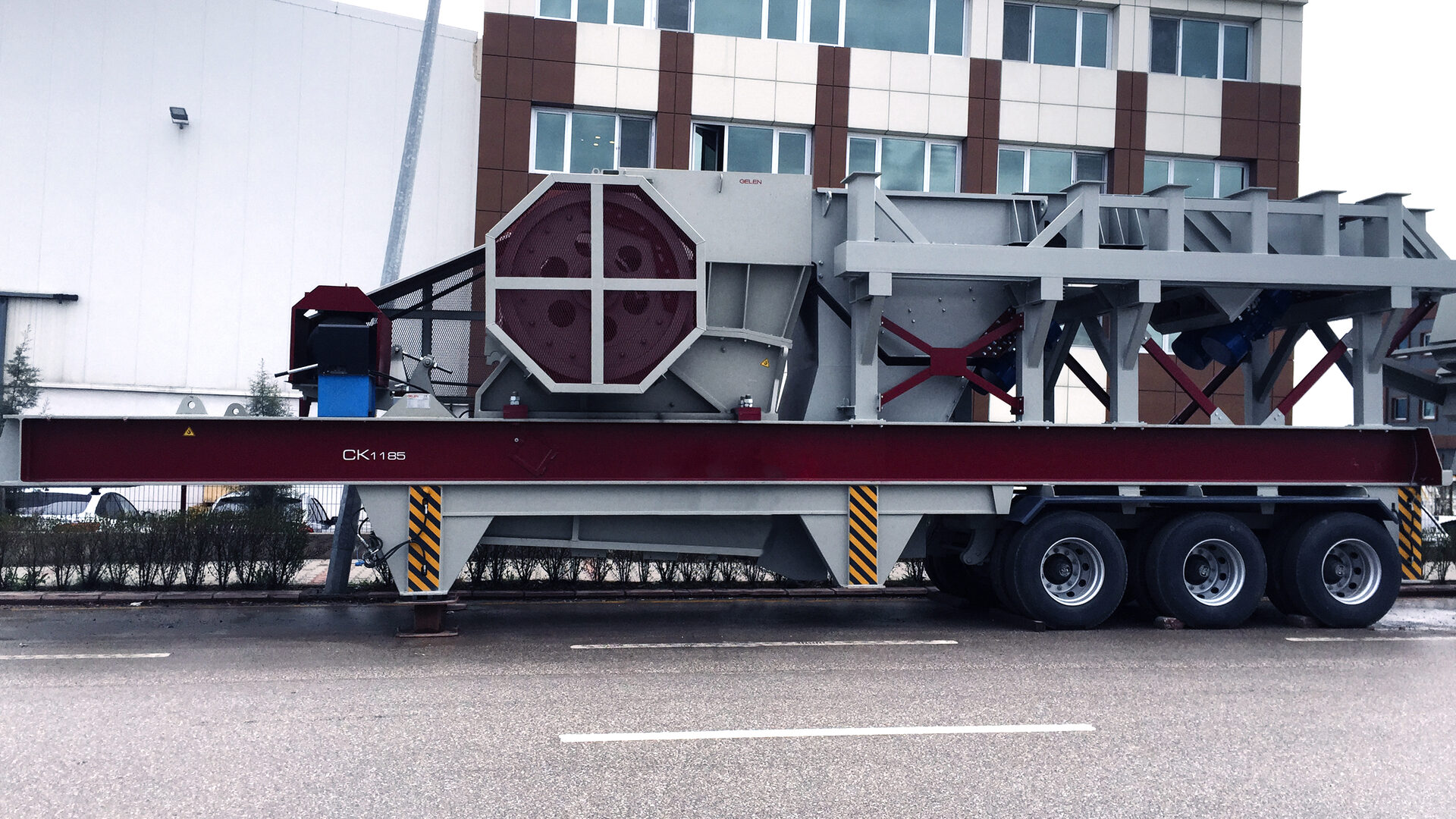
Why Jaw Crushers Are Ideal for Concrete Recycling
- Compressive crushing: Unlike impact crushers, jaw crushers do not shatter material at high speed — they squeeze it. This means rebar bends and liberates from the concrete rather than jamming blow bars.
- Wide feed opening: Demolition blocks can be oversized and irregular. A jaw crusher accepts large, awkward-shaped pieces without pre-breaking.
- Adjustable CSS: Recycled aggregate specs vary (0–31.5 mm, 0–63 mm, 0–100 mm). Hydraulic CSS adjustment on the GELEN CK Series lets operators switch between products quickly.
- Robust design: Heavy-duty jaw plates and a sacrificial toggle plate protect the crusher from tramp metal damage.
- Low fines generation: Compression creates less dust than impact, which is important for environmental compliance.
Handling Rebar in Concrete
Reinforced concrete contains carbon steel rebar, wire mesh, and sometimes pre-stressed cables. Here is how to manage it:
Before the Crusher
- Pre-sort manually: Remove large steel sections (beams, plates, heavy reinforcement) with an excavator before feeding.
- Pre-breaking: Use a hydraulic breaker to reduce oversized blocks to within the crusher's max feed size.
- Keep feed consistent: Avoid dumping entire slabs at once — use a feeder to regulate the flow.
During Crushing
- CSS setting: Set CSS wide enough (50–80 mm) to allow bent rebar to pass through the discharge. Too-tight CSS traps rebar and causes jams.
- Feed rate: Run at 60–80% of rated capacity. Rebar increases the chance of bridging, so a moderate feed rate reduces jam frequency.
- Toggle plate as fuse: If an uncrushable piece enters the chamber, the toggle plate is designed to break first, protecting the frame and bearings. Keep spare toggle plates on-site.
After the Crusher
- Overband magnet separator: Install a cross-belt or suspended magnet above the discharge conveyor to extract liberated rebar.
- Scalping screen: Screen out remaining steel with a grizzly or vibrating screen.
- Manual picking station: For high-quality RCA, a manual or robotic picking station removes non-ferrous contaminants (wood, plastic, insulation).
Recommended CSS Settings for Recycled Aggregate
| End Product | Recommended CSS (mm) | Application |
|---|---|---|
| 0–100 mm | 60–80 | Road sub-base, fill material |
| 0–63 mm | 40–50 | Drainage, pipe bedding, general fill |
| 0–31.5 mm | 20–25 | Recycled aggregate for new concrete (requires secondary crushing) |
Important: Concrete with heavy rebar (≥16 mm diameter) should not be crushed below 50 mm CSS in a single jaw stage. The rebar will wrap around jaw plates and cause jams. For fine products, use a two-stage circuit: jaw crusher → magnetic separation → secondary crusher.
Jaw Plate Selection for Recycled Concrete
Concrete is moderately abrasive (especially with sand and aggregate embedded in it), but softer than natural rock. The main challenge is impact from rebar, not abrasion.
| Jaw Plate Alloy | Suitability for Concrete | Why |
|---|---|---|
| Mn14 (standard manganese) | Good | Work-hardens under impact; adequate for most concrete |
| Mn18 (high manganese) | Best choice | Better impact toughness; handles rebar strikes well |
| Mn22 / Mn18Cr2 | Overkill for most concrete | Higher cost with marginal benefit; save for granite/basalt |
The GELEN CK Series uses reversible jaw plates as standard — flip them when one side wears, doubling service life. See the Jaw Plate Selection Guide for more detail.
Environmental Compliance & Circular Economy
Concrete recycling is not just good business — it is increasingly required by regulation. Many countries and municipalities now mandate recycling rates for construction and demolition (C&D) waste.
- Dust control: Jaw crushers generate less dust than impact crushers, but water spray bars or misting systems are usually required at the feed and discharge points.
- Noise: Concrete crushing is noisy. Enclosures, sound barriers, and operating-hour restrictions may apply in urban areas.
- Water management: If using wet suppression, collect and settle runoff water — concrete wash water is highly alkaline (pH 11–13).
- Recycled aggregate standards: EN 12620 (Europe), ASTM C33 (USA), and local equivalents define permissible contaminant levels, gradation, and strength requirements for RCA.
Typical Concrete Recycling Plant Setup
A basic concrete recycling circuit using a jaw crusher:
- Excavator with breaker: Pre-break oversized slabs on the demolition pile.
- Vibrating feeder with grizzly bars: Regulate feed and scalp out fines/dirt.
- GELEN CK jaw crusher: Primary reduction to 0–100 mm or 0–63 mm.
- Overband magnet: Extract liberated rebar from the conveyor.
- Vibrating screen: Classify product into target fractions (e.g., 0–31.5 mm, 31.5–63 mm).
- Stockpile conveyors: Direct product to stockpiles for loading.
Conclusion
Concrete recycling with a jaw crusher is technically straightforward when you control three things: feed quality, CSS setting, and rebar separation. The result is valuable recycled aggregate that reduces landfill costs, earns revenue, and supports your environmental commitments.
GELEN CK Series jaw crushers are recycling-ready with hydraulic CSS adjustment, reversible jaw plates, and robust toggle plate overload protection. Contact our team for a mobile or stationary recycling plant configuration.