

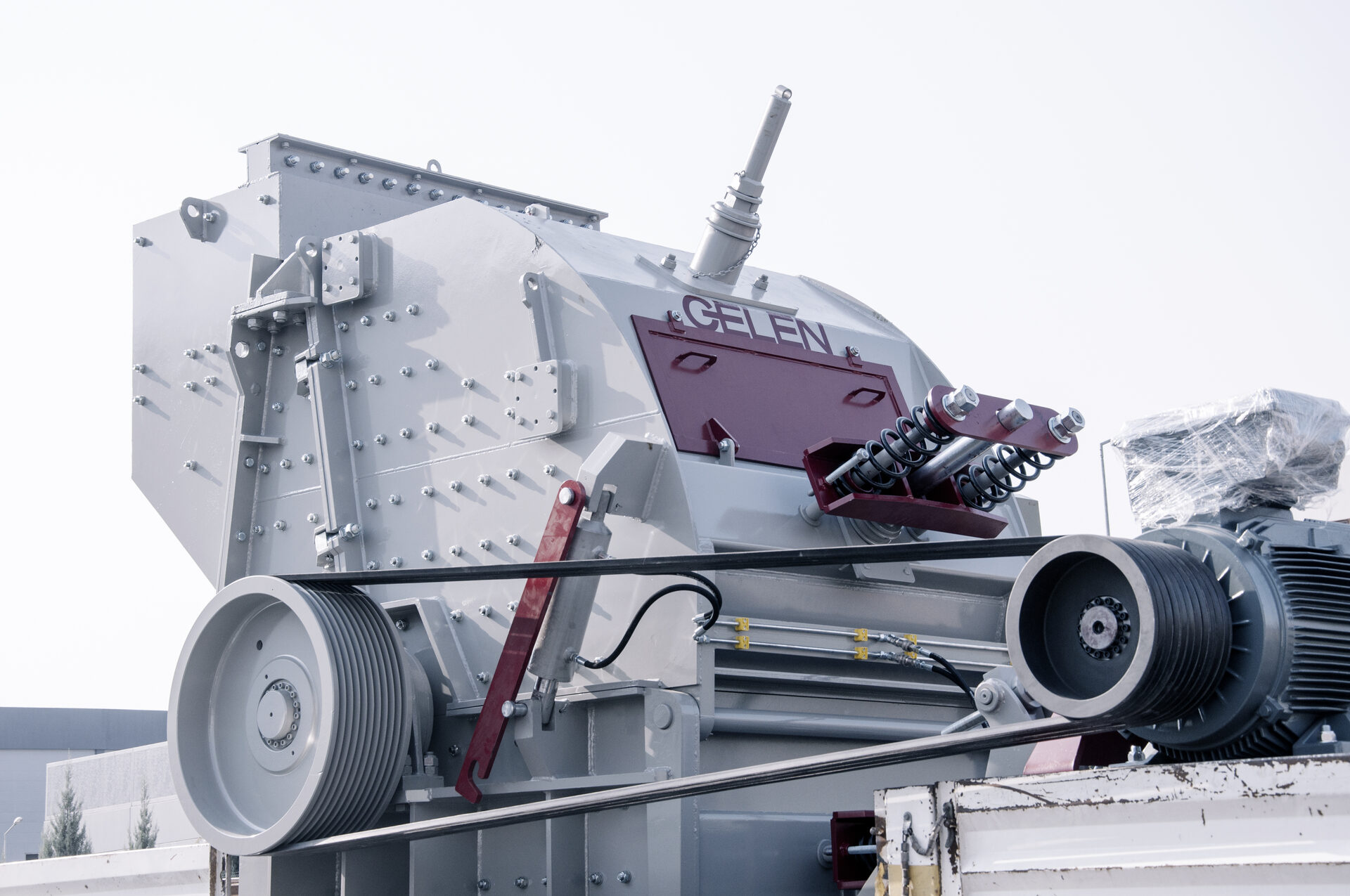
Impact Crusher for Concrete Recycling: What You Need to Know
Introduction: Concrete demolition waste is one of the largest material streams in construction and civil engineering. Recycling it on-site with an impact crusher can eliminate haulage costs, reduce landfill fees, and generate sellable recycled aggregate — but only if the machine is configured correctly for the job. This guide covers everything from rebar handling to output gradation targets.
Why Impact Crushers Work Well for Concrete Recycling
Concrete has a compressive strength typically in the range of 30–80 MPa — well within the design range of a horizontal shaft impact (HSI) crusher, which handles materials up to around 200 MPa. This makes the HSI a natural fit for concrete processing:
- High reduction ratio — up to 20:1 in a single pass means fewer crushing stages are needed. For sub-base aggregate production, a single HSI pass is often sufficient.
- Clean matrix separation — impact shatters the cement paste from the aggregate particles more efficiently than compression, producing cleaner recycled aggregate.
- Cubical output — impact crushing produces well-shaped, cubical particles that meet recycled aggregate (RA) and recycled concrete aggregate (RCA) specifications for road sub-base and fill applications.
- Variable feed acceptance — reinforced concrete slabs, beams, and mixed demolition debris can all be processed without pre-sizing if feed control is managed correctly.
Jaw crusher vs impact crusher for concrete: A jaw crusher handles rebar better in the primary stage because it compresses rather than shatters the steel. For secondary shaping and aggregate refinement, the HSI is the preferred choice — it produces a cleaner, more cubic product at a higher reduction ratio.
The Rebar Problem — How to Handle It
Rebar (steel reinforcement bar) is the primary challenge when processing reinforced concrete in an impact crusher. Steel can damage blow bars, jam the rotor, or cause severe impact events that crack brittle alloys. There are several proven approaches to managing rebar risk:
| Approach | Description | Risk Level |
|---|---|---|
| Pre-screening / sorting | Remove large rebar lengths before feed — manual or mechanical sorting | Best — eliminates risk at source |
| Metal detector | Detect and divert ferrous metal on the feed conveyor before the crusher | Good — prevents most damage events |
| Manganese blow bars | Work-harden on impact, absorb energy rather than cracking when struck by steel | Essential with rebar-contaminated feed |
| 2-high / 2-low rotor configuration | Bar arrangement allows rebar to pass through the rotor without jamming | Recommended for recycling applications |
| Magnetic conveyor (overband magnet) | Overhead magnet on discharge conveyor extracts rebar from output material | Adds value — steel recovery for scrap |
Warning: Never run high-chrome blow bars with rebar-contaminated feed. Chrome iron is brittle — a steel bar will shatter the blow bar and potentially damage the rotor. Always use manganese steel (Mn14 or Mn18) when processing reinforced concrete with residual rebar.
Recommended Crusher Setup for Concrete Recycling
Blow Bar Selection
Use manganese steel (Mn14 or Mn18) for any feed that may contain rebar or other ferrous contamination. Manganese work-hardens under repeated impact, making it progressively tougher in service — exactly the property needed for steel-contaminated feed. If you are processing clean crushed concrete without rebar (e.g., processed material from a jaw crusher first stage), martensitic steel blow bars offer better wear life and can be considered.
CSS Setting
Apron gap setting depends on the target recycled aggregate gradation:
- Sub-base aggregate (0–80 mm): Open apron gap to 60–80 mm
- Road base (0–40 mm): Set apron gap to 40–50 mm
- General fill material (0–100 mm): Fully open apron — maximum throughput priority
Rotor Speed
Reduce rotor speed compared to clean limestone operation. Concrete has variable density and embedded steel, and lower rotor speed reduces shock loading on the blow bars and rotor. Typical setting for concrete recycling: 600–800 RPM, compared to 800–1,100 RPM for clean limestone. Lower RPM also reduces fines generation, which is important when the recycled aggregate specifications require a minimum fines content control.
Feed Control
Even, controlled feed is critical for concrete recycling. Use a vibrating feeder with variable speed control to maintain a consistent feed rate and prevent surge loading. Avoid feeding single large concrete slabs without pre-breaking — slabs over approximately 600 mm in any dimension should be pre-broken or pre-screened before entering the crusher.
Output Specifications for Recycled Aggregate
Different end-use applications for recycled concrete aggregate require different output gradations. The table below shows typical targets and the required CSS settings to achieve them:
| Application | Target Gradation | Required Apron Gap (CSS) |
|---|---|---|
| Road sub-base (Type 1) | 0–40 mm well graded | 35–45 mm apron gap |
| Pipe bedding fill | 0–20 mm | 20–30 mm apron gap |
| Drainage fill | 20–80 mm | 60–80 mm apron gap, screen out fines |
| Temporary road surface | 0–100 mm | Fully open — maximum throughput |
| Recycled concrete aggregate (RCA) for concrete mix | 4–20 mm | 15–25 mm apron gap + screen to size |
Note that for RCA used in new concrete production, screening to close tolerances is essential. The crusher alone cannot guarantee a precise top size — always combine with a vibrating screen for product specifications below 40 mm.
Mobile vs Stationary for Concrete Recycling
One of the key decisions in concrete recycling is whether to process material on-site (mobile plant) or transport it to a fixed recycling facility (stationary plant).
Mobile processing advantages:
- Process on the demolition site — eliminates haulage cost for waste concrete
- Eliminate illegal dumping risk and associated environmental liability
- Faster project turnaround — recycled aggregate available immediately on site
- Lower total cost on short-term contracts where transport distances are long
GELEN HSI crushers are available on wheeled mobile chassis for exactly these applications. A typical mobile concrete recycling plant configuration is: vibrating feeder → HSI crusher → vibrating screen → stockpile conveyor. This allows simultaneous production of two or three aggregate fractions from a single pass.
When to use a stationary plant instead:
- Permanent recycling depot with continuous feed volume
- High volume operations exceeding 500 t/day where fixed infrastructure is justified
- When site space permits and long-term contracts make capital investment attractive
Case Example: Demolition Contractor Processing 200 t/day
To illustrate how the setup principles work in practice, here is a representative case for an urban demolition site:
- Site: Urban demolition project — mixed reinforced concrete, brick, and ceramic tile
- Machine: GELEN SDK secondary impact crusher with manganese (Mn18) blow bars
- Setup: Vibrating feeder with grizzly pre-screen → overband magnet to remove loose rebar → HSI crusher → double-deck vibrating screen producing 0–40 mm and 40–80 mm fractions
- Output: 0–40 mm fraction sold as road sub-base at local market rate
- Result: Near-zero waste to landfill; estimated crushing cost of approximately $0.15/tonne; rebar recovered and sold to scrap metal dealer, partially offsetting operating costs
The key to this operation's economics is the combination of the overband magnet (protecting the crusher from rebar damage) and manganese blow bars (providing resilience against any residual steel contamination that passes the magnet).
Maintenance Notes for Recycling Applications
Impact crusher maintenance intervals are significantly more demanding in recycling applications than in clean quarry operation. The following adjustments to standard maintenance schedules are recommended:
- Blow bar wear intervals: Plan for 400–700 hour change intervals in concrete recycling versus 800–1,500 hours in clean limestone. Monitor blow bar thickness at each shift change and replace when wear limit is reached — worn bars allow material to pass through without sufficient impact, degrading output quality and increasing rotor stress.
- Rotor inspection: Inspect the rotor body for cracks every 200 operating hours when processing rebar-contaminated feed. Even with manganese bars, occasional high-energy steel impacts can cause micro-cracks in the rotor that propagate over time.
- Bearing temperature monitoring: Monitor bearing temperatures more frequently than in quarry applications. Concrete dust is highly abrasive and has a strong affinity for grease — it degrades bearing seals faster than mineral dust. Increase grease nipple frequency by 50% versus standard schedule.
- Metal detector calibration: Check metal detector sensitivity and calibration weekly. Detector drift over time can allow larger steel pieces to pass undetected.
Related Articles
- The Complete Guide to Horizontal Shaft Impact Crushers (HSI) — full overview of HSI crusher selection, sizing, and operation.
- Impact Crusher Blow Bar Selection Guide — alloy comparison matrix and selection by material type.
- Impact Crusher Maintenance Schedule — daily, weekly, and monthly checklists.
- Jaw Crusher for Concrete Recycling — how jaw crushers handle reinforced concrete in the primary stage.
Conclusion
Impact crushers are a powerful tool for concrete and demolition recycling — but success depends on the right blow bar alloy, appropriate CSS settings for your target gradation, robust rebar management, and a maintenance schedule that accounts for the more demanding operating environment of recycling applications.
GELEN manufactures horizontal shaft impact crushers in both stationary and mobile configurations, with full support for blow bar selection and crusher setup for recycling applications. Contact our engineering team to discuss your concrete recycling project and get a recommended plant configuration.