

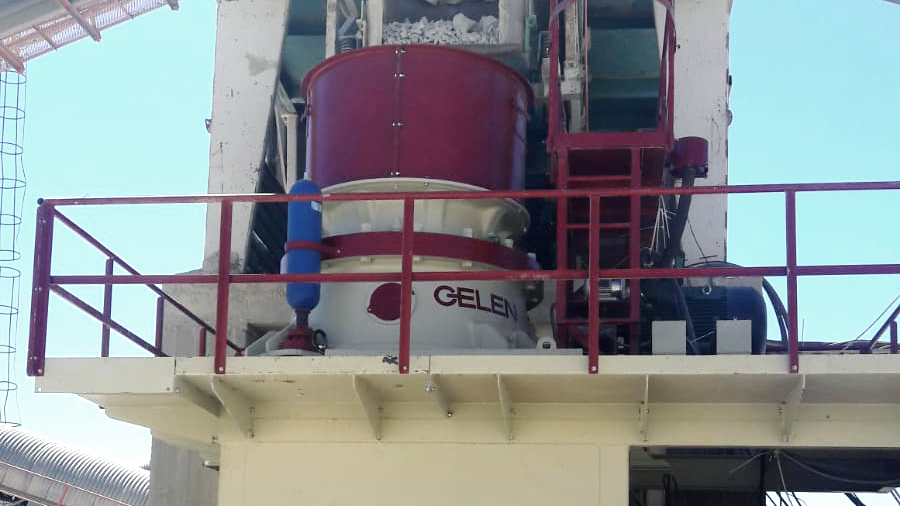
Cone Crusher Closed Side Setting (CSS): What It Is and How to Get It Right
What Is Closed Side Setting (CSS)?
The closed side setting (CSS) of a cone crusher is the smallest gap between the mantle and the concave at the point where the mantle is closest to the bowl liner during each gyration cycle. Because the mantle swings eccentrically inside the concave, the distance between the two crushing surfaces constantly changes. The narrowest point of that cycle is the CSS, while the widest point is called the open side setting (OSS).
Understanding the relationship between CSS and OSS is essential for any operator. The difference between the two values equals the throw (or stroke) of the crusher head. For example, if a cone crusher has a CSS of 16 mm and a throw of 18 mm, the OSS will be 34 mm. Material is nipped at the OSS and crushed down to approximately the CSS before it exits the chamber.
CSS matters because it is the single most influential parameter controlling the product gradation that leaves the crusher. A tighter CSS produces finer material; a wider CSS produces coarser material. Every downstream process, from screening to asphalt batching, depends on the cone crusher CSS being set correctly and monitored regularly.
How Does CSS Affect Product Size?
In practice, the cone crusher CSS does not create a perfectly uniform product at exactly the set dimension. Instead, a range of particle sizes exits the crusher. The industry rule of thumb is that roughly 80% of the crushed product will pass through a sieve opening equal to 1.0 to 1.7 times the CSS. The exact ratio depends on the crusher chamber profile, the throw, the feed gradation, and the rock's fracture characteristics.
The table below gives a practical reference for typical P80 product sizes at various closed side setting values on a standard secondary or tertiary cone crusher:
| CSS (mm) | Estimated P80 at 1.0x CSS (mm) | Estimated P80 at 1.4x CSS (mm) | Estimated P80 at 1.7x CSS (mm) |
|---|---|---|---|
| 10 | 10 | 14 | 17 |
| 16 | 16 | 22 | 27 |
| 20 | 20 | 28 | 34 |
| 25 | 25 | 35 | 43 |
| 32 | 32 | 45 | 54 |
| 38 | 38 | 53 | 65 |
Because liner wear gradually opens the CSS over time, operators should check the setting at regular intervals. A CSS that drifts even 2-3 mm wider than intended can push the P80 beyond specification limits, leading to rejected product or excessive recirculation through the crushing circuit.
How to Measure and Adjust CSS - Step by Step
Accurate measurement of the cone crusher CSS is a hands-on task that should be performed with the crusher stopped and locked out. The most common field method uses a lead ball or modelling clay to take a direct impression of the minimum gap. Here is the recommended procedure:
1. Stop and Lock Out the Crusher
Shut down the crusher drive motor and engage the lockout/tagout procedure according to your site safety plan. Make sure the feed conveyor is off and the crushing chamber is empty. Never attempt a CSS measurement while the crusher is running.
2. Prepare a Lead Ball or Clay Slug
Take a piece of soft lead or a ball of modelling clay that is slightly larger than the expected CSS. A diameter of roughly 1.5 to 2 times the anticipated setting works well. Attach the slug to a length of wire so you can lower it into the chamber and retrieve it afterwards.
3. Lower the Slug into the Crushing Chamber
Position the lead ball at the tightest zone of the chamber, which is the closed side. On most cone crushers, this is directly opposite the widest gap. Lower the slug until it rests between the mantle and the concave at the narrowest point.
4. Bump the Crusher
Briefly jog the crusher motor so the mantle completes at least one full gyration. The eccentric motion will compress the lead ball or clay at the closed side, leaving an impression of the actual gap.
5. Retrieve and Measure
Pull the slug out with the wire and measure its thinnest dimension using a calliper. This measurement is your current CSS. Compare the reading to the target closed side setting for your product specification.
6. Adjust the Setting
On modern GELEN GHC Series cone crushers, the CSS is adjusted hydraulically. Rotating the bowl (upper assembly) raises or lowers the concave relative to the mantle, increasing or decreasing the gap. On some older designs, operators change shim stacks beneath the bowl to achieve the same effect. After every adjustment, repeat the lead-ball check to confirm the new setting matches the target.
What Happens If CSS Is Too Small?
Reducing the cone crusher CSS beyond the manufacturer's recommended minimum might seem like a shortcut to finer product, but it introduces several serious problems:
- Mechanical overload - A CSS that is too tight forces the crusher to work against material it cannot efficiently break. Crushing forces escalate rapidly, stressing the mainshaft, eccentric bushing, and frame beyond their design limits.
- Accelerated liner wear - When the gap is excessively narrow, the mantle and concave liners experience metal-to-metal contact or near-contact at peak compression. This dramatically shortens liner life and increases consumable costs.
- Motor tripping and stalling - The drive motor draws higher current as crushing forces rise. If the overload persists, thermal protection relays will trip the motor, halting production and requiring a cool-down period before restarting.
- Overload protection activation - GELEN GHC Series crushers are equipped with hydraulic relief systems that allow the bowl to lift momentarily when forces exceed a safe threshold. While this protects the machine, frequent relief-valve activation signals that the CSS is set too aggressively and should be opened.
If you observe any of these symptoms, stop the crusher and widen the CSS immediately. It is always better to make a slightly coarser product and recirculate oversize than to risk catastrophic damage to the crusher frame or mainshaft. For ongoing guidance, consult the cone crusher maintenance schedule to keep settings within safe operating windows.
CSS Ranges for GELEN GHC Series
Each model in the GELEN GHC Series has a specific CSS range dictated by its head diameter, throw, and chamber geometry. Operating within these ranges ensures safe crushing forces and optimal liner life. The table below summarises the recommended closed side setting ranges:
| Model | Minimum CSS (mm) | Maximum CSS (mm) | Typical Application |
|---|---|---|---|
| GHC 28 | 6 | 32 | Tertiary / fine crushing |
| GHC 37 | 18 | 38 | Secondary / tertiary crushing |
| GHC 45 | 10 | 45 | Secondary crushing |
| GHC 56 | 15 | 50 | Secondary / heavy-duty crushing |
For instance, the GHC 28 can close down to 6 mm, making it an excellent choice when a very fine tertiary product is required. The larger GHC 56, with its minimum of 15 mm, is better suited for high-tonnage secondary duties where a coarser product feeds a downstream tertiary stage. Always cross-reference your target product size with the CSS range before selecting a model.
How to Match CSS to Aggregate Specification
Different end uses demand different aggregate gradations, and the cone crusher setting adjustment should be guided by the specification you need to meet. Below are common application categories and the CSS windows that typically satisfy them:
Asphalt Aggregate (8-14 mm CSS)
Hot-mix asphalt plants require tightly graded coarse and fine aggregate fractions. A CSS in the 8-14 mm range, combined with closed-circuit screening, produces the cubical, well-graded material that asphalt mix designs demand. Use the GHC 28 or GHC 45 in fine-cavity configuration for this duty.
Concrete Aggregate (12-20 mm CSS)
Concrete aggregate standards typically call for nominal maximum sizes of 10 mm, 14 mm, or 20 mm. Setting the cone crusher CSS between 12 and 20 mm and screening the output through the appropriate deck will yield aggregate that meets these gradation envelopes. A GHC 37 or GHC 45 in a standard cavity handles this range comfortably.
Road Base and Sub-Base (20-38 mm CSS)
Road base materials are specified as broadly graded crusher-run products, often 0-40 mm or 0-50 mm. A wider CSS of 20-38 mm delivers the coarser top size while natural fines generated during crushing fill out the lower fractions. The GHC 37 or GHC 56 are well suited for road base production, offering high throughput at these wider settings.
Regardless of the application, always verify the final gradation through sieve analysis after adjusting the CSS. Rock type, moisture, feed size distribution, and crusher speed all influence the actual product curve. Treat the CSS as the primary control lever and fine-tune with screen cloth selection and circuit design.
Further Reading
- Complete Guide to Cone Crushers — everything you need to know about cone crusher types, operation, and selection.
- Cone Crusher Liner Replacement Guide — step-by-step liner change procedures and best practices.
- Cone Crusher Maintenance Schedule — printable PM checklists for daily, weekly, and monthly inspections.
- GELEN GHC Series Cone Crushers — full product range, specifications, and downloads.
Get the CSS Right with GELEN
GELEN GHC Series cone crushers give you precise hydraulic CSS adjustment, built-in overload protection, and robust chamber geometries designed for consistent product gradation. Whether you need:
- Fine aggregate for asphalt at tight CSS settings
- Concrete-grade material with reliable cubicity
- High-tonnage road base at wider settings
- Expert guidance on CSS selection and circuit design
Our engineering team will help you select the right model, chamber, and closed side setting for your specification. Contact us today to discuss your project requirements.