

Cone Crusher Liner Replacement: When, Why, and How
What Are Cone Crusher Liners (Mantles and Concaves)?
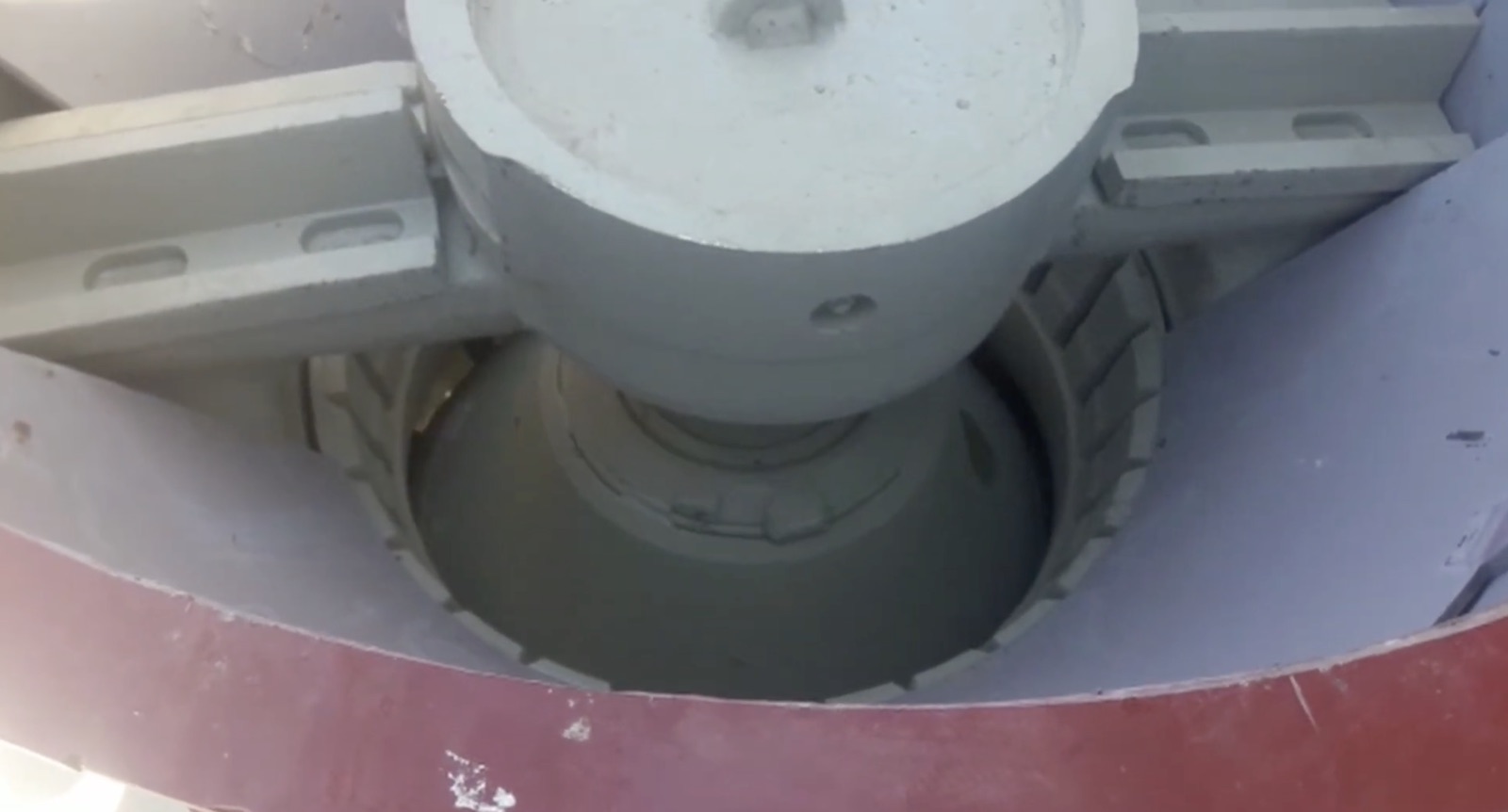
Every cone crusher relies on two critical cone crusher wear parts to break rock: the mantle and the concave. These manganese steel liners are the surfaces that actually contact the feed material, and their condition directly determines product quality, throughput, and overall machine health.
The mantle is the inner, rotating wear surface that is mounted on the head assembly (main shaft). As the eccentric bushing rotates the main shaft, the mantle gyrates inside the crushing chamber, compressing material against the outer stationary liner. Mantles are typically a single piece on smaller crushers and may be split into upper and lower sections on larger machines. They are secured with a locking nut and backed with an epoxy resin compound to ensure even load distribution.
The concave (also called the bowl liner) is the outer, stationary wear surface that lines the upper frame or bowl assembly. Concaves are often supplied in multiple segments that are stacked and locked into the bowl using a clamping ring or threaded adjustment mechanism. Together, the mantle and concave form the crushing chamber profile that controls the closed-side setting (CSS) and the final product gradation.
Both liners are manufactured from high-manganese steel, most commonly in 14Mn and 18Mn grades. Manganese steel is unique because it work-hardens under impact: the surface becomes progressively harder during operation while the core remains tough and resistant to fracture. This self-hardening property makes it the ideal material for cone crusher liner replacement parts that must endure millions of compression cycles.
Signs Your Liners Need Replacing
Knowing when to change cone crusher liners is essential for preventing unplanned downtime, protecting downstream equipment, and maintaining product specification. Waiting too long risks damaging the head, bowl, or main shaft -- repairs that cost far more than a set of liners. Here are the five most reliable indicators that replacement is due:
- CSS drift beyond adjustment range -- When you can no longer achieve the target closed-side setting even after fully threading down the bowl, the liners have worn past their useful limit. On GELEN GHC Series cone crushers, the hydraulic adjustment system provides a wide range, but once that range is exhausted the only solution is new liners. If you need a refresher on proper setting procedures, see our CSS Setting Guide.
- Liner thickness below 50% of original -- Most manufacturers recommend measuring liner thickness at regular intervals with an ultrasonic gauge or physical measurement during shutdowns. When the thinnest point drops below half the as-new dimension, the liner is approaching the minimum safe thickness. Running beyond this point increases the risk of liner cracking and backing material exposure.
- Visible cracks, gouging, or pitting -- Surface cracks are early warnings of imminent failure. Deep gouges and pitting indicate that the work-hardened layer has been penetrated and softer base metal is being attacked at an accelerated rate. Inspect liners during every scheduled shutdown and document wear patterns photographically for trend analysis.
- Throughput drop greater than 15% -- A gradual decline in tons per hour at the same CSS and feed rate is a strong signal that the crushing chamber profile has degraded. Worn liners create a less efficient nip angle and wider gap at the feed zone, reducing the crusher's ability to grip and break material. For a broader overview of performance monitoring, refer to the Cone Crusher Maintenance Schedule.
- Increased motor load or power draw -- When the crusher draws consistently higher amperage to process the same material, it often means the chamber geometry has changed enough to create inefficient crushing action. The machine works harder to achieve the same result, wasting energy and accelerating wear on bearings and drive components.
If you observe two or more of these symptoms simultaneously, schedule a cone crusher liner replacement at the earliest opportunity rather than waiting for the next planned shutdown.
How Long Do Liners Last?
Liner life varies significantly depending on the feed material, crusher speed, CSS, and whether the crusher is choke-fed. The table below provides general guidelines based on material type for a properly configured cone crusher:
- Limestone and similar soft-to-medium rock -- 600 to 1,000 operating hours. Limestone has moderate abrasiveness and work-hardens manganese liners well, leading to relatively long service life.
- Granite and basalt -- 400 to 700 operating hours. These hard, abrasive materials wear liners significantly faster. Consistent choke feeding and correct CSS selection become critical to reaching the upper end of this range.
- Highly abrasive materials (quartzite, river gravel with high silica content) -- 200 to 400 operating hours. Silica-rich feeds are extremely aggressive on manganese steel. In these applications, selecting a higher manganese grade (18Mn) and maintaining strict feed discipline are essential.
These figures assume a correctly sized feed, consistent choke feeding, and the appropriate liner profile for the application. Deviations from any of these conditions can reduce liner life by 30% or more. Tracking cumulative operating hours and correlating them with measured liner thickness is the most reliable method for predicting your specific replacement intervals.
Step-by-Step Liner Replacement
Replacing cone crusher wear parts is a major maintenance event that typically requires a crane, specialized tooling, and experienced personnel. The following eight-step procedure covers the general process for most cone crushers, though you should always consult your machine-specific service manual for torque specifications, clearance values, and safety procedures.
- Shutdown and lockout/tagout (LOTO) -- Completely shut down the crusher and all associated conveyors and feeders. Isolate electrical, hydraulic, and pneumatic energy sources. Confirm zero energy state before any work begins. This is a non-negotiable safety requirement.
- Clear the crushing chamber -- Run the crusher empty before shutdown to clear retained material. If material remains, it must be manually removed with vacuum equipment or small tools. Never enter the chamber while material is bridged above.
- Remove the top shell (bowl assembly) -- Disconnect the hydraulic adjustment cylinder, bowl clamp ring, and any feed distribution plates. Use the overhead crane to lift the bowl assembly clear of the main frame. Set it on timber blocking and inspect the bowl threads and sealing surfaces for damage.
- Remove the worn concave segments -- With the bowl inverted or accessible, remove the clamping hardware and extract the concave segments. Note the wear pattern on each segment; uneven wear may indicate feed distribution problems or a misaligned bowl.
- Remove the worn mantle -- Unscrew the mantle locking nut (left-hand thread on most machines). Use a hydraulic nut runner or impact wrench rated for the torque requirement. Lift the mantle off the head using the crane and slings. Clean all old backing compound from the head surface.
- Install the new mantle -- Lower the new mantle onto the head, ensuring it seats evenly. Pour the specified epoxy backing compound into the gap between the mantle and the head. Allow curing time per the compound manufacturer's instructions (typically 4-8 hours). Torque the locking nut to specification.
- Install the new concave segments -- Stack the new concave segments into the bowl, applying backing compound as required. Secure with the clamping ring and torque all fasteners. Verify that segments are seated flush with no gaps that could allow material packing.
- Reassemble, set CSS, and test run -- Reinstall the bowl assembly onto the main frame. Reconnect hydraulic lines and the adjustment mechanism. Set the CSS to the target value using lead or a CSS measurement device. Run the crusher empty for 15-20 minutes, checking for abnormal vibration, temperature, or oil pressure. Gradually introduce feed and verify product gradation. For detailed CSS procedures, see the CSS Setting Guide.
Total downtime for a full liner change typically ranges from 8 to 16 hours depending on crusher size, crew experience, and whether the backing compound requires extended curing. Planning the change during a longer scheduled shutdown minimizes production impact.
Liner Profiles: Fine, Medium, and Extra Coarse
The internal geometry of the mantle and concave -- known as the liner profile -- has a profound effect on crusher performance. Choosing the wrong profile is one of the most common and costly mistakes in cone crusher liner replacement. The three standard profiles are:
Fine (F) Profile
Fine liners feature a steep chamber angle and a long parallel zone at the bottom of the crushing cavity. They are designed for producing small, tightly graded products and are best suited for:
- Tertiary or quaternary crushing stages
- Producing manufactured sand or fine aggregate (0-5 mm, 0-10 mm)
- Applications where a tight CSS (6-15 mm) is maintained
Medium (M) Profile
Medium liners offer a balanced chamber geometry suitable for the widest range of applications. They provide a good compromise between feed acceptance, reduction ratio, and product shape:
- Secondary crushing with moderate reduction ratios
- Producing base course and sub-base aggregates (10-30 mm)
- Applications with CSS settings between 15-30 mm
Extra Coarse (EC) Profile
Extra coarse liners have a wide feed opening and aggressive nip angle to accept larger feed material. Use them for:
- Secondary crushing directly after a jaw crusher
- Processing large, blocky feed (150-250 mm)
- Applications requiring high throughput with CSS settings above 30 mm
Selecting the correct profile starts with understanding your feed size distribution and desired product. For a deeper dive into how cone crushers fit into your overall plant design, see our Complete Guide to Cone Crushers.
Manganese Steel Grades: 14Mn vs 18Mn
The two most common manganese steel grades used for cone crusher liners are 14Mn (also designated Mn14Cr2 or similar) and 18Mn (Mn18Cr2). The number refers to the approximate manganese content as a percentage of the alloy. Choosing between them depends primarily on the hardness and abrasiveness of the feed material.
14Mn -- Standard Grade
- Contains approximately 11-14% manganese
- Achieves good work-hardening on medium-hard materials
- Recommended for limestone, dolomite, and moderately abrasive feeds
- Lower cost per set compared to 18Mn
- Best suited for applications where impact forces are moderate and consistent
18Mn -- High-Performance Grade
- Contains approximately 16-19% manganese, often with added chromium (1.5-2.0% Cr)
- Work-hardens to a significantly higher surface hardness under heavy impact
- Recommended for granite, basalt, quartzite, and high-silica river gravel
- Higher initial cost but substantially longer service life in abrasive applications
- Essential for crushers operating at high eccentric speeds or tight CSS settings
The general rule is straightforward: match material hardness to manganese grade. Using 14Mn on very hard, abrasive rock leads to rapid wear and frequent replacements, while using 18Mn on soft limestone offers no performance benefit and unnecessarily increases cost. When in doubt, consult your GELEN representative with a sample of your feed material for a tailored recommendation.
Maximizing Liner Life
Extending the service life of your cone crusher wear parts translates directly into lower cost per ton and fewer production interruptions. The following practices can add hundreds of hours to each set of liners:
- Maintain consistent choke feeding -- A full crushing chamber ensures rock-on-rock crushing, even liner wear, and maximum work-hardening of the manganese surface. Starving the crusher leads to uneven wear, metal-on-metal contact, and premature liner failure.
- Control feed top size -- Oversized material causes point loading on the liners and can lead to cracking. Ensure your primary crusher and pre-screen deliver feed within the specified range for the liner profile installed.
- Distribute feed evenly around the chamber -- Use a properly designed feed distribution plate or rotating feed box. Uneven feed causes one side of the liner to wear faster, reducing the total usable life of the set.
- Remove tramp metal -- Install magnetic separators and metal detectors upstream. Tramp iron and steel cause severe impact damage and can crack manganese liners in a single event.
- Monitor and adjust CSS regularly -- As liners wear, the CSS opens. Regular adjustment maintains product quality and ensures the crusher operates within its designed power curve. Refer to the CSS Setting Guide for proper procedures.
- Follow the maintenance schedule -- Lubrication, hydraulic system checks, and countershaft inspections all affect liner wear indirectly. A well-maintained crusher runs smoothly and wears its liners more evenly. See the Cone Crusher Maintenance Schedule for a complete checklist.
- Select the correct liner profile and manganese grade -- As discussed above, mismatched liners waste money and reduce performance. Invest the time upfront to select the right combination for your application.
Further Reading
- Complete Guide to Cone Crushers -- everything from selection to optimization.
- Cone Crusher CSS Setting Guide -- step-by-step CSS adjustment procedures.
- Cone Crusher Maintenance Schedule -- printable PM checklists.
- GELEN GHC Series Cone Crushers -- explore our full product range.
Need Genuine GELEN Cone Crusher Liners?
GELEN supplies OEM mantles and concaves in both 14Mn and 18Mn grades for the entire GHC Series range. Our wear parts are:
- Manufactured to exact OEM tolerances
- Available in Fine, Medium, and Extra Coarse profiles
- Backed by application engineering support
- Shipped worldwide with short lead times
Contact our team today for a liner recommendation tailored to your specific material and production requirements.